Baetyl
View All Tags
In Asia Minor the worship of baetyls often intersected with the cults of local Anatolian gods, especially those associated with mountains, fertility, and celestial phenomena. The Lydian god Mên was closely associated with rounded or conical baetyls, sometimes carved with a crescent or star, symbolizing his cosmic nature. In Phrygia the Mother Goddess, the later Kybele, was linked to sacred stones believed to have fallen from the sky. These meteorite baetyls carried immense prestige, and their heavenly origin emphasized the goddess’s power over both earth and firmament. The Phrygians and Lydians did not always distinguish between a god, the god’s image, and the stone itself. Instead the stone served as a living point of contact between the divine and the worshipper.
Urban Greek communities of Asia Minor eventually adopted and adapted these traditions. Temples of Zeus in several Anatolian cities preserved baetylic stones, some of which were said to have been oracular. At Hierapolis a sacred stone linked to Zeus Achaïos played a role in local rites. At Pessinus the famous meteorite of Kybele became so central to the goddess’s cult that Rome transported it to Italy during the Second Punic War. Even in Hellenistic and Roman periods, when anthropomorphic statues dominated temple art, baetyls continued to hold religious authority. They were an enduring reminder of the region’s older traditions where the divine was not human-shaped but elemental, celestial, and mysterious.
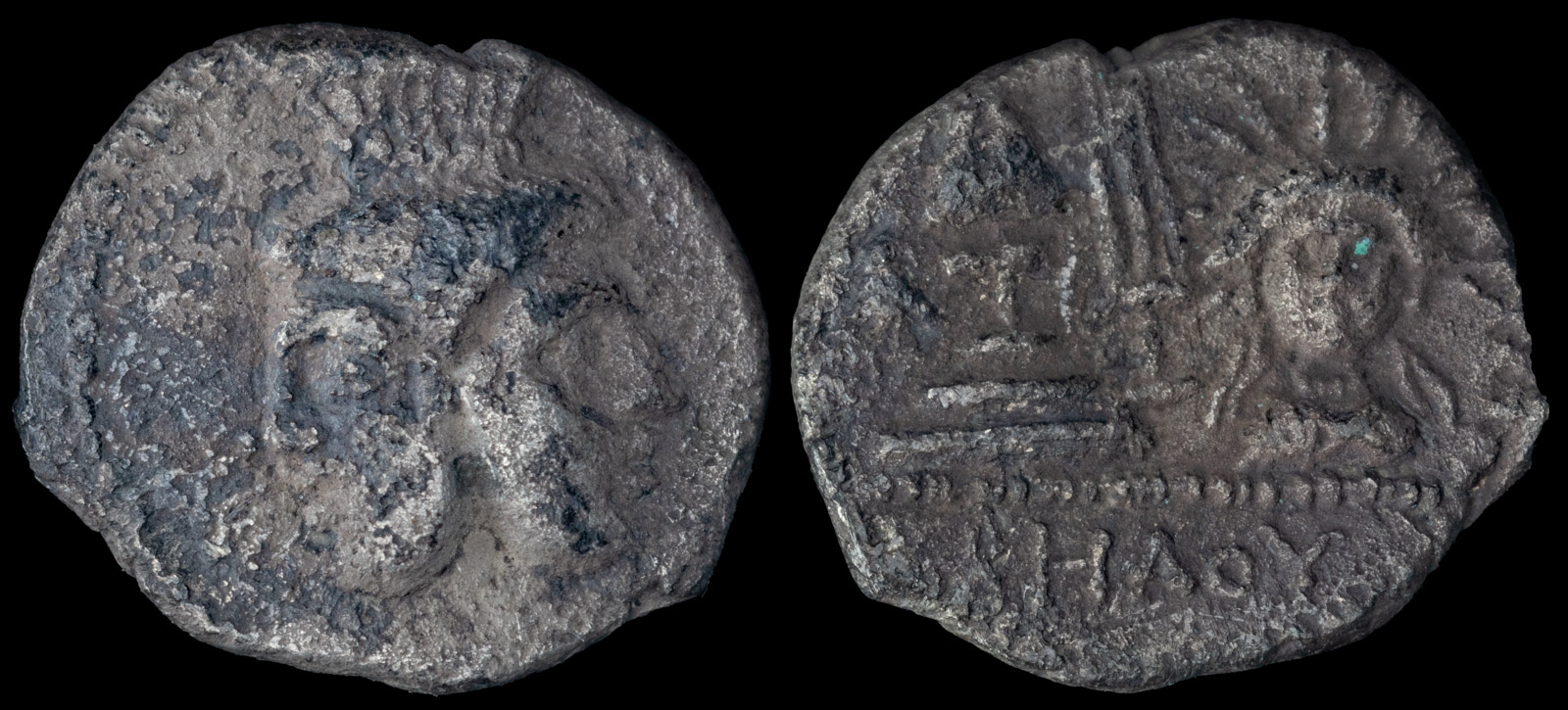
Belos, Syria
460-430 BCE
AR Obol 10mm, 0.63g
Janiform heads of Athena /
Triangular baetyl with eye set on base L; Radiate facing head of Belos R. Priestly instrument between. ΒΗΛΟΥ below
Unpublished
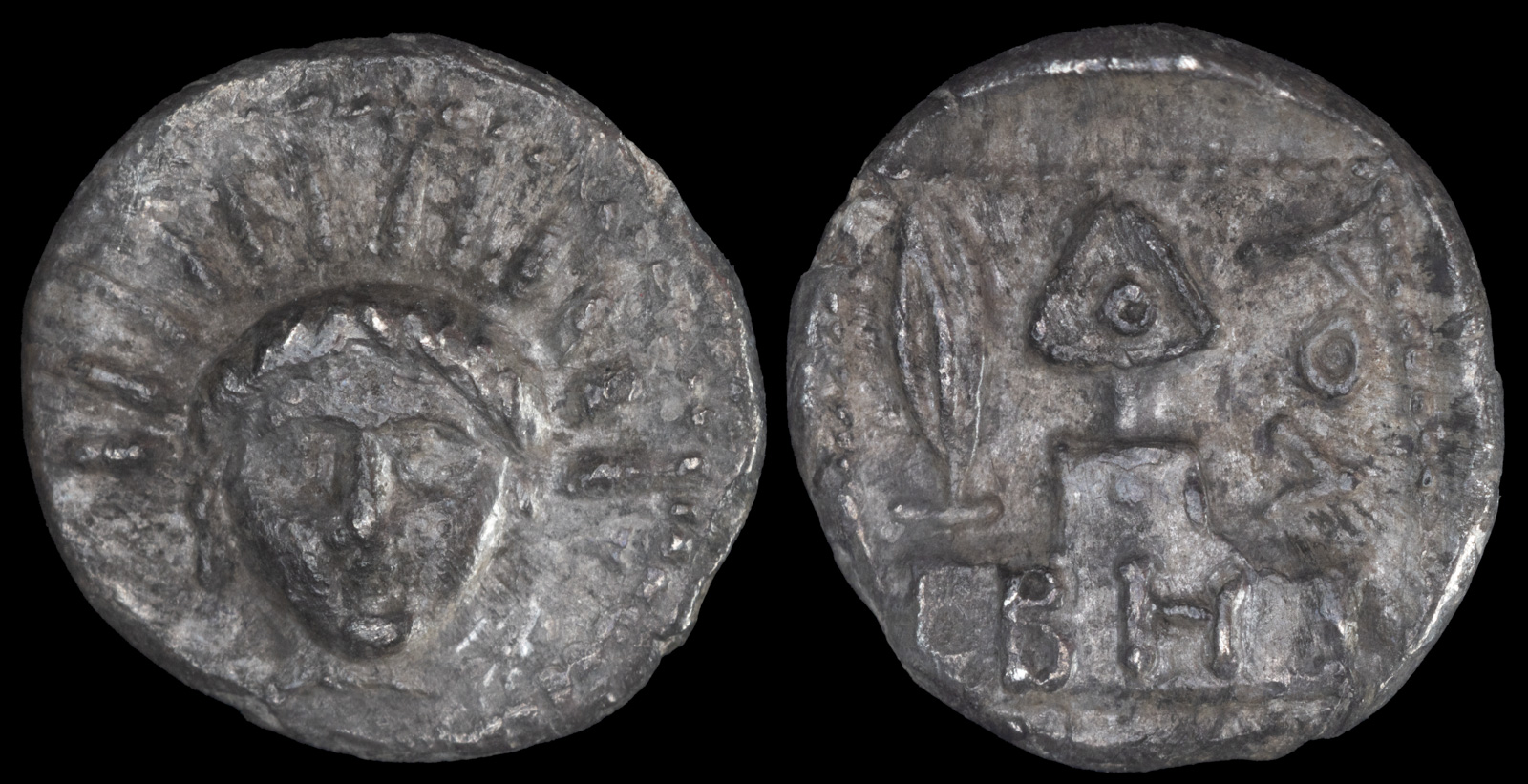
Emesa(?) Syria
460-430 BCE
AR Hemiobol 9.5mm, 0.31 g, 2h
Radiate facing head of Belos /
Triangular baetyl with eye set on base; ΒΗΛΟΥ below and left; olive leaf to left; all in dotted square border
Unpublished