Janiform
View All Tags
In Greek coinage, janiform heads were used to represent the Dioscuri (Castor and Pollux), twin brothers venerated as protectors of sailors and patrons of athletic contests. The conjoined heads emphasized their inseparable bond and shared divinity, while also representing balance—mortal and divine, earth and sky. Other Greek examples include depictions of male and female faces joined together, symbolizing harmony between genders or the duality of nature.
Roman coinage, however, fully embraced the janiform type as an explicit reference to Janus. Coins struck during the Republic frequently depict Janus with his two bearded faces looking in opposite directions, symbolizing vigilance and the ability to see both the past and future. This imagery underscored Rome’s ideals of continuity, foresight in governance, and stability across tumultuous times. It also had a practical civic message—Janus was invoked at the start of wars and treaties, and his imagery on coins resonated with Rome’s military and diplomatic endeavors.
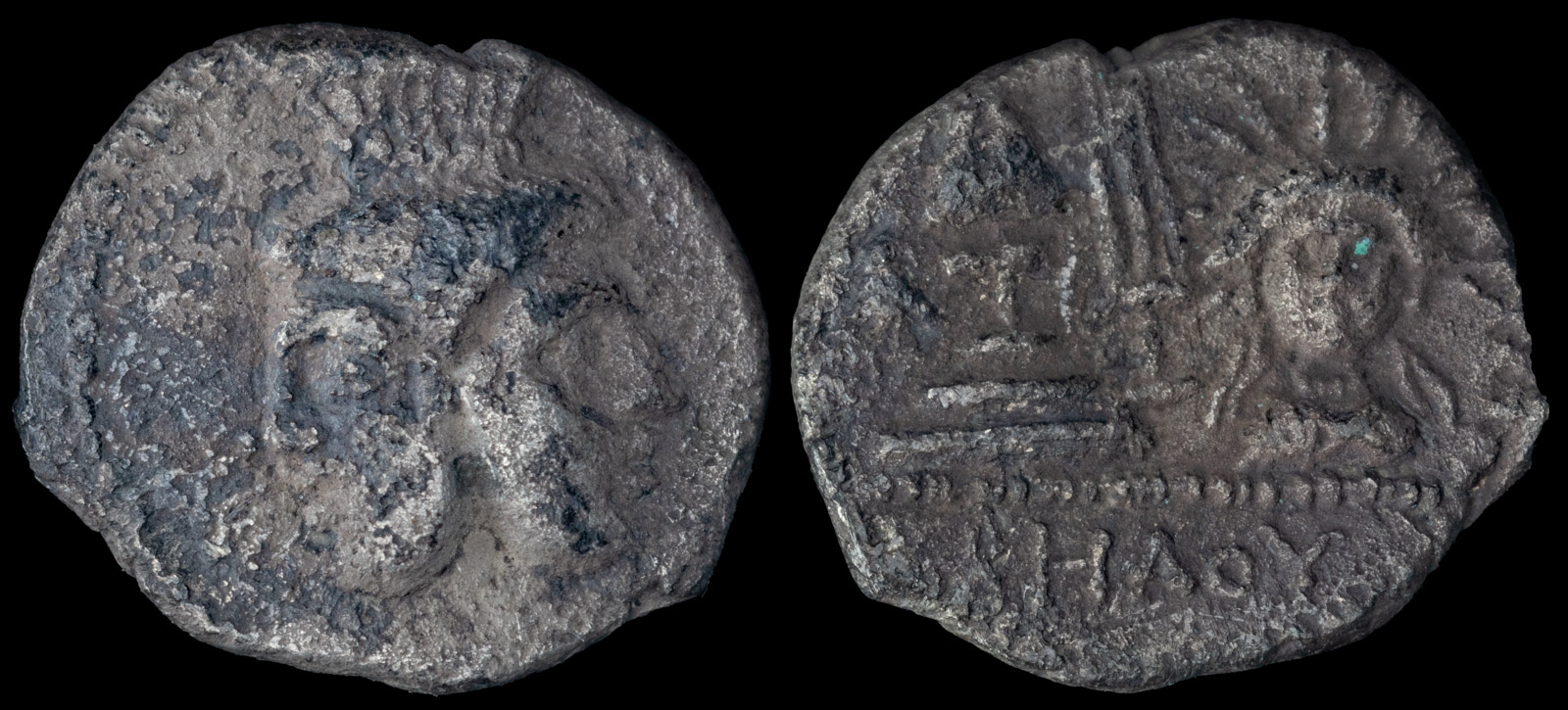
Belos, Syria
460-430 BCE
AR Obol 10mm, 0.63g
Janiform heads of Athena /
Triangular baetyl with eye set on base L; Radiate facing head of Belos R. Priestly instrument between. ΒΗΛΟΥ below
Unpublished
Filter coins

Belos, Syria mid-5th century BCE

Lampsakos, Mysia 250-200 BCE
Malaga, Iberia 200-20 BCE

Thessalonika, Macedon 187-167 BCE