Helios
View All Tags
In Greek mythology, Helios was considered to be all-seeing, as his daily journey across the sky gave him a vantage point over the entire world. This made him a powerful figure in various myths, often playing the role of an observer or witness to significant events. For instance, in the Odyssey, Helios is famously depicted as the owner of the sacred cattle of the Sun, which were kept on the island of Thrinacia. When Odysseus’ men slaughter the cattle, despite being warned not to, Helios becomes enraged and demands retribution, leading to the destruction of their ship and the death of the crew.
Although Helios was worshipped widely across the Greek world, especially in Rhodes, where a giant statue known as the Colossus of Rhodes stood in his honor, he was not as central to Greek religious life as other deities like Zeus or Apollo. Helios was often overshadowed by Apollo, who later became more closely associated with the Sun in Greek mythology. This shift in association occurred due to the overlapping roles of the two deities, as both were linked to light, music, and prophecy. In earlier traditions, however, Helios was regarded as the primary Sun god, and Apollo’s later connection to the Sun was more of a fusion of these two divine figures.
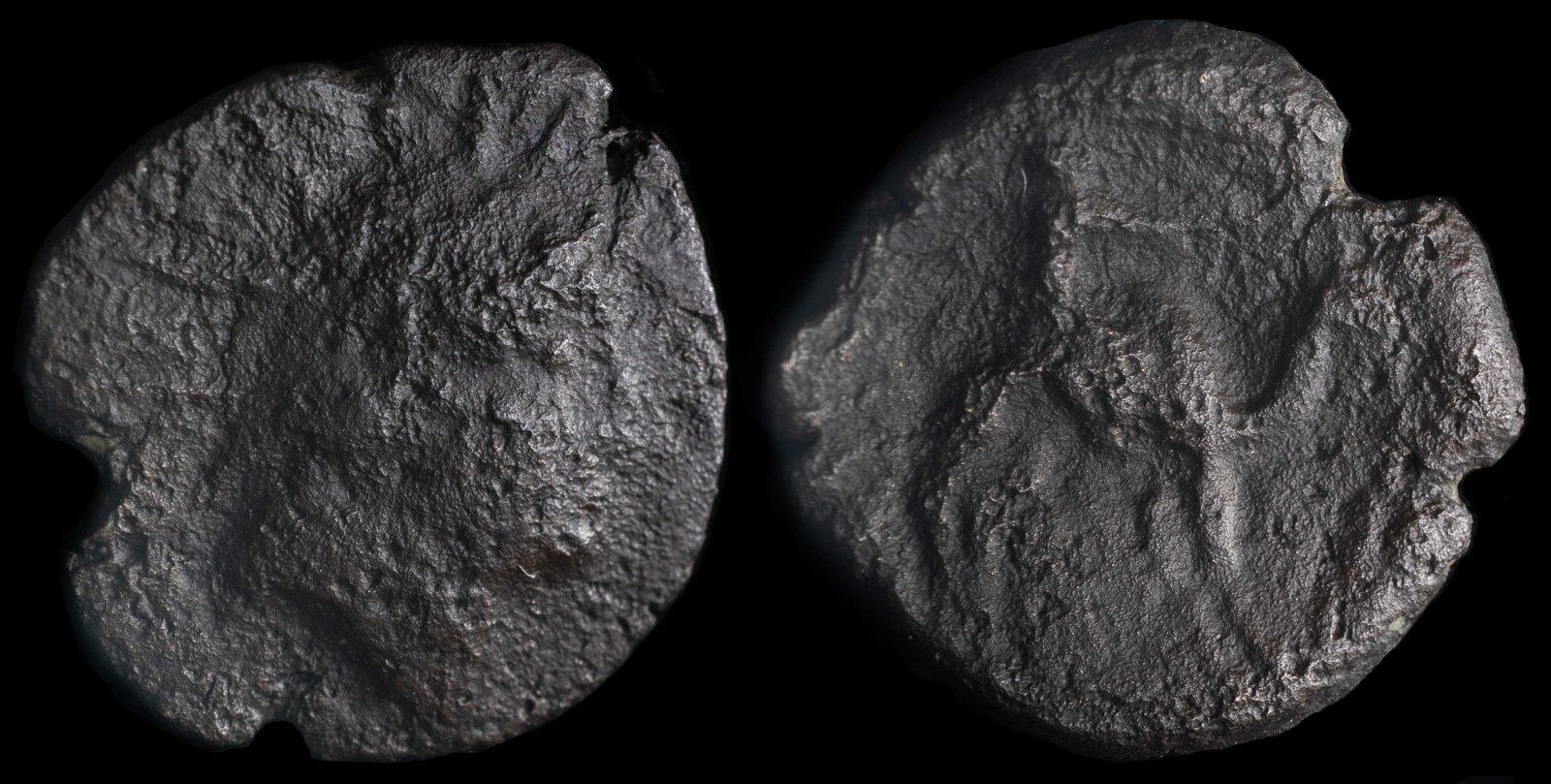
Mesopotamia, Adiabene Natounia
circa 125-75 BCE
Æ 21 mm, 4,08 g
Radiate and diademed male head (Helios-Shamash?) to right.
Rev. Rider on camelback to right, holding a short staff in his right hand; all within wreath border.
CSE II 846. Hoover, Natounia Series 1, 1-7. Seyrig, Trésor 13a
Filter coins
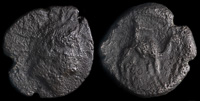
Adiabene, Mesopotamia 125-75 BCE
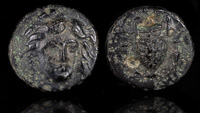
Astypalaia 4th century BCE
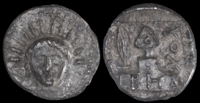
Emesa(?), Syria 460-430 BCE
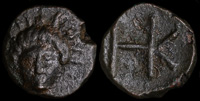
Kleitor, Arkadia 300-260 BCE
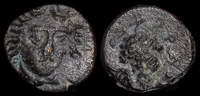
Kranaos, Caria 300-280 BCE
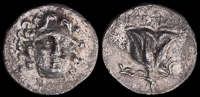
Larymna, Boeotia 171 BCE
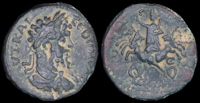
Medaba, Arabia 193-211 CE
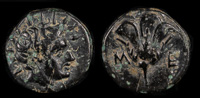
Memnon of Rhodes 360-332 BCE
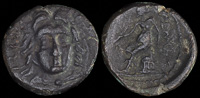
Ptolemy II of Telmessos, 196-189 BCE