Egypt
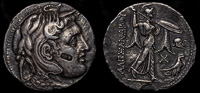
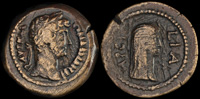
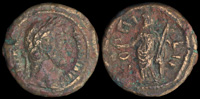
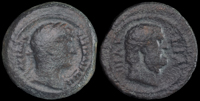
Memphis called Ankh-Tawy, meaning “life of the two lands”.
Memphis is besieged by the Hyksos.
Memphis renamed to mn-nfr, meaning “enduring and beautiful”.
Sennacherib, the Neo-assyrian emperor, approaches Pelusion but declines an attempt to take it
Memphis is captured by the Assyrians under Esarhaddon.
Memphis is again sacked and looted by the Assyrians under Ashurbanipal .
At the Battle of Pelusion, the Persians under Cambyses II take Egypt
Amyrtaeus ends the Persian occupation of Egypt and frees Memphis.
The Egyptian capital is moved from Memphis to Mendes.
October
Amyrtaeus defeated by Nepherites I at Memphis.
Approximate birth year of Nektanebo II at Sebennyte.
Nektanebo I overthrows Nepherites II and founds the 30th dynasty of Egypt, centered in Sebennyte
Pharnabazos approaches Pelusion, but declines to take it
Arrtaxerxes III Okhos successfully reconquers Egypt, ending its independence under Pharaoh Nektanebo II, who ruled from Sebennyte.
Artaxerxes III enters Memphis and installs a satrap. Nektanebo II flees to Nubia.
Nektanebo II is besieged by Artaxerxes III in Memphis. He eventually flees north.
Pelusion is taken by the Persians under a command of Greeks
Pelusion opens its gates to Alexander the Great
Alexander the Great enters Egypt, where he is hailed as a liberator. He sacrifices to the gods at Memphis.
April
Alexandria, Egypt founded by Alexander the Great.
April
Alexander the Great returns to Memphis and is informed that the oracles at Didama and Erythrai proclaimed him a son of Zeus.
June 30
Partition of Babylon. Abydos and Adramytteion come under control of Leonnatos. Egypt with Alexandria and Gaza are under Ptolemy. Baktria comes under Seleukos I Nikator. Asandros obtains Caria. Laomedon receives Koele-Syria.
Ptolemy diverts the funeral carriage of Alexander the Great to Alexandria. Archon may have colluded with him on this.
Ptolemy I declares himself Pharaoh and moves his capital to Alexandria, thus beginning the Ptolemaic Kingdom.
Pyrrhos is taken as a hostage to Alexandria in an arrangement between Demetrios Poliorketes and Ptolemy I Soter.
Pyrrhos marries Antigone, the stepdaughter of Ptolemy I Soter, in Alexandria.
Demetrios of Phaleron travels to the court of Ptolemy I Soter in Alexandria.
Ptolemy II takes power in Alexandria. He is believed to have founded the Library of Alexandria.
July
Ptolemy II Philadelphos travels to Memphis and distributes reclaimed land near there to his soldiers.
Antiochos Epiphanes defeats the forces of Ptolemy Philometor at the Battle of Pelusion
Berenike III installs Ptolemy XI as co-regent of Egypt. He then murders Berenike III and is subsequently lynched in Alexandria. Ptolemy XII becomes king.
The synagogue at Leontopolites is destroyed by Vespasian
Romans under Mark Antony defeat the Egyptians at Pelusion and take the country
Emesa aids Julius Caesar in his siege of Alexandria
September 29
Pompey arrives for Alexandria and is killed near Pelusion.
October 2
Julius Caesar arrives in Alexandria and supports Kleopatra VII over her brother, Ptolemy XIII.
Julius Caesar lays siege to Alexandria.
December
Julius Caesar and Kleopatra are besieged in Alexandria by Ptolemy XIII and Arsinoe IV.
Mithridates of Pergamon storms and takes Pelusion in an effort to support Julius Caesar
March
The forces of Julius Caesar are relieved in the Siege of Alexandria.
Marc Antony seizes 200,000 scrolls from the Library at Pergamon and gifts them to Kleopatra for the Library at Alexandria.
Octavian (later Augustus) enters Alexandria and annexes Egypt into the Roman Empire. Cleopatra VII commits suicide, ending the Ptolemaic Dynasty.
Violence between Jews and Greeks in Alexandria over the visit of King Agrippa I results in numerous synagogues being desecrated.
Approximate year of the death of Philo,a reknowned Jewish Philosopher, in Alexandria.
July
Vespasian is the first emperor since Augustus to visit Egypt. He stays in Alexandria.
The Diaspora Revolt results in major damage to Alexandria and the near annihilation of its Jewish community. Trajan uses the occasion to rebuild the city.
Emperor Marcus Aurelius visits Alexandria and addresses the city’s citizens during his reign.
Caracalla visits Alexandria and feels insulted by the locals, so he orders all men of arms-bearing age to be executed.
Queen Zenobia of Palmyra briefly controls Egypt, including Alexandria, during her revolt against Rome, but Emperor Aurelian recaptures the city later that year.
Pompey’s Pillar erected in Alexandria to honor Diocletian.
The Arian controversy begins, with the priest Arius in Alexandria challenging orthodox Christian teachings about the nature of Christ. This theological debate has widespread implications for Christianity across the Roman Empire.
Council of Nicaea is convened by Constantine to address the Arian controversy. Athanasius, a key figure from Alexandria, emerges as a defender of orthodox Christianity against Arianism.
Athanasius becomes Bishop of Alexandria, playing a central role in the Arian controversy and in shaping early Christian doctrine.
Constans and Constantius II hold the Council of Serdica to settle a dispute over the bishop Athanasius of Alexandria. There is no agreement.
Constantius II and Constans nearly start a civil war, until Constantius allows Athanasius to return to his position in Alexandria.
Athanasius is exiled from Alexandria by Emperor Constantius II due to his opposition to Arianism.
July 21
An earthquake destroys Aptera, Gortyna, Eleutherna, and Knossos on Crete. Alexandria is devastated by a tsunami, and Kyrene is also affected by the same tsunami. Kydonia is also damaged. In the Peloponnese, Messene is affected.
Athanasius dies in Alexandria, leaving a lasting legacy as a defender of Nicene Christianity against Arianism.
Theophilus, the Patriarch of Alexandria, orders the destruction of pagan temples in Alexandria, including the Serapeum, as part of the rising Christian influence and suppression of paganism following Emperor Theodosius I’s edicts against pagan worship.