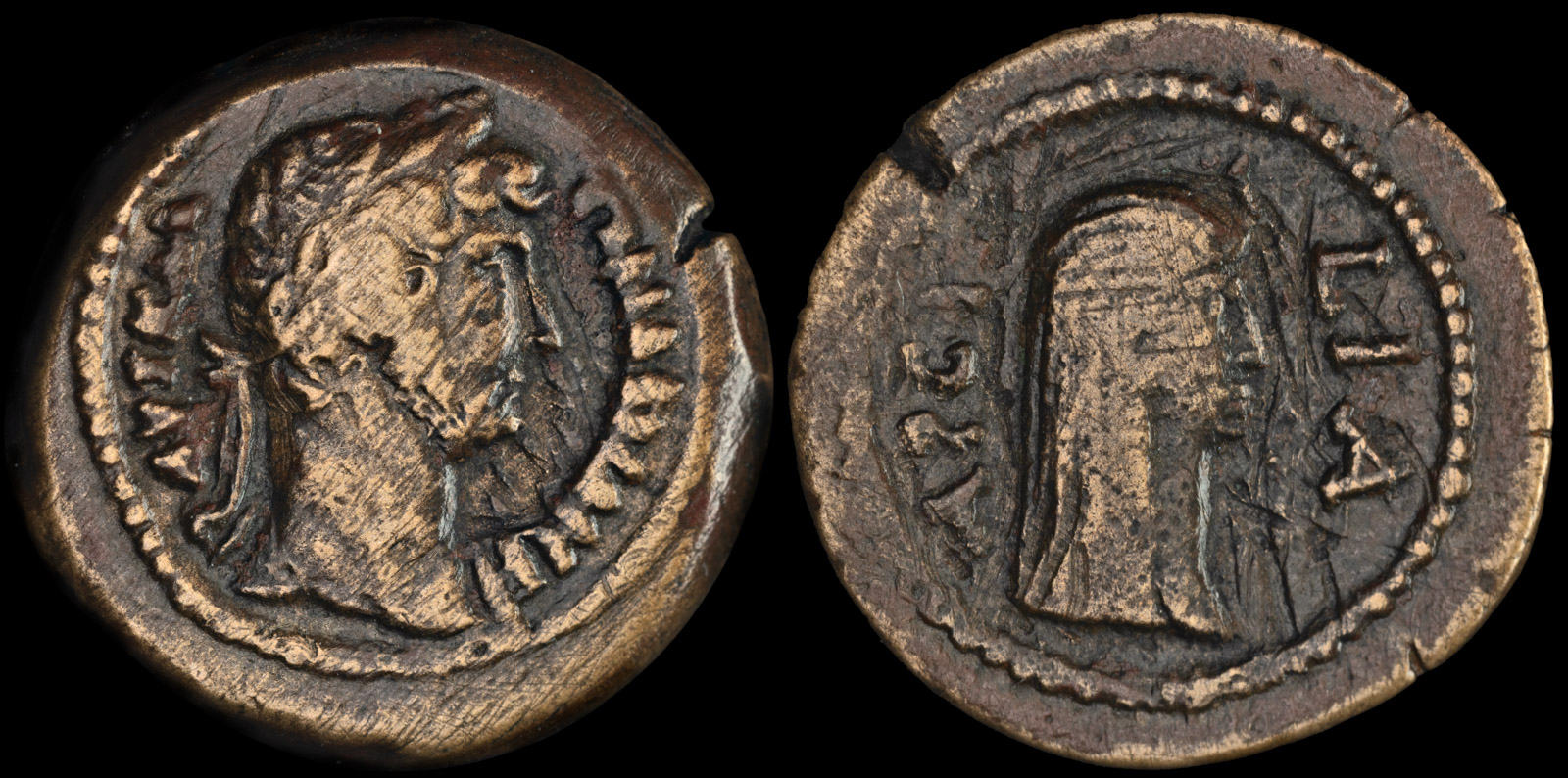
Egypt, Arsinoite Nome
Hadrian, 117-138
Obol Bronze, 19mm, 5.1 g
year 11 = 126-127 CE
ΑΥΤ ΚΑΙ ΤΡΑΙ ΑΔΡΙΑ CEΒ Laureate head of Hadrian to right, with slight drapery on far shoulder.
Rev. ΑΡCI / L ΙΑ Head of Amenemhat III to right, wearing nemes adorned with uraeus.
Dattari (Savio) 6210. K&G N6.6. RPC III 6296
The Arsinoite Nome encompassed he city of Arsinoe (Medinet el-Fayum) and the whole of the basin. It’s an ancient region, even by Egyptian standards, with evidence of occupation from at least 20,000 BCE. More sizable settlements arose in roughly 5000 BCE and eventually it housed the most significant temple to the crocodile god Sobek. Its worship involved priests feeding a specific sacred crocodile, who was replaced with another after death.
Under the Ptolemies, it was originally called Ptolemais Euergetis, until Ptolemy II renamed it to Arsinoe, in honor of his sister who also happened to be his wife. He also established a more organized town there.
This is the location where the famous death masks were found – lifelike painted images on mummies of what the individuals actually looked like. Their realism continues to astonish people today.
This is the only ancient coin known today to depict a Pharaoh, who has been identified as Amenemhat III. Most of these nome coins, which were believed to have been minted in Alexandria, were designed to depict local religious practices. In this case, it depicts the cult of Amenemhat III, for whom a temple existed in the nome.
Why was he worshipped. For one, he greatly helped the nome by investing in land reclamation projects there. He was also believed to have founded his own cults. Evidently his worship continued to the time of Hadrian.