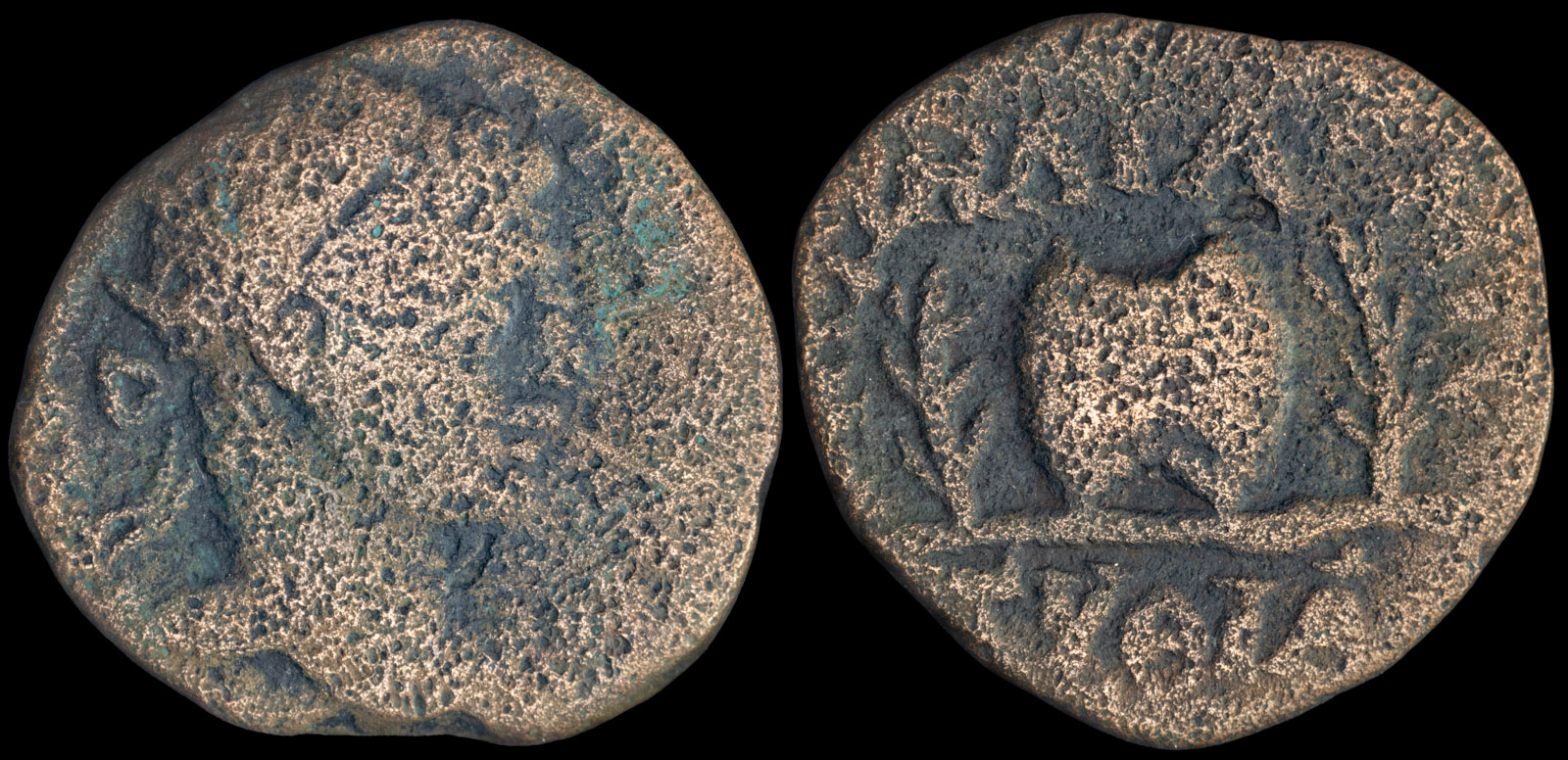
Seleucis and Pieria, Emesa
Elagabal 218-222 CE
Æ 18mm, 4,82g
Celebrating the games in honour of Helios and the Pythian Games
E = 5. AYT K M A – AN[TΩNINOC]Laureate, draped and cuirassed bust of Elagabalus to right, seen from behind.
Rev. ΜΗΤ-ΡΟ Κ ΕΜΙϹΩΝ / ΗΛΙΑ // ΠΥΘΙΑ / ᛫϶᛫ Prize crown between two palm branches.
cf. RPC VI Online 8364.4. SNG Bern 2091
Emesa is today the city of Homs, Syria. Before the Syrian Civil War, it was a major center and the third largest city in Syria.
The city was founded in roughly the 3rd millennium BCE, with the construction of a citadel, still somewhat visible in ruins. It is believed to have been constructed around 2300 BCE. By 1274, it was the scene of a major battle between Egypt and the Hittite Empire, that involved perhaps 5000-6000 chariots and may have been the largest chariot battle ever fought.
By the time of Alexander the Great, it appears that Emesa was mostly deserted. While there have been some thoughts it was founded as a hellenistic city under the Seleukids, archeology has suggested it was populated only afterwards, perhaps in the 1st century BCE.
Under the Emessene dynasty, Emesa grew rapidly in importance. However, it was only under Antoninus Pius that it began to mint its own coins. It grew in importance under Caracalla and Elagabalus, who served as priest of its temple.
Unlike many of the cities near it, Emesa had few christians and remained pagan until fairly late. Aurelian visited it to pay thanks to El-Gabal at his temple.
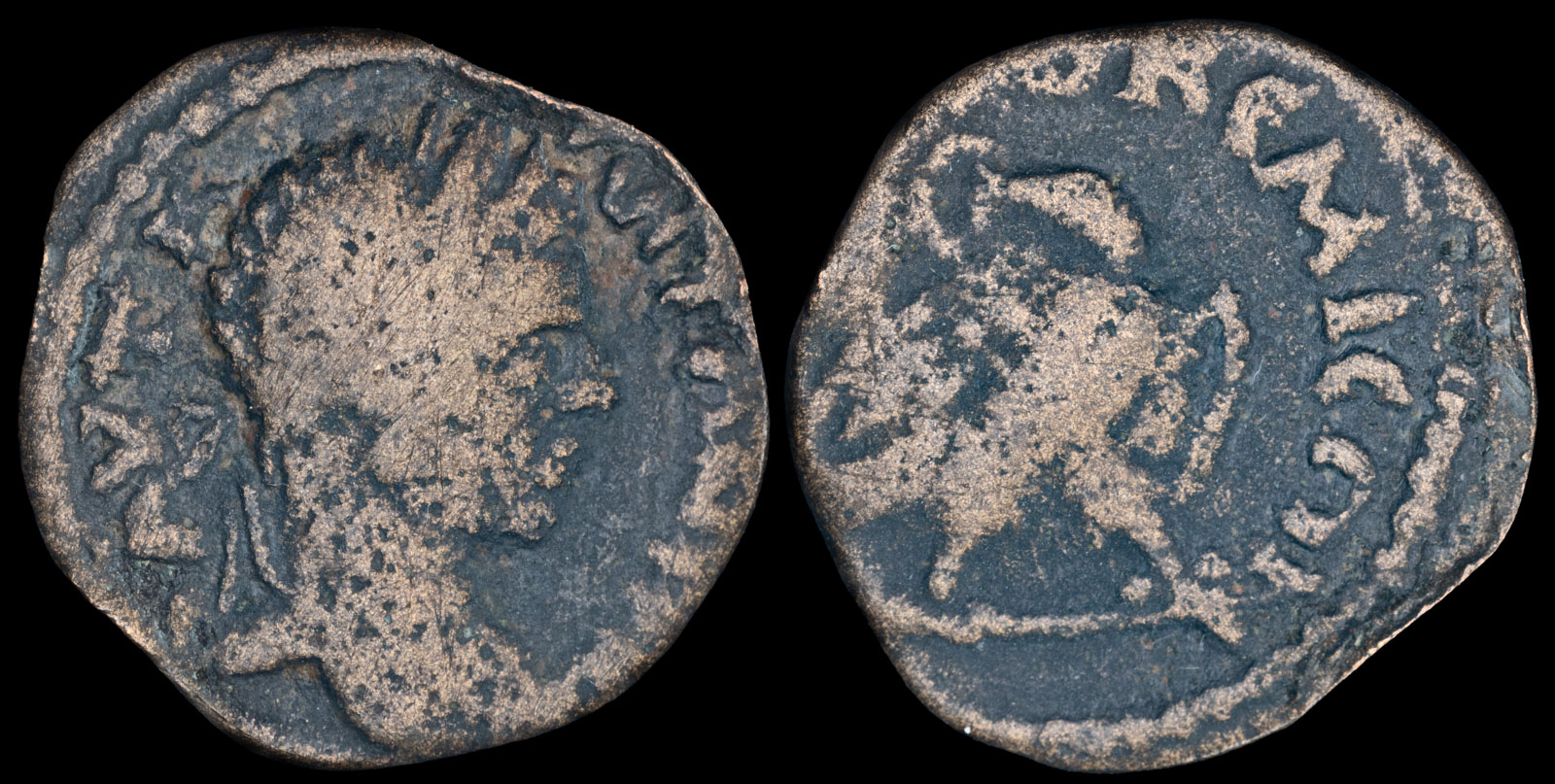
Emesa, Syria
Elagabalus 138-161 CE
Ae 18mm 3.7g
Obverse: ΑΥΤ Κ (?) ΑΝΤΩΝΙΝΟϹ; radiate head of Elagabalus, right
Reverse: ΜΗΤΡΟ Κ ΕΜΙϹΩΝ Ε; eagle facing, head left, holding wreath in beak and spreading wings
BMC 19, Nurpetlian, Orontes Valley 46 (part); RPC VI 8357 (2 specimens)
A battle between Ramesses II of Egypt and the Hittite Empire takes place near Emesa. It may have been the largest chariot battle ever fought.
Emesa aids Julius Caesar in his siege of Alexandria
Alexander of Emesa seizes power and puts Iamblichus I to death
Heliopolis comes under the control of Emesa
Emesa assists Rome in the siege of Jerusalem
Potential date for incorporation of Emesa into Roman Empire
Death of Soheamus of Emesa
Construction of Tomb of Sampsigeramus at Emesa