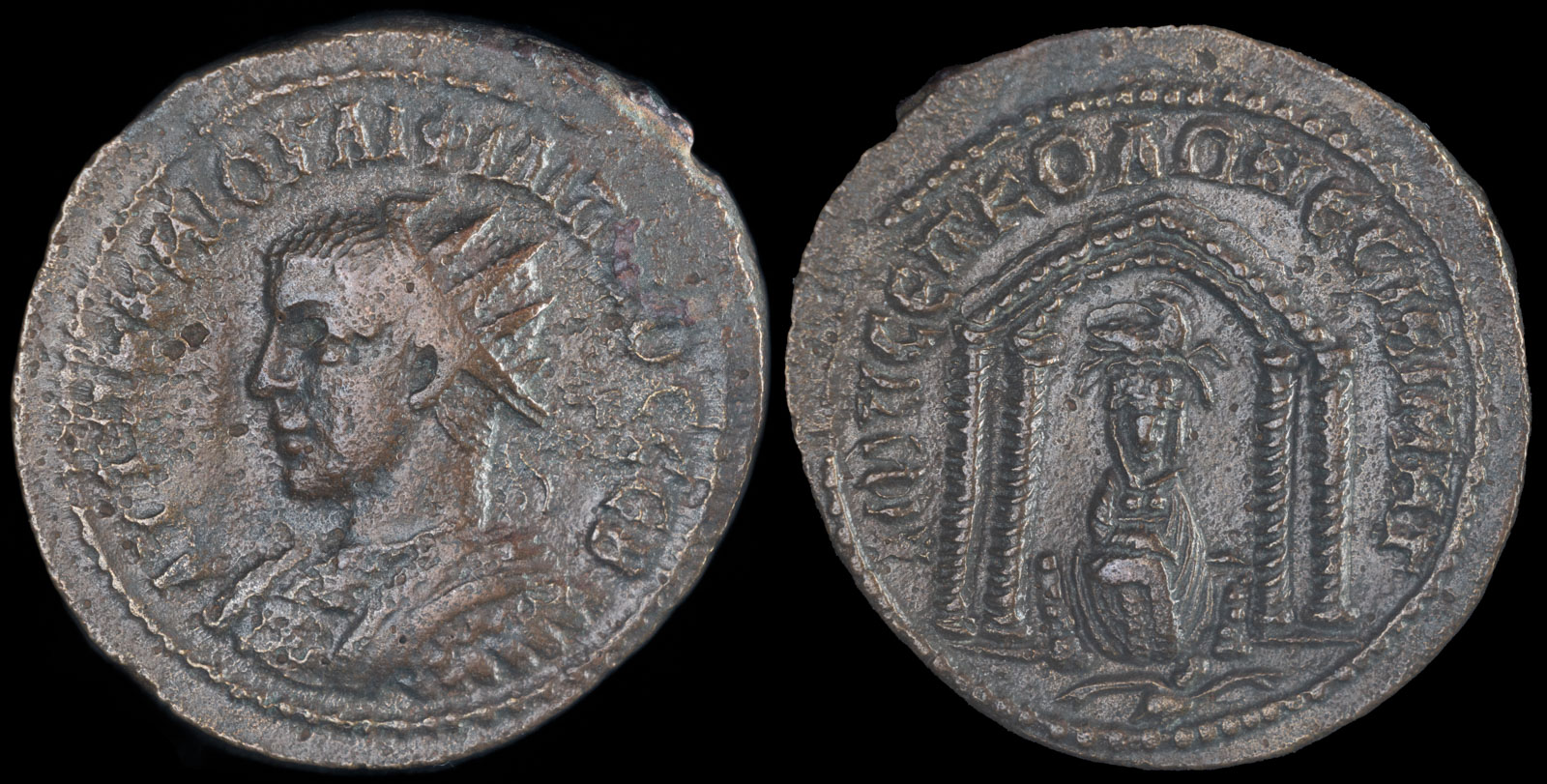
Mesopotamia. Nisibis
Philip II 47-249 CE
Æ 27mm, 12,31g
Obv: AVTOK K M IOVΛI ΦIΛIΠΠOC CЄB. Laureate and cuirassed bust left.
Rev: IOV CЄΠ KOΛΩ NЄCIBI MHT. Statue of Tyche seated facing, with ram leaping right, head left, above; all within tetrastyle temple below which half-length river-god Mygdonius swims to right.
SNG Copenhagen 242; BMC 17-19
Nisibis is located at the modern day city of Nusaybin, Turkey and is close to the border with Syria. It has an extremely long history, having been part of the Neo-Assyrian and Persian Empires before coming under Alexander the Great in 332 BCE. After it was captured by Trajan in 115 CE, it alternated between the Parthians and Romans, then was besieged multiple times unsuccessfully by the Sassanids.
First mention of Nisibis
Nisibis is annexed to the Neo-Assyrian empire
The Roman general Lucullus takes Nisibis
Nisibis captured by Trajan
Rome loses Nisibis to Parthia
Nisibis taken by Septimius Severus
The last battle between Rome and Parthia is fought near Nisibis
By the Treaty of Narseh, Nisibis comes under Roman control
Nisibis unsuccessfully besieged by the Sassanids
Shapur besieges Nisibis for 78 days, then lifts it
The Sassanids unsuccessfully attempt to take Nisibis
Nisibis ceded to the Sassanid Empire