Ram
View All Tags
One of the most significant associations of the ram in Greek mythology is its connection to Chrysomallos, the golden-fleeced ram. According to the myth, Chrysomallos was sent by Zeus to rescue Phrixos and Helle, and after their journey, Phrixos sacrificed the ram to Zeus and hung its golden fleece in a sacred grove. This myth became central to the story of the Argonauts, as Jason and his crew sought the Golden Fleece in their legendary adventure. The ram, therefore, symbolized divine protection, the pursuit of noble quests, and the promise of rewards. It became emblematic of heroism, leadership, and the sacred.
In other contexts, the ram was connected to Poseidon, the god of the sea, and was often used in regions where Poseidon’s cults were strong, such as in Delphi. As Poseidon was also considered a protector of livestock and sailors, the ram could represent the god’s dual role in both agricultural and maritime life. In some Greek cities, coins depicting the ram likely alluded to the fertility and wealth associated with these lands and the protection offered by Poseidon.
Furthermore, the ram was also a symbol of strength, vigor, and masculinity. On coins, it could signify the power of the ruler or the city that issued the coin, and its depiction was used to communicate authority and security.
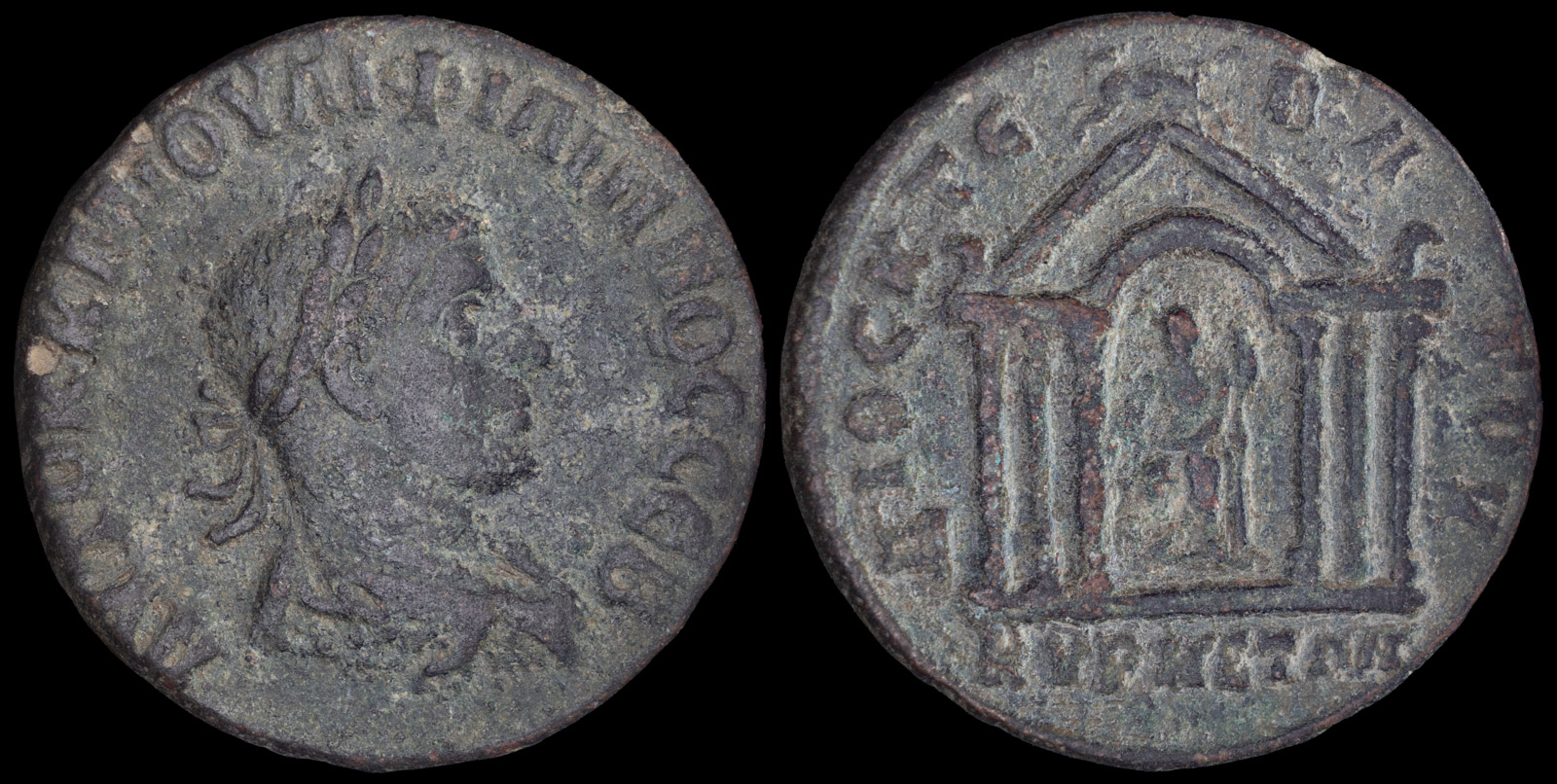
Cyrrhestica, Cyrrhus
Philip II. 247-249 CE
AE 28mm 13.16g
Obv: AVTOK K M IOVΛI ΦΙΛΙΠΠOC CЄB, laureate, draped and cuirassed bust right
Rev: ΔIOC K[A]TЄBATOV / KVPHCTΩN, Hexastyle temple of Zeus Kataibates, within which is the god seated facing, holding a thunderbolt and sceptre, eagle at his feet; above temple, ram leaping left, head right.
Butcher 21c
Filter coins
Cyrrhus, Cyrrhestica 247-249 CE
Gonnos, Thessaly ca 350 BCE
Halos, Thessaly 3rd century BCE
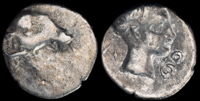
Kasolaba, Caria 400-350 BCE
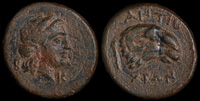
Kebren, Troas 281-261 BCE
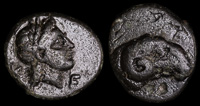
Kebren, Troas 400-310 BCE
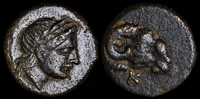
Kebren, Troas 400-310 BCE
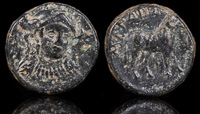
Klazomenai, Ionia 4th century BCE
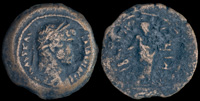
Libya Nome, Egypt 117-138 CE
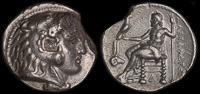
Memphis, Egypt 323/2 BCE
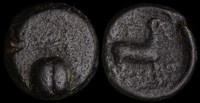
Methylion, Thessaly 4th century BCE
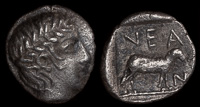
Neandria, Troas 350 BCE
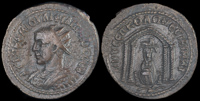
Nisibis, Mesopatamia 247-249 CE

Oinoia, Ikaros, Ionia after 300 BCE

Patrae, Achaia 198-219 CE
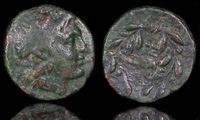
Pellene, Achaia 350-300 BCE
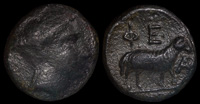
Pheneos, Arkadia 350-300 BCE
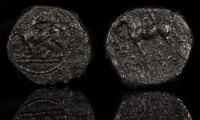
Pumiathon of Kition 362-312 BCE
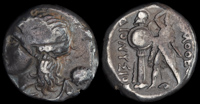
Timotheos & Dionysios, Herakleia Pontika 345-337 BCE