Nemes
View All Tags
The nemes was closely associated with the pharaoh and emphasized the ruler’s sacred and political status. It was often worn together with the **uraeus**, the rearing cobra placed above the forehead, which symbolized royal protection and divine authority. In some representations, the nemes appears with the ceremonial false beard, further reinforcing the ruler’s identification with divine kingship. One of the most famous surviving examples is the funerary mask of Tutankhamun, whose gold-and-blue striped nemes has become one of the best-known images of ancient Egypt.
The headdress also played an important role in Egyptian sculpture. The Great Sphinx of Giza is shown wearing a nemes, linking the monumental figure directly with royal power. Statues of pharaohs frequently use the headdress to frame the face and create the idealized, symmetrical appearance characteristic of Egyptian royal portraiture. Its broad side panels and carefully arranged folds gave the ruler a visually imposing silhouette while distinguishing him immediately from ordinary individuals.
The nemes was therefore more than an item of dress. It was part of a carefully developed visual language through which Egyptian rulers expressed legitimacy, divine favor, and continuity with earlier pharaohs. Its repeated appearance over many centuries demonstrates how strongly Egyptian kingship depended on traditional symbols. Even when artistic styles or dynasties changed, the nemes remained an instantly recognizable sign that the person depicted possessed the unique and sacred status of the pharaoh.
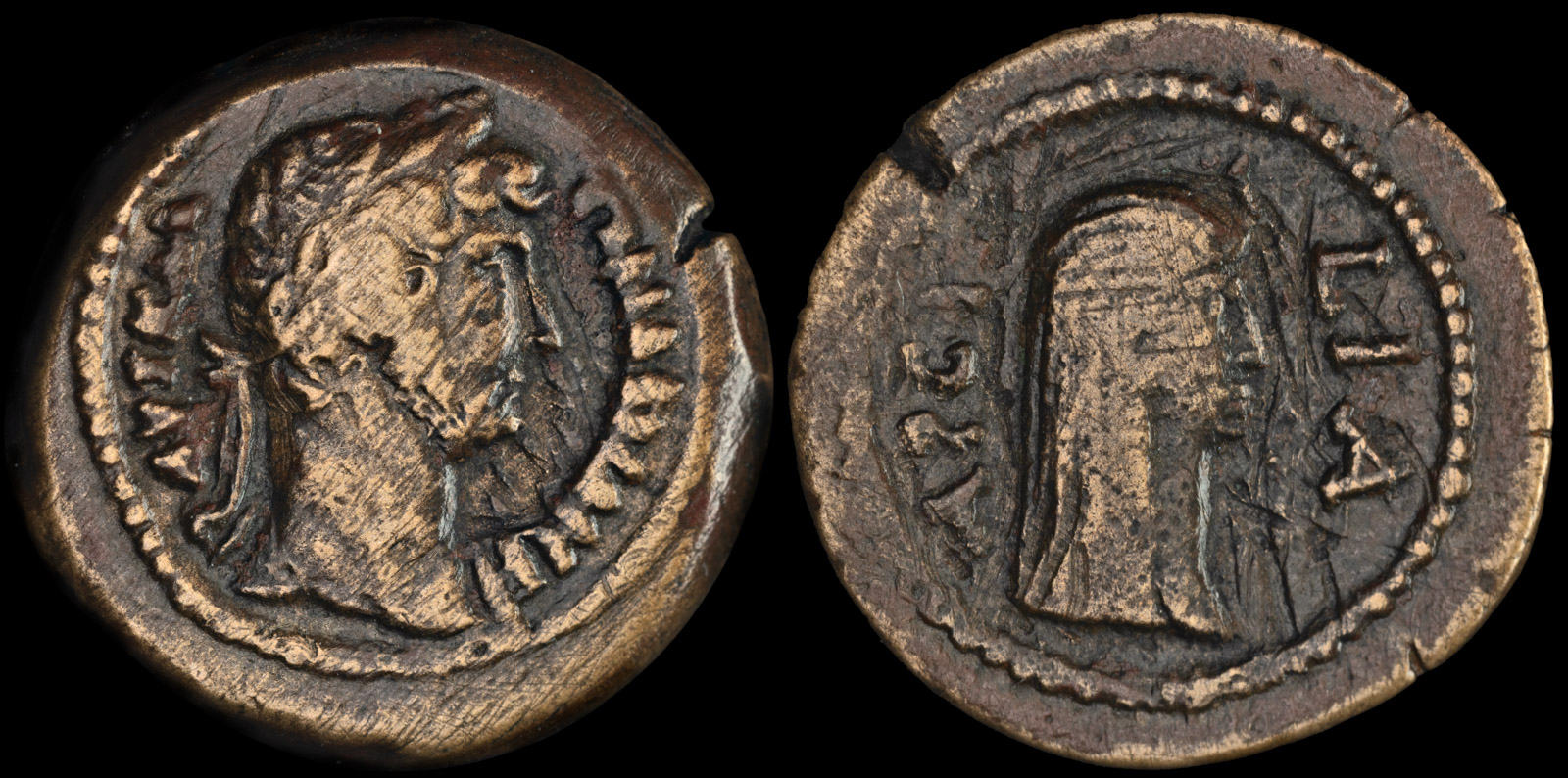
Egypt, Arsinoite Nome
Hadrian, 117-138
Obol Bronze, 19mm, 5.1 g
year 11 = 126-127 CE
ΑΥΤ ΚΑΙ ΤΡΑΙ ΑΔΡΙΑ CEΒ Laureate head of Hadrian to right, with slight drapery on far shoulder.
Rev. ΑΡCI / L ΙΑ Head of Amenemhat III to right, wearing nemes adorned with uraeus.
Dattari (Savio) 6210. K&G N6.6. RPC III 6296