Bottle Cap
View All Tags
The bottlecap form seems to emerge as a continuation of experimentation in coin design during the Hellenistic period, when local mints were not just concerned with economic function but also regional identity and anti-counterfeiting methods. Instead of smooth round flans, these coins were struck on planchets with serrated rims—sometimes up to twenty or more triangular notches. Examples from Maroneia often display the wine-god Dionysos on one side and a bunch of grapes or kantharos on the other, hinting that the serrated design may have been used to differentiate their coinage in the wine-export trade that made the region wealthy.
Scholars disagree on the true purpose of the serrations, and several theories exist:
Anti-counterfeiting measure
Many numismatists believe the notched edges were meant to prevent forgeries. If someone tried to plate a bronze core with silver, cutting into a serration would expose the fraud. This theory is plausible but not conclusive since few bottlecap coins show attempts at plating.
Symbolic or aesthetic identity
Others argue that the shape had symbolic meaning tied to local industry. In wine centers like Maroneia and Thasos, the serrated edge may have evoked the toothed leaves of the grapevine or simply made their coinage recognizable across trade networks.
Technical experimentation
The Hellenistic age was a time of minting innovation. This might have simply been a regional artistic experiment in flan production that persisted because it was distinctive and popular.
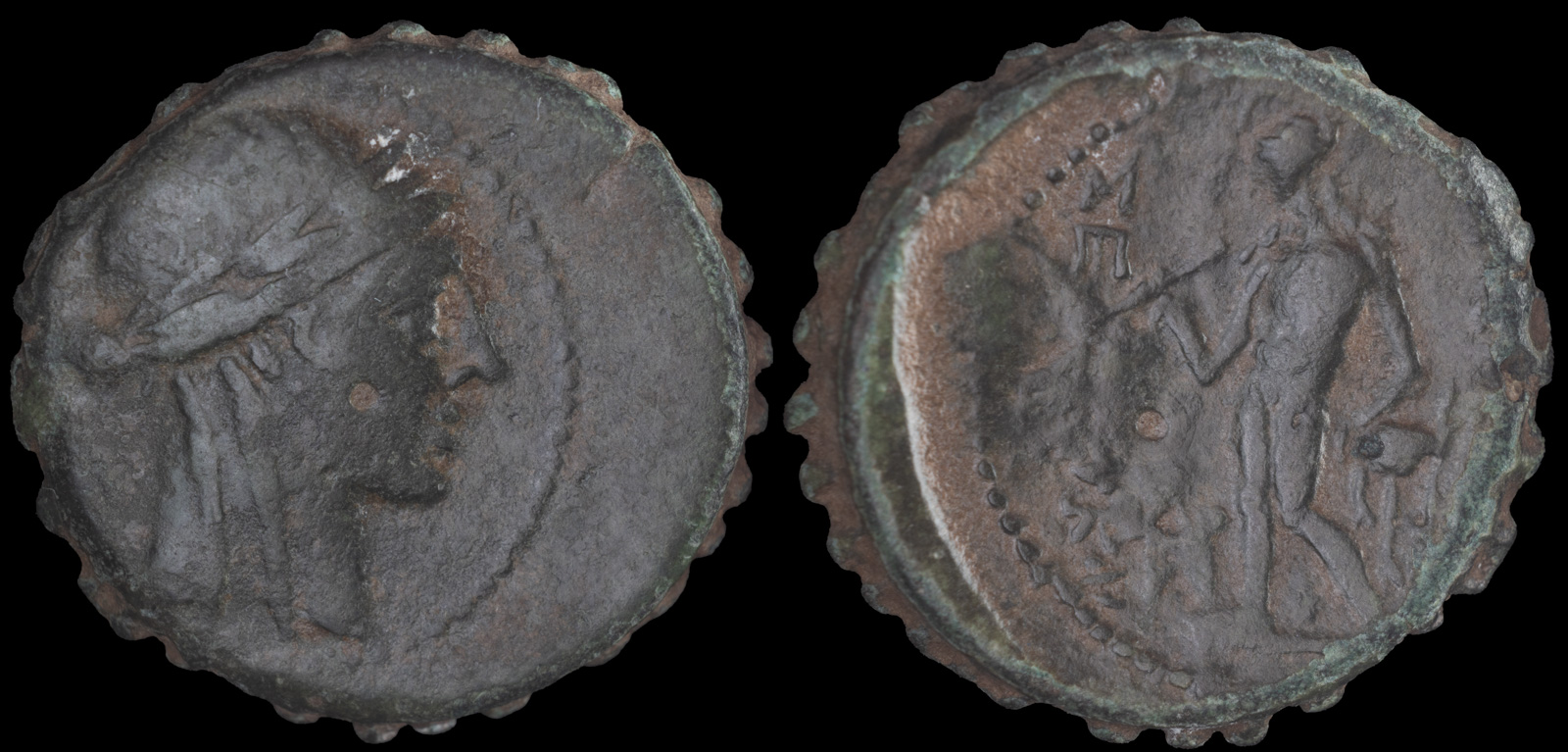
Aitolia, Aitolian League
ca 205-150 BCE
Ae Hemiobol 18.7mm, 3.2g
Obv. Athena wearing Corinthian helmet right
Rev. AITΩ-ΛΩN; Herakles, naked, standing left head right, holding lion-skin and club; monogram at upper left, M in field
BCD 577 var