Pyre
View All Tags
A notable example comes from the reign of Emperor Antoninus Pius, whose coins struck after his death in 161 CE feature a detailed image of his funeral pyre. These coins show a tiered structure, often depicted with multiple levels, decorative columns, and a flame at the top, symbolizing the emperor’s deification through cremation. Such imagery visually conveyed the transition of the emperor from mortal to divine, a concept central to the Roman imperial cult. The coins were a powerful way to broadcast this transformation across the empire, ensuring that subjects associated the deceased ruler with divine status and continuity.
These pyre depictions were not meant to portray literal funerals in every detail, but rather to evoke the grandeur and ritual of an imperial passing. The stylized architecture of the pyres echoed both Roman engineering and religious symbolism, blending realistic elements with idealized forms. In this way, coins became miniature monuments—portable, state-sanctioned memorials that reinforced collective memory and political order across the diverse regions of the Roman world.
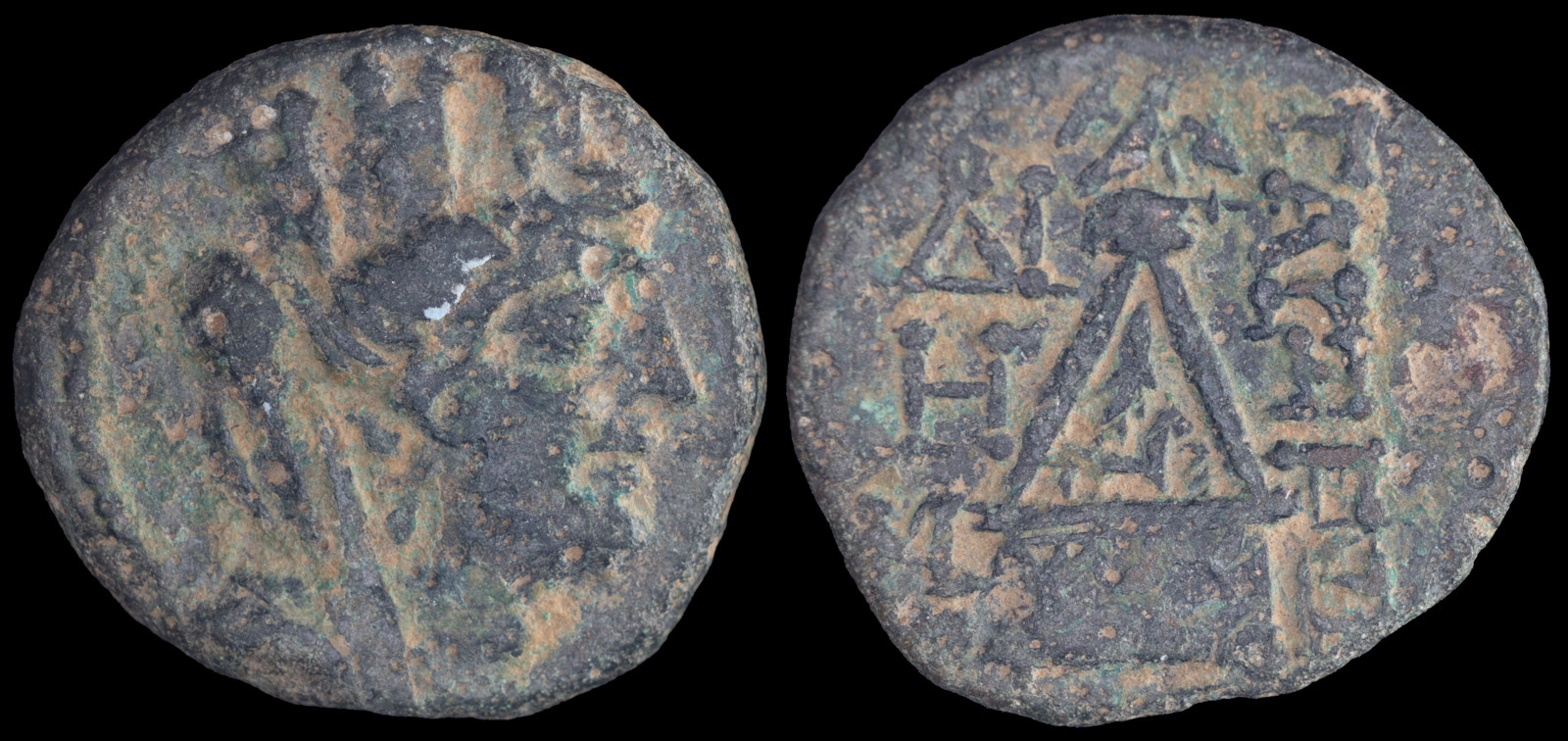
Cilicia, Tarsos
Ca 150 BCE
Ae 19mm 6.32g
Obv: Turreted head of Tyche
Rev: Pyre of Sandan in the form of a pyramid, Sandon standing on a lion, all on decorated base. Eagle atop pyramid.
SG #5672