Aphlaston
View All Tags
Beyond its practical use in navigation, the aphlaston also held symbolic meaning within Greek and Roman cultures. In particular, the sail became a symbol of journey and direction, often representing the connection between human effort and the forces of nature, especially the wind and sea. The ancient Greeks and Romans often associated the sea with the unpredictable and uncontrollable forces of fate and destiny, and the aphlaston, as part of the ship, could be seen as a metaphor for human endeavor in the face of these vast, uncontrollable elements. Ships with aphlastons thus symbolized not only physical travel but also the broader journey of life, where success often depended on understanding and cooperating with the natural world.
In addition, the aphlaston had military connotations, particularly during naval engagements. The ancient Greeks and Romans placed great importance on naval power, and the ships with aphlastons were crucial in the success of many naval campaigns. For example, the Athenian triremes and the Roman quadriremes used sails as part of their overall design, with the aphlaston enabling greater maneuverability and speed. In this context, the sail could be seen as a symbol of strength and victory, with the ability to control the wind becoming a reflection of the empire’s naval might. The symbolism of the aphlaston, then, extended to the representation of power and military supremacy, with its strategic use on warships playing a pivotal role in battles that determined the fate of empires.
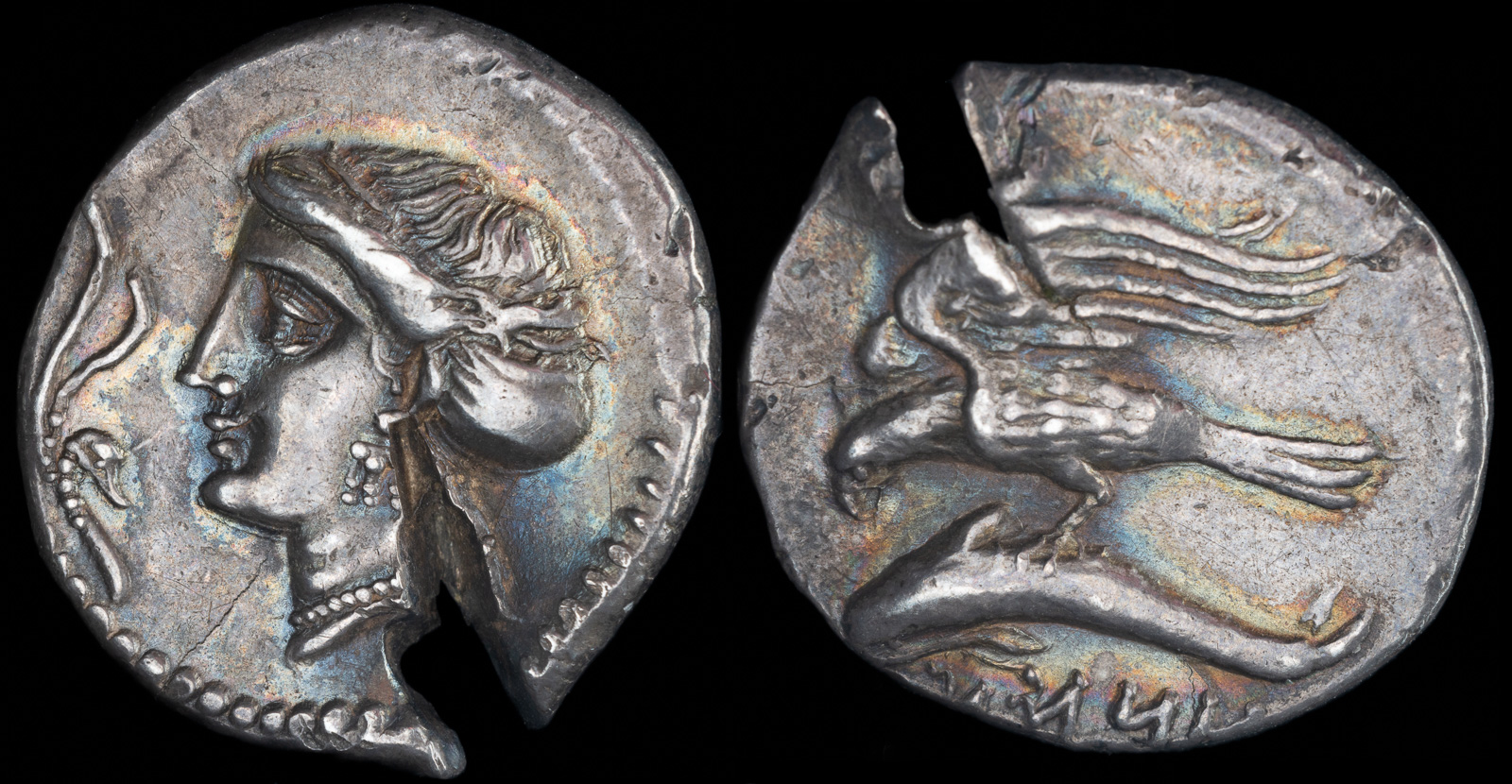
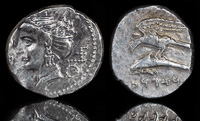
Persian satrap Abdasan
Paphlagonia, Sinope
circa 360-330 BCE
AR Drachm 20mm, 5.09g. 9h
Head of nymph Sinope left, wearing triple-pendant earring, necklace and sakkos; aphlaston before /
Aramaic legend ‘BDSSN below eagle standing to left on dolphin.
SNG Stancomb 760; Recueil général Pl XXIV, 27; SNG BM Black Sea 1356-8; HGC 7, 433
Abdasan, 360-330 BCE
Anaia, Karia 300-200 BCE
Anemurium, Cilicia mid 1st century CE
Ariarathes I 325 BCE

Kyrene 282-250 BCE
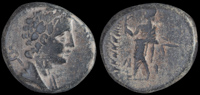
Marathos, Phoenicia 173/2 BCE