Mesopotamia, Singara
Gordian III (238-244 CE)
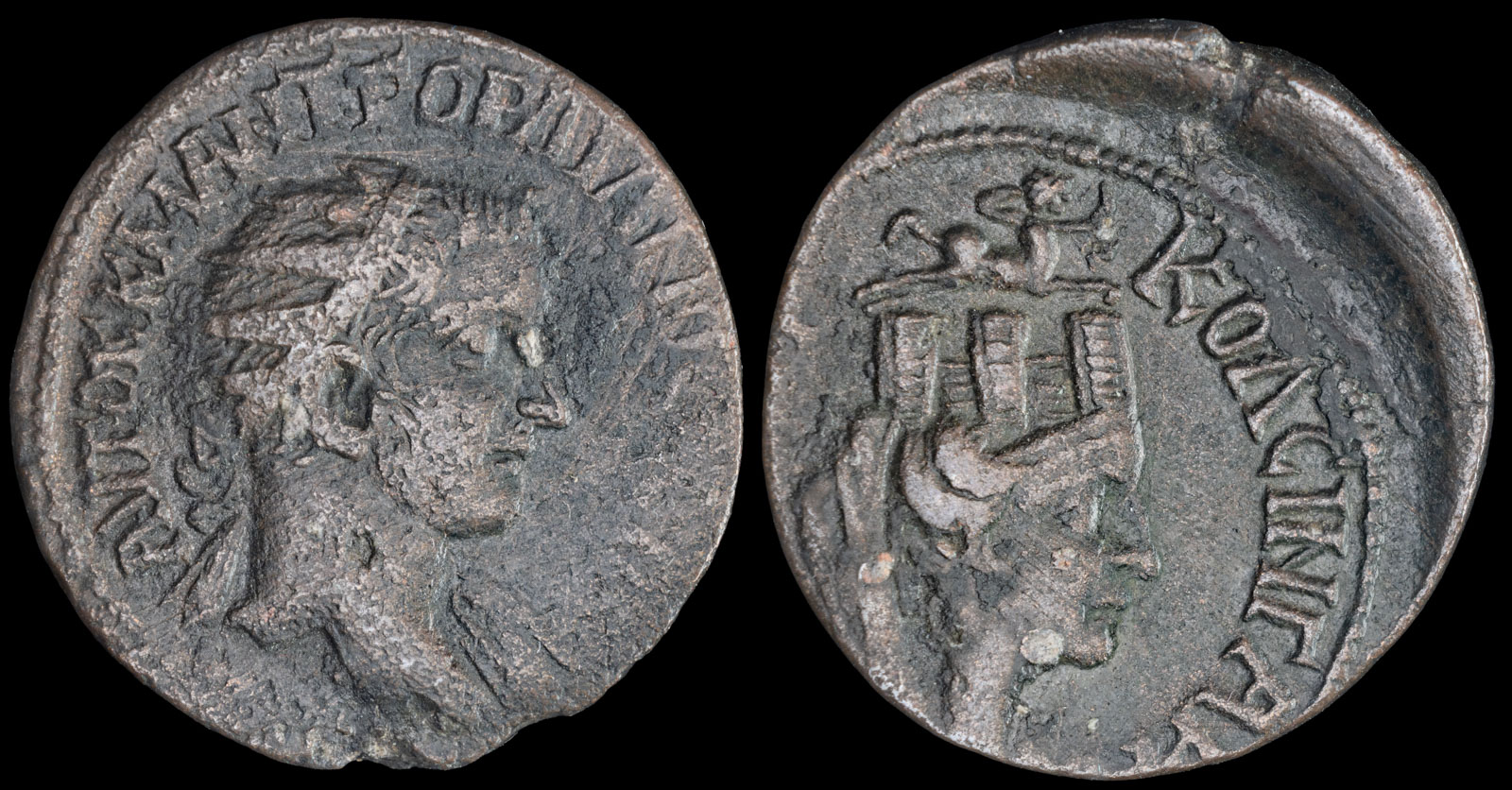
AE 25.02mm 11.39g
Obverse: AVTOK K M ANT ΓOPΔIANOC [CЄB], laureate and draped bust of Gordian right
Reverse: [AVP CЄΠ] KOΛ CINΓAPA, turreted veiled and draped bust of Tyche right, the centaur Sagittarius leaping right and shooting bow above
SNG Copenhagen 255
Ex Ed Flinn Collection
Singara is now Sinjar, Iraq, and was a heavily fortified town on the northern border of Mesopotamia. It was the camp of the Legio I Parthica, which is emphasized by the depiction of Sagittarius here, since he was the symbol of that legion. Note that there is some confusion, though, since it’s believed that this coin depicts Sagittarius, while the symbol of the Legio I Parthica was simply a centaur.
It was first taken under Trajan in 114 CE, but was soon abandoned. During the reign of Septimius Severus, it was taken for good until sacked by the Sassanians in 360 CE. The area around it was reported to be extremely arid.
The Roman general Quietus, under orders from Trajan, captures Singara
The Romans abandon Singara
Singara again captured in the Parthian campaign under Septimius Severus
Singara is besieged by Shapur I
Sasanians sack Singara