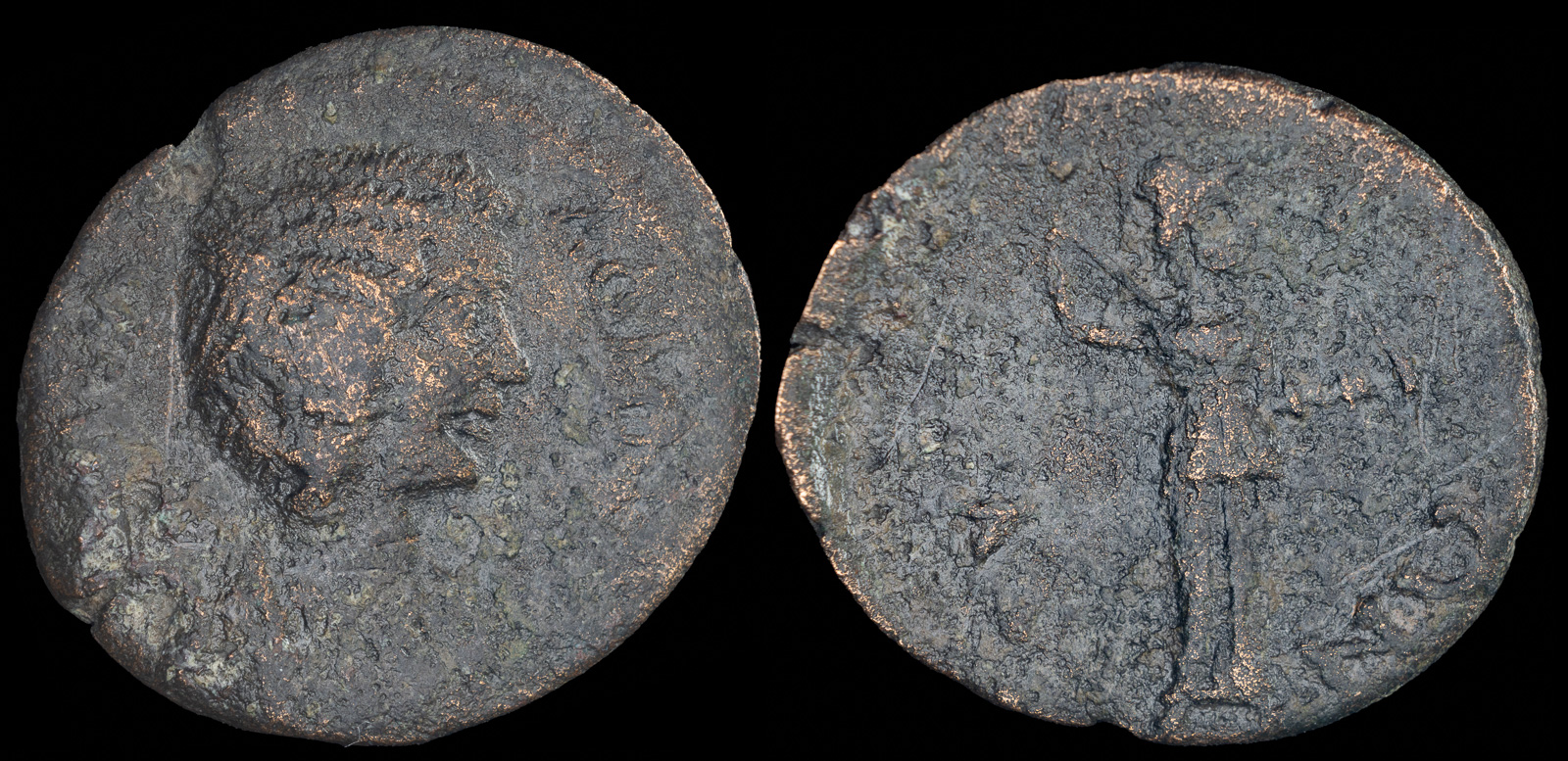
Messenia, Pylos
Julia Domna, Augusta. 193-217 CE
AE Assarion 4.61, 22mm
Obv.: ΙΟΥΛΙΑ ΔΟΜΝA, draped bust right
Rev.: Athena standing right, holding shield and hurling spear
BCD 765.3
Ex Roland Dauwe Collection of 3rd Century Empresses
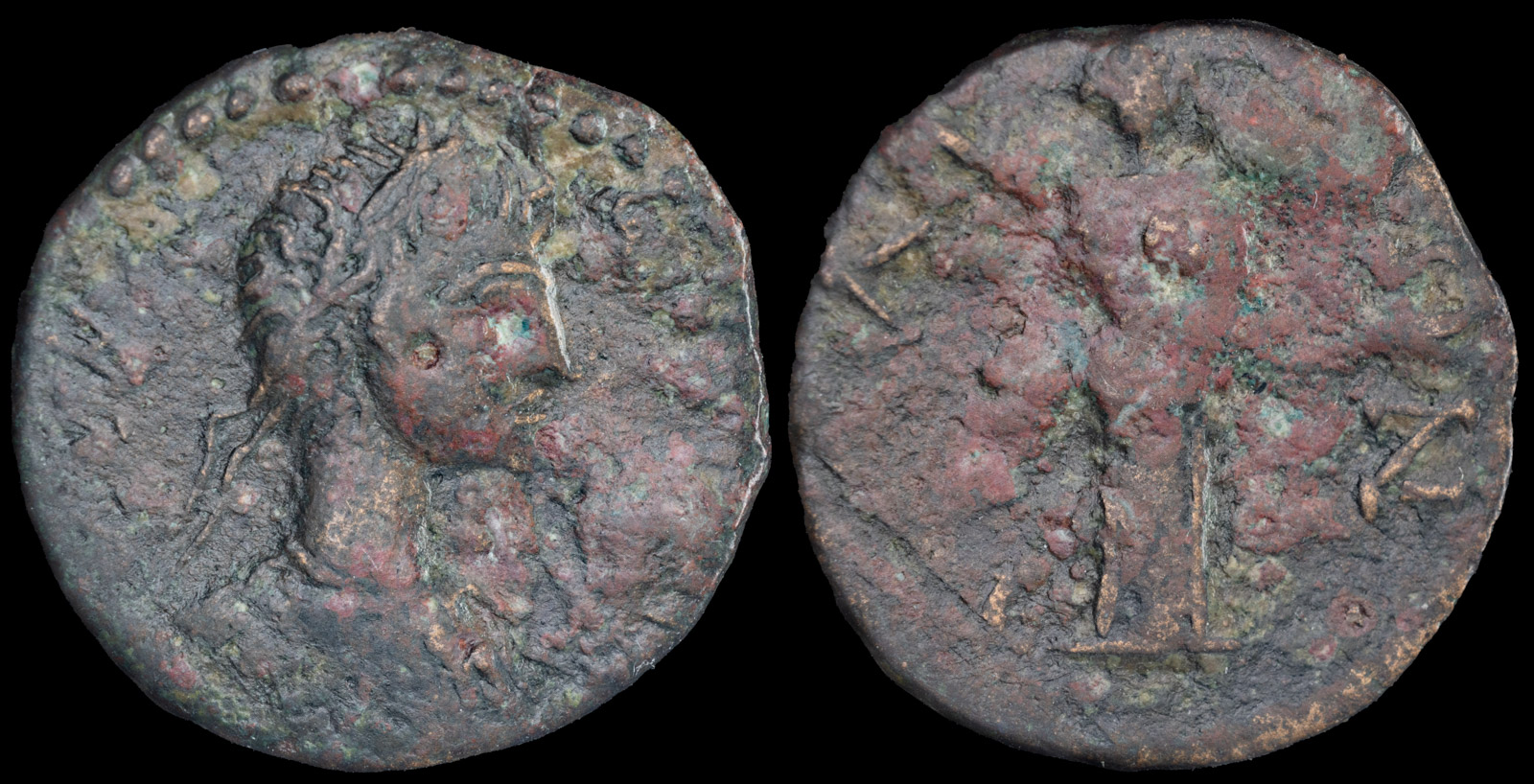
Messenia, Pylos
Caracalla, circa 198-209 CE
Assarion Bronze, 20mm, 3.72g, 9h
AV M ANTΩNINO Laureate, draped and cuirassed bust of Caracalla to right
Rev. ΠVΛΙΩΝ Athena standing to left, with patera and spear
BCD Peloponnesos 819; NCP p. 69 No. 1
Ex collection of John Aiello
Ex BCD, Collection
Ex Frank Kovacs 1979
Pylos was the home of the famed Nestor from the Iliad and the Odyssey. It was here that Telemachos sailed in the Odyssey for word of his father. The area was also used as a filming location in the recent movie.
It is among the most ancient in Greece, with archeological evidence of habitation from at least 6500 BCE. Pylos then became an important capital in the Mycenaean kingdom, the time where the Odyssey takes place. During that time, Pylos had a population of between 50,000 to 100,000 people.
Today, it is home to the well-known tourist attraction, the Palace of Nestor, which dates to roughly the 14th century BCE and is advertised as featuring in the Iliad. It remains among the best preserved Mycenaean palaces in Greece.
During Greek times, Pylos was one of the last holdouts against the Spartans in the Second Messenian War. Many of its inhabitants then migrated to Sicily with the rest of the Messenians.
Pylos featured in several important battles between Athens and Sparta in the Peloponnesian War. Interestingly, the coinage of Pylos is all known from Roman times. Pausanias visited the city and reported of its temples, but it does not appear to have been an important city at the time.
Pausanias wrote of the city when he visited:
It contains a sanctuary of Athena with the title Coryphasia, and a house called the house of Nestor, in which there is a painting of him. His tomb is inside the city; the tomb at a little distance from Pylos is said to be the tomb of Thrasymedes. There is a cave inside the town, in which it is said that the cattle belonging to Nestor and to Neleus before him were kept