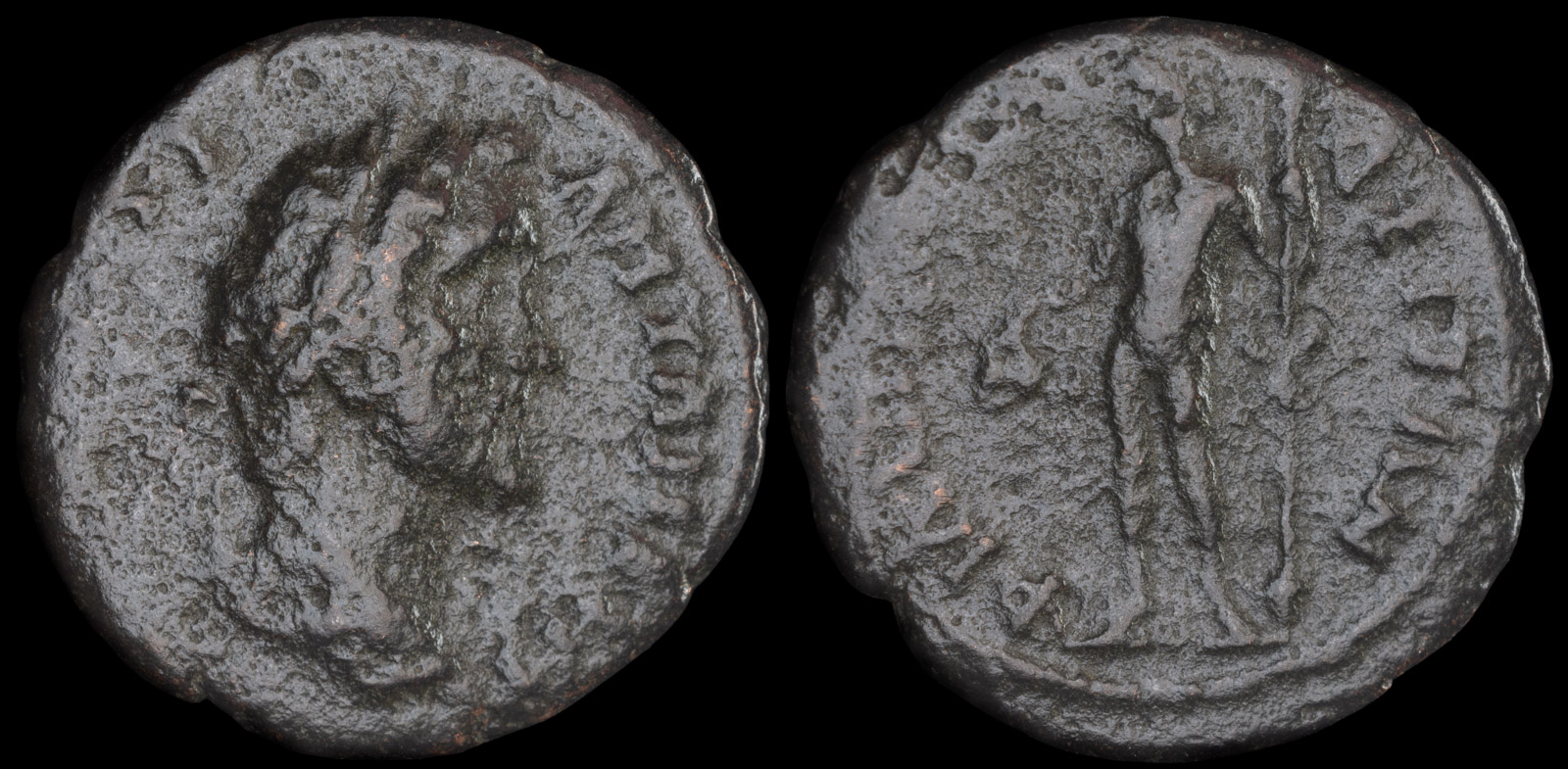
Thrace. Philippopolis
Antoninus Pius 138-161 CE
Æ 17mm, 2,69g
Obv: ΑΥ Τ ΑΙ ΑΔΡI ΑΝΤΩΝΕΙΝO. Laureate head of Antoninus Pius, right.
Rev: ΦΙΛ]ΙΠΠΟΠΟΛΕΙΤ. Nude Dionysus standing, left, holding cantharus and long filleted thyrsus.
RPC 7441; Mouchmov, Philip. 66–70 and 75
Philippopolis is modern day Plovdiv, Bulgaria. Lucian in his day called it “the largest and most beautiful of all cities.” It was founded by the Macedonian king Philip II, though archeological remains have been found down to the sixth millennium BCE, and at one time it had a population of 100,000.
It was renamed to Philippopolis after taken by Philip II in 342 BCE, and much later it fell into Roman control. Although it was the largest of Thracian cities during Roman times, it was not the capital of Thrace, which was Perinthus. During the Flavian dynasty, it was renamed again to Flavia-Philippopolis. It was visited by Hadrian.
Thrace, including Philippopolis, becomes part of the Persian Empire
The Persian general Mardonius rules Thrace, including Philippopolis
Philippopolis becomes part of the Odrysian Kingdom
Philip II takes Philippopolis and renames it for himself
Approximate date of the destruction of Philippopolis by the Celts
Philippopolis conquered by Philip V of Macedon
The Roman general Lucullus sacks Apollonia Pontika and takes Kallatis and Philippopolis.
Thrace is annexed by the Roman Empire, bringing Agathopolis, Aigiospotamoi, Kabyle, Deultum, Philippopolis, and Perinthos under its rule.
A second city wall is constructed in Philippopolis.
Philippopolis besieged and destroyed by the Goths. 100,000 people are slain or taken captive.
Philippopolis destroyed again by Attila