Phemios
View All Tags
Phemios’s most dramatic moment comes at the end of the epic, when Odysseus finally slaughters the suitors. Knowing that innocents may also be killed in such a sweeping act of vengeance, Phemios throws himself before Odysseus and begs for mercy. He explains that he sang “under compulsion.” His life, he argues, has been spent learning songs from the gods, not serving the violent ambitions of the suitors. Telemachus supports him, confirming that Phemios acted unwillingly. Odysseus, recognizing the truth of this and respecting the sanctity of a bard’s craft, spares him.
In many interpretations, Phemios represents the power and vulnerability of the poet. He survives not by force but by truth and art. His story becomes a reflection on the role of storytelling in the ancient world. Even amid chaos, violence, and shifting loyalties, the bard remains a vessel for memory. Odysseus’s decision to spare Phemios is not only an act of justice but an acknowledgment that poetry and song are essential threads holding the fabric of civilization together.
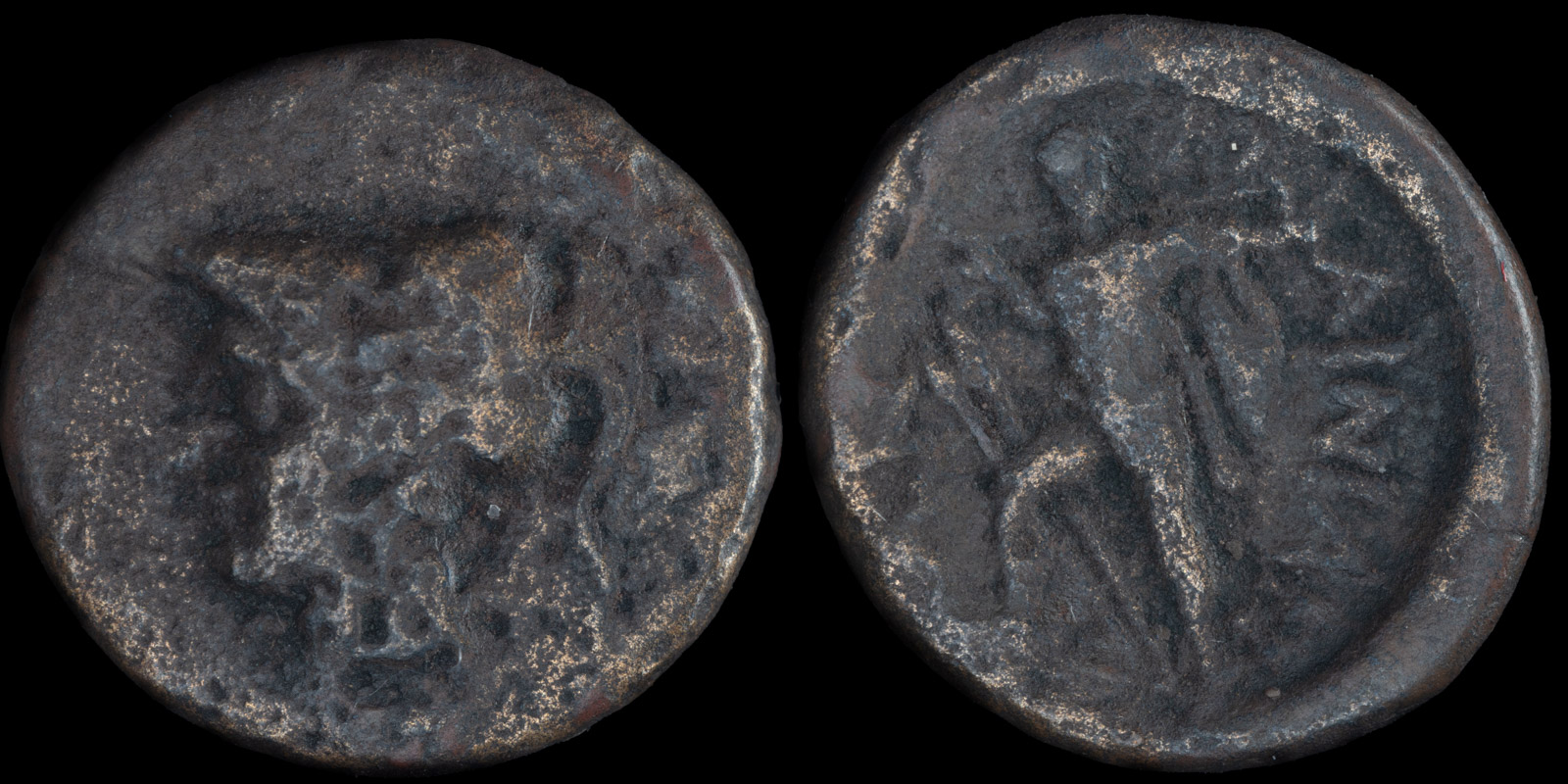
Thessaly, Ainianes
Hypata 4th century BCE
AE Chalkous 2.40g 14.5mm
Obv: Head of Athena left, wearing a Corinthian helmet.
Rev: ΑΙΝΙΑΝ r. down, ΩΝ l. up, Phemios, naked but for chlamys over his shoulder and sword in scabbard, shooting sling to right; behind, leaning against his right leg, two spears.
SNG Cop 26 for right facing bust of Athena. Left facing bust not in Rogers and probably unpublished.