Marsyas
View All Tags
The contest between Marsyas and Apollo was judged by the Muses or, in some versions, by King Midas. While Marsyas played with raw passion and earthbound intensity, Apollo wielded the lyre with divine precision and order. When Apollo added his voice or played his instrument upside down, a feat Marsyas could not match, the god claimed victory. The outcome revealed the imbalance between mortal audacity and divine authority, and the punishment was severe. Apollo had Marsyas flayed alive, his skin hung as a warning to those who dared rival the gods.
Marsyas’s death transformed him into something more than a cautionary tale. From his blood or tears sprang the river Marsyas in Phrygia, binding his suffering permanently to the land. In this way, he became a symbol of music born from pain and of creativity that flows from the body and the earth rather than from celestial order. Ancient audiences often felt sympathy for Marsyas, seeing him as a figure punished not for evil, but for daring to express himself too fully.
Mythically, Marsyas represents the tension between wild, instinctual expression and disciplined, divine harmony. He stands for the untamed voice, the music of forests and breath, set against Apollo’s structured, intellectual art.
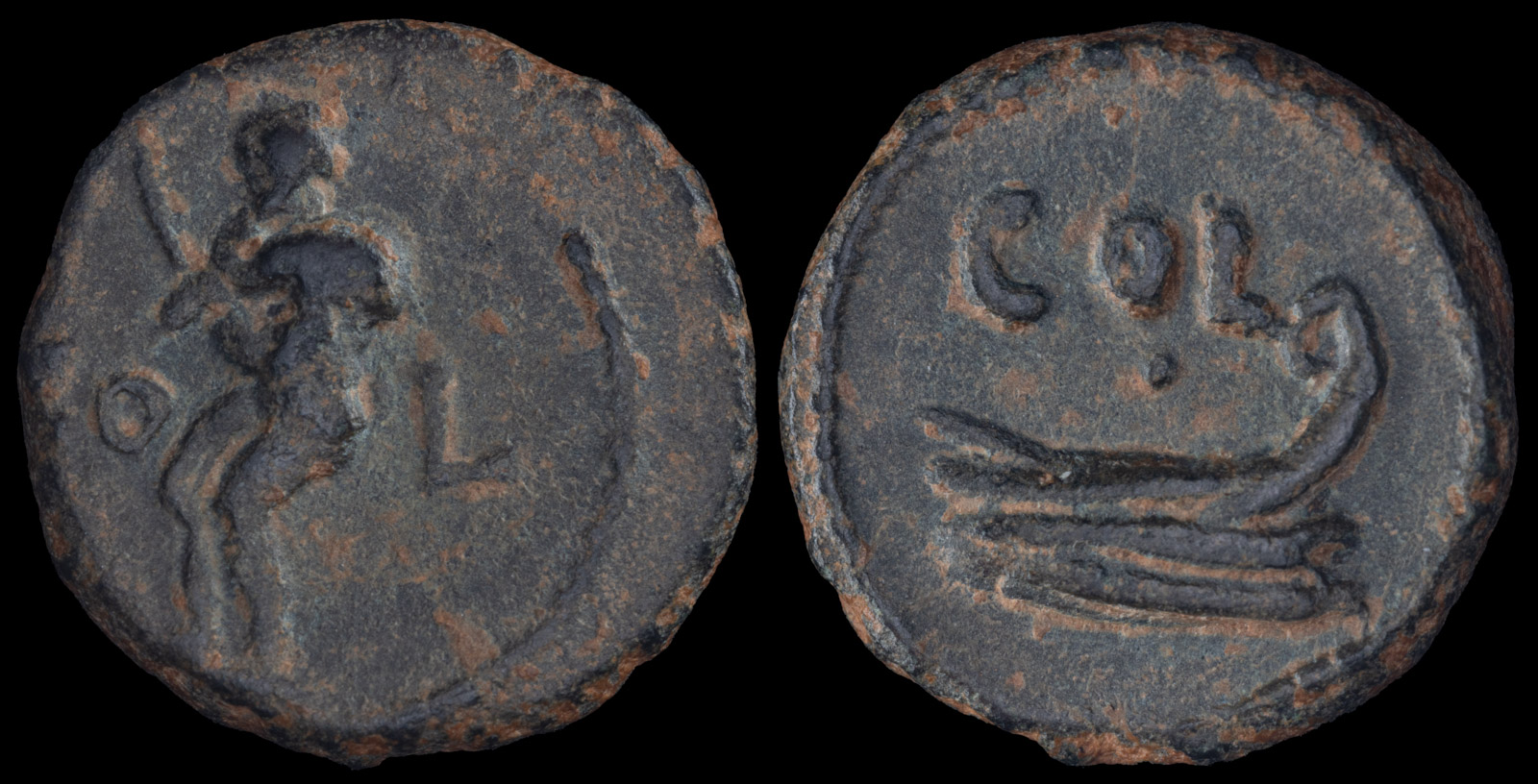
Phoenicia, Berytus
1st century CE
AE 13mm 2.00g
Obv: COL, Marsyas standing left, holding wine-skin
Rev: BER Prow right
RPC I 3858; SNG Copenhagen 89