
Maximian
Ticinum, circa 295-296 CE
BI Nummus 9.26g, 26mm, 6h
IMP C MAXIMIANVS P F AVG, laureate head to right /
GENIO POPVLI ROMANI, Genius, wearing modius on head and chlamys over shoulder, standing to left, holding patera and cornucopiae; star in left field; PT in exergue.
RIC VI 29b
Ex Vitangelo Collection

Numerian BI Antoninianus
Ticinum, AD 283-284
3.38g, 23mm, 12h
IMP NVMERIANVS P F AVG, radiate, draped and cuirassed bust to right / PROVIDENT AVGG, Providentia standing to left, holding corn-ears over modius and sceptre; VIXXI in exergue. RIC V.2 447
Ex Roma
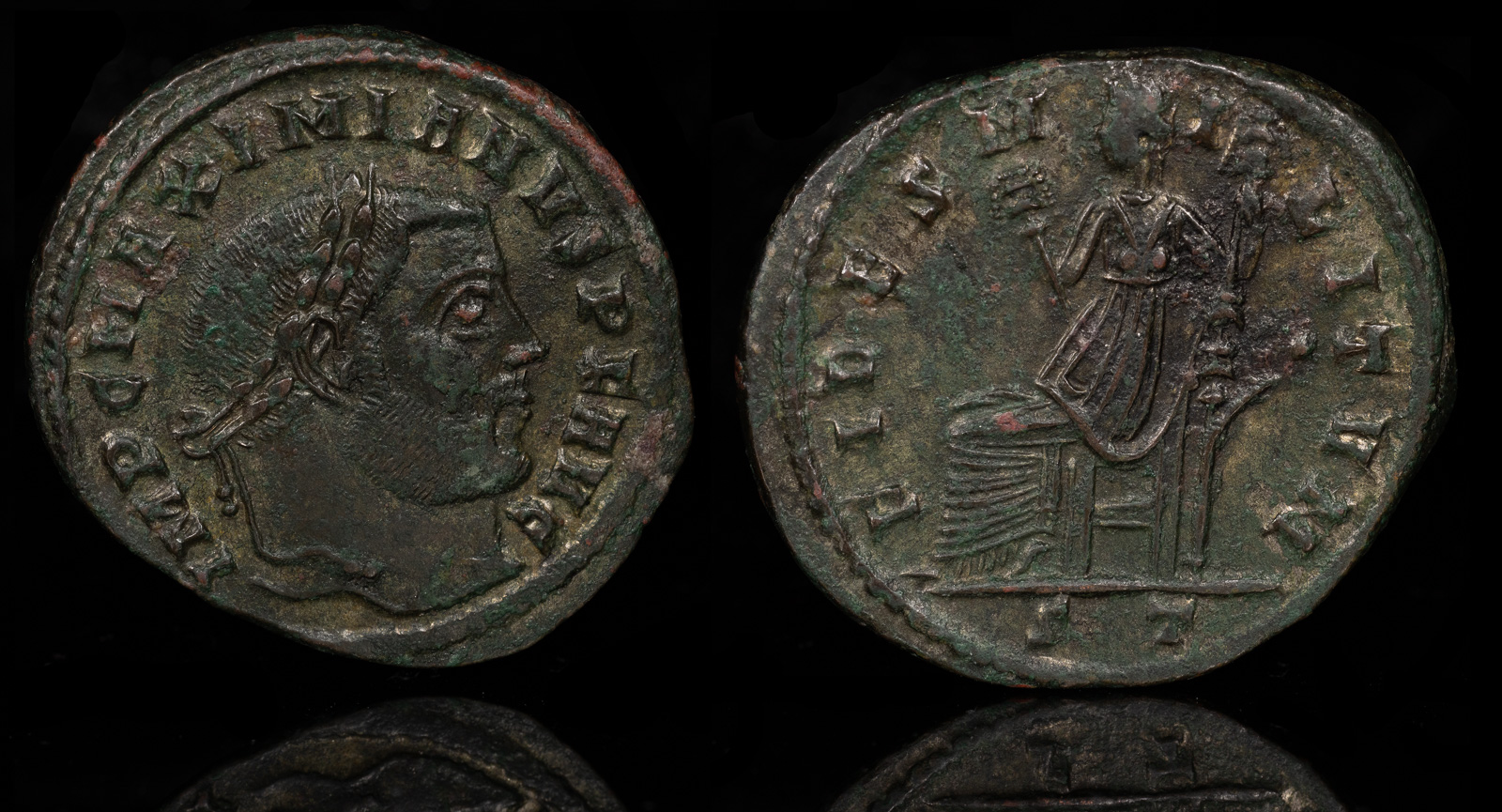
Galerius BI Nummus
Ticinum, AD 305
8.74g, 29mm, 5h
IMP C MAXIMIANVS P F AVG, laureate head to right / FIDES MILITVM, Fides seated to left, holding standard in each hand; • in right field, ST in exergue.
RIC VI 55b
Ex Roma
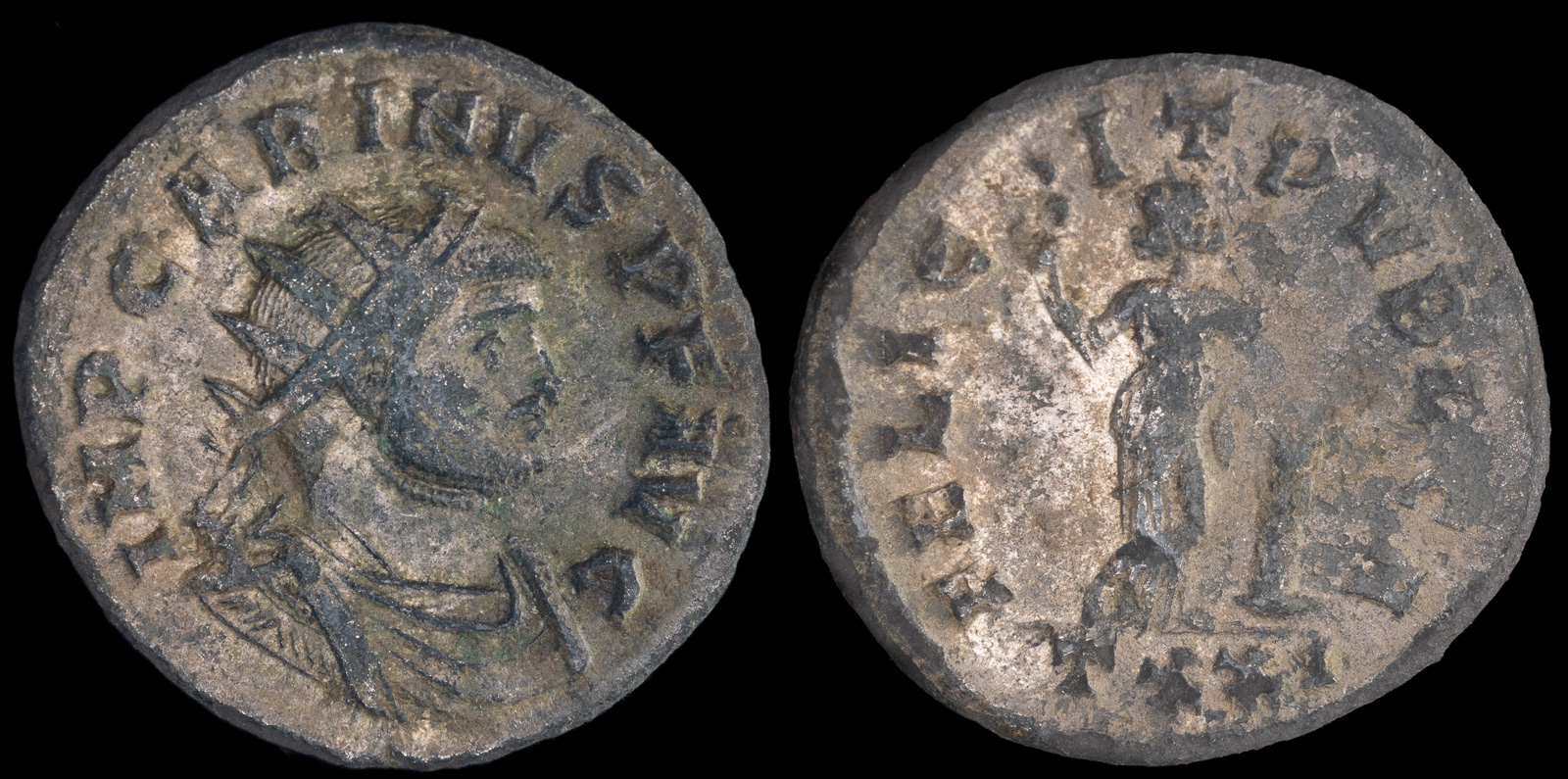
Carinus
Ticinum mint 238 CE
AE Antoninianus 3.34g, 21.5mm
Obv: IMP CARINVS P F AVG, radiate, draped and cuirassed bust right
Rev: FELICIT PVBLICA, Felicitas standing facing, legs crossed, head left, holding caduceus and resting left elbow on column, TXXI in exergue.
RIC 295; Pink VI/2, pg. 29
Ticinum was located in Cisalpine Gaul, which is today northern Italy. It was founded according to Pliny the Elder by Ligurian tribes and was an important crossroads and imperial mint in Roman times.
Ticinum appears to have reached its peak in the late 3rd to 5th centuries. Boethius wrote his acclaimed “Consolation of Philosophy” there.
Today, the city is noted for its medieval covered bridge Ponte Vecchio, where one pillar remains of the original Roman bridge.
March
Aurelian faces a Gothic invasion and defeats them at the Battle of Placentia and the Battle of Pavia. He begins fortifying the city of Rome, initiating the construction of the Aurelian Walls to protect against future invasions.
Aurelian transfers the mint at Mediolanum to Ticinum
Mint at Ticinum closed by Constantine the Great
Ticinum pillaged by Attila
Ticinum pillaged again by Odoacer
Boethius writes “The Consolation of Philosophy” while imprisoned in Ticinum