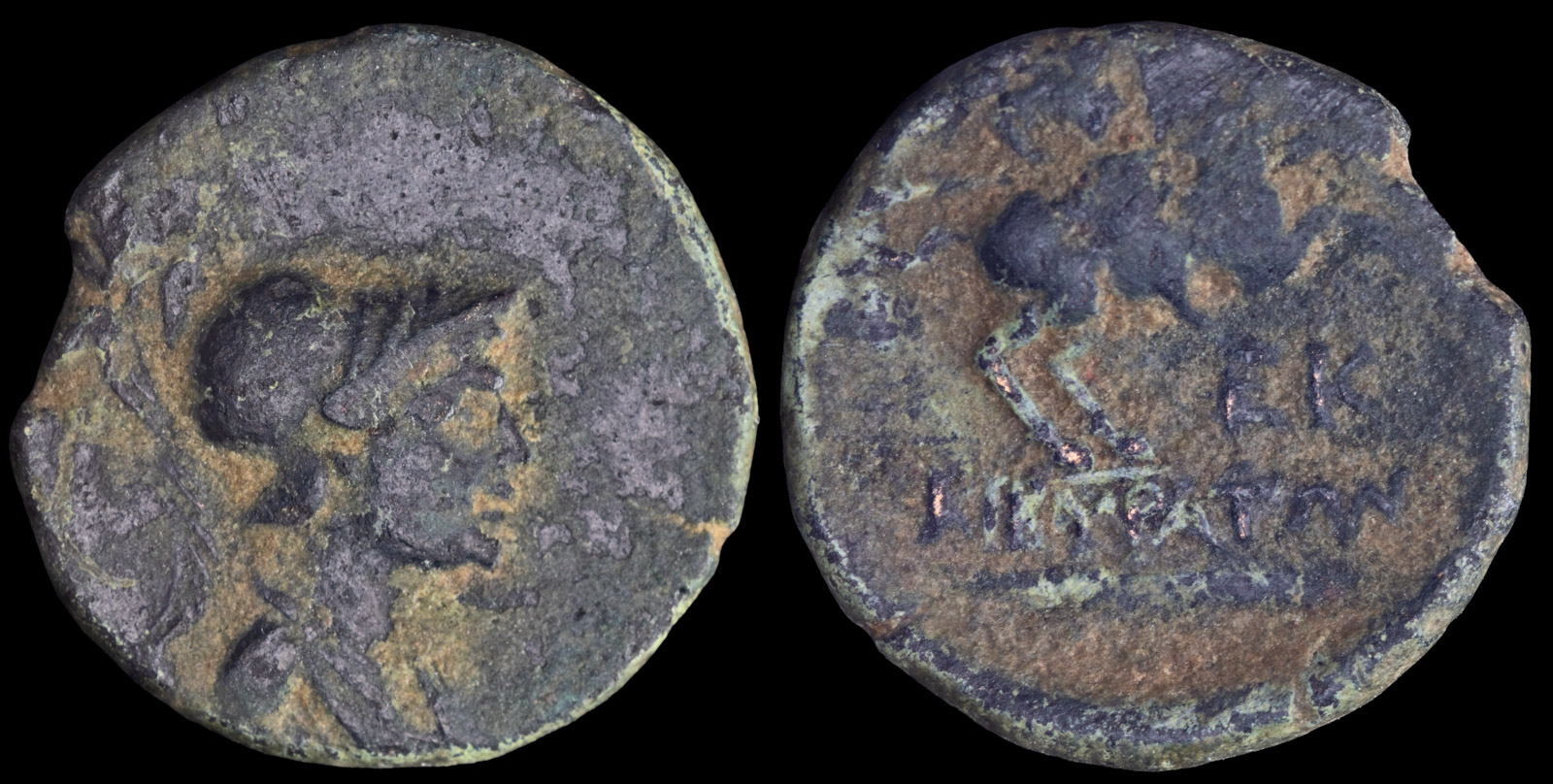
Phrygia, Kibyra
Dated year 25 (167/66 BCE)
AE 12mm, 1.38g
Draped and helmeted bust of athena right, wearing Attic helmet. /
Cuirassed horseman right, ΕK monogram and ΚIBYPATΩN below
The inhabitants of Kibyra were said to be the descendants of Lydians who migrated there and routed the neighboring Pisidians. It was an important city, mentioned by several ancient sources, and during the time of the Attalid kingdom was ruled by Pergamon.
It became a major center of commerce and was well-known for its blacksmiths, leather processing, and horse breeding. Eventually, it joined a federation called the metropolis with Oinoanda, Balbura, and Bubon. Kibrya was the only city with two votes in the alliance, because of its large population. It was reported capable of mustering 30,000 soldiers and 2,000 cavalry.
According to Strabo, during his time the Kibryans spoke Pisidian, Solymian, Greek, and Lydian. If true, that would make Kibrya one of the last places where Lydian was spoken.
Today, the ruins of the city are a candidate for the UNESCO World Heritage list.
The Romans force 100 talents and 10,000 medimni of wheat from Kibyra
Treaty of Apamea. Euromos, Laodikeia ad Lykon, Kibyra, Sestos, and Abydos returned to the Kingdom of Pergamon.
Kibyra is heavily damaged by an earthquake
Hadrian visits Kibyra
Another earthquake hits Kibyra. Large portions of the city are not rebuilt.