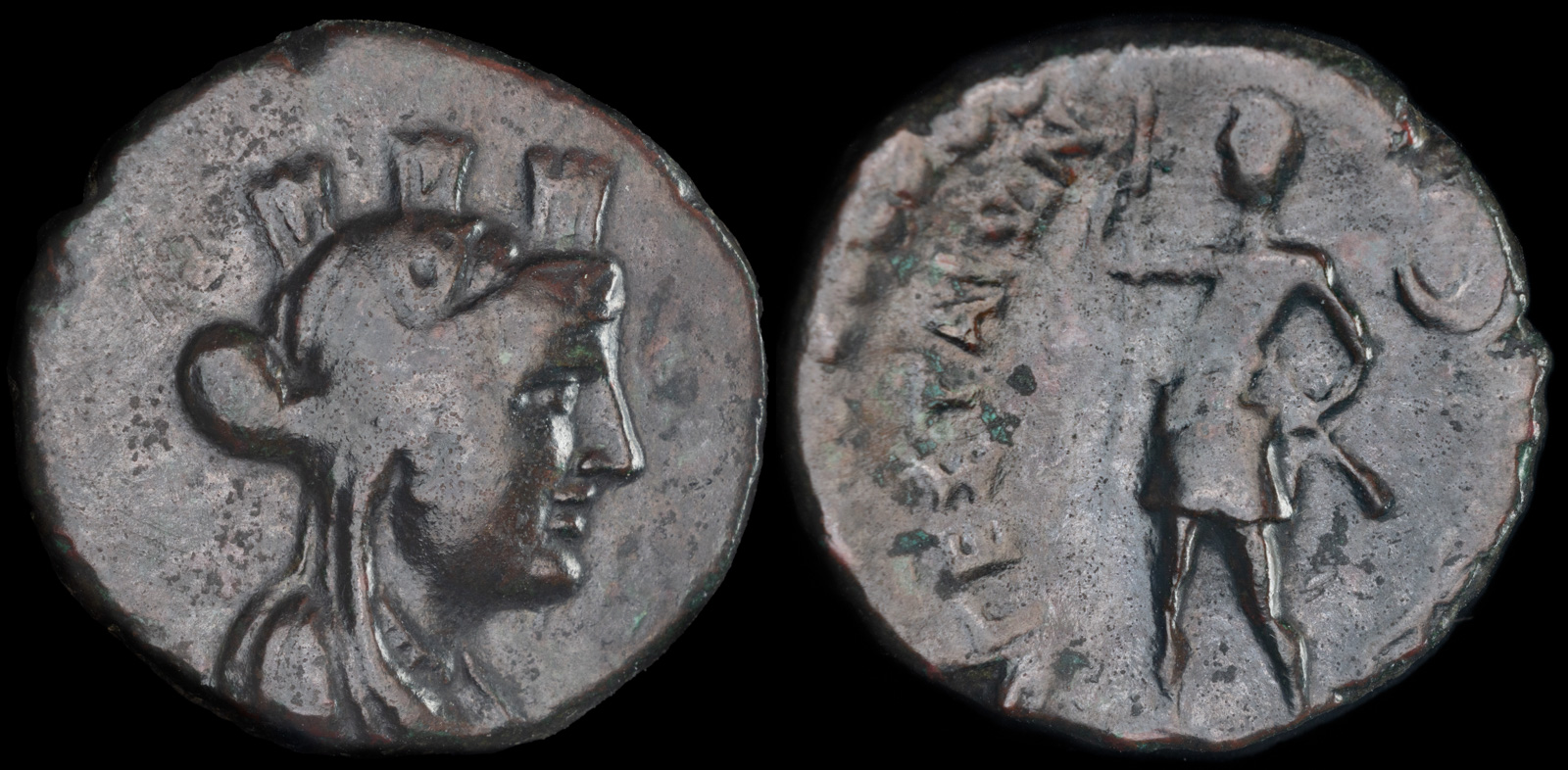
Sicily, Segesta
Roman protectorate. Circa 210-mid 1st century BCE
AE 19mm 4.47g
Obv: turreted and draped bust of Tyche right.
Rev: warrior standing facing, holding spear; to right, crescent above hound
BAR Issue 6; CNS 58; HGC 2, 1198
Some time ago, while planning the next vacation, my wife suggested going to Sicily because “there can’t be so many ruins there”, while I of course grinned nefariously and began planning the trip in earnest. Near the top of the list was Segesta, where an unfinished temple still remains in the valley. Because the temple was never completed, marauders could not obtain permits to destroy it. After all, it’s a bit pointless to destroy something that was never finished. You don’t receive any points for that.
In ancient times, Segesta was one of the main cities of the Elymians, an indigenous people of Sicily. A variety of legends concerns its foundation. Some said that it was first settled by Trojan survivors. Another story attributes it to a king Aegestus together with followers of Aeneas who wished to remain behind. It’s believed the city was originally called Acesta, but was renamed to Segesta by the Romans because Acesta is too close to a latin word that means “poverty”.
From early on, Segesta was hostile to nearby Selinos. The disastrous Athenian expedition to Sicily was actually started to relieve Segesta against Selinos, but little of the war occurred there. The Athenians instead turned their attention to Syracuse. Segesta then turned their pleas successfully to Carthage. Later Segesta fell prey to the deceptions of Agathokles of Syracuse, who put every citizen to the sword. Eventually, Segesta joined the Roman alliance, for the most part stayed loyal, and was rewarded.
Today, the famed temple and an interesting theater may be visited.
Segesta concludes an alliance with Athens
Segesta provides Athens with a total of 90 talents for their expedition
Agathokles of Syracuse deceives Segesta, seizes it, and kills the inhabitants
Segesta supports Pyrrhos of Epeiros
Rome attempts to take Segesta, without success. Shortly afterwards, they join the Roman alliance.
Gaius Duillius defeats Carthage in a naval battle that rescues Segesta