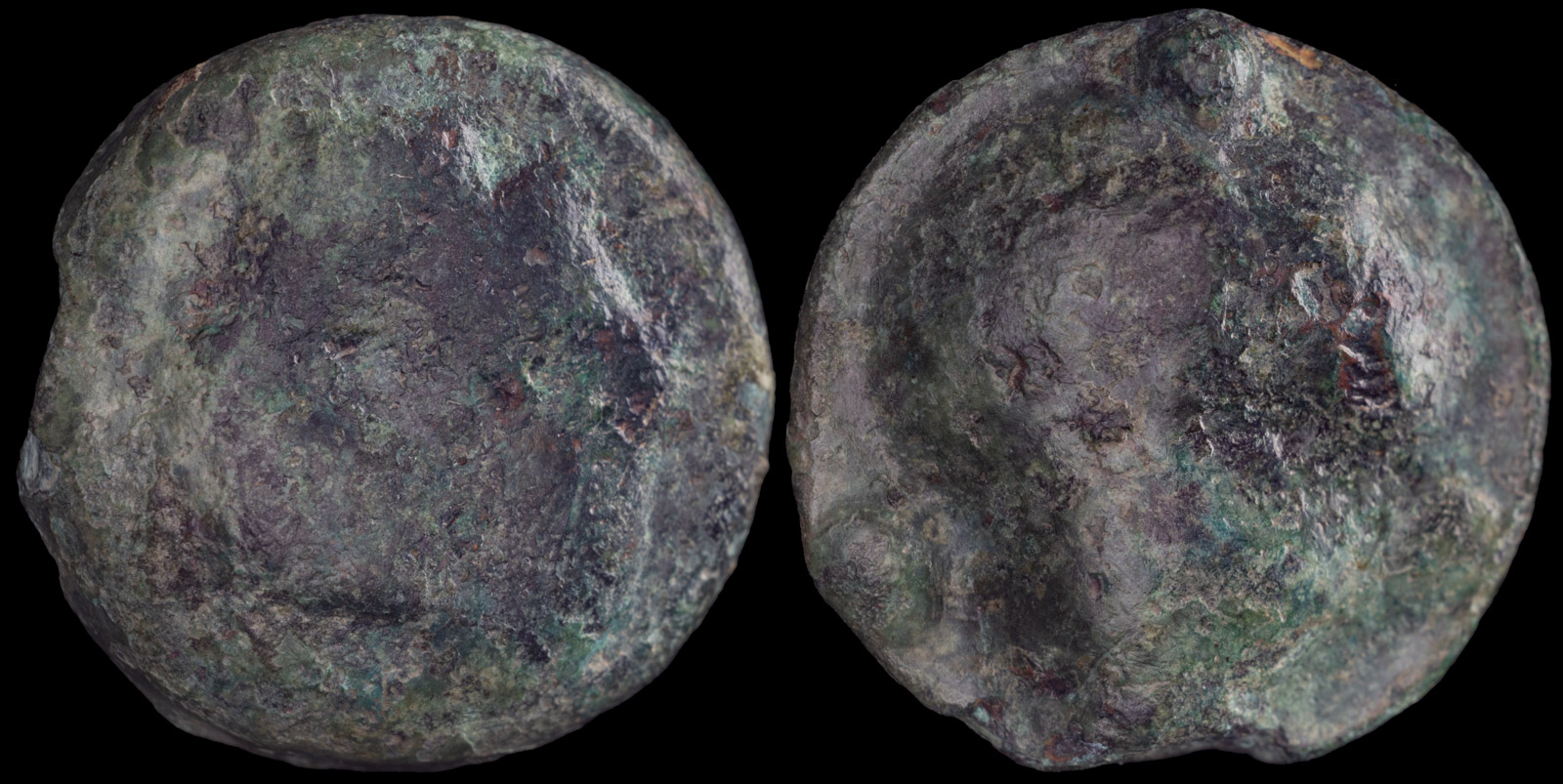
Sicily. Selinos
450-440 BCE
cast Æ Tetras 19.57mm 9.21g
Obverse: Head of Nymph left
Reverse: Selinon (wild parsley) leaf, with three pellets around
HGC 2 1234
Today, Selinos is visitable as the ancient ruins of Selinunte, which was the Roman name for the city. The date was debated even in ancient times, but the city was named for the large amount of wild celery that grew in the area. This is illustrated on many of their coins, including this one. The westernmost of the Greek colonies in Italy, Selinos conflicted early with Segesta, populated by Elymian people. By the 5th century BCE, somewhere between 14000 and 19000 people lived there.
The dispute with Segesta later brought the Athenians to Sicily, and shortly afterwards Carthage also intervened, taking it several times before finally destroying the city for good in 250 BCE.
Today, Selinos is an archeological park that my wife and I visited in 2025.