Herm
View All Tags
The presence of the phallus on herms was not obscene to the Greeks but rather a symbol of vitality and creative power. It reflected Hermes’ role as a god of fertility and renewal. Herms often stood at crossroads, doorways, and marketplaces—places where transitions and exchanges occurred. Their placement emphasized the Greeks’ belief that sacred and practical realms were intertwined. Just as Hermes mediated between gods and mortals, the herm stood between public and private space, divine and human activity.
In Athenian society, herms also carried civic and religious importance. They were believed to protect the city and its people from harm. The desecration of herms in 415 BCE, on the eve of the Sicilian Expedition, caused great panic in Athens. The mutilation was interpreted as a sacrilegious omen and an attack on the city’s divine favor.
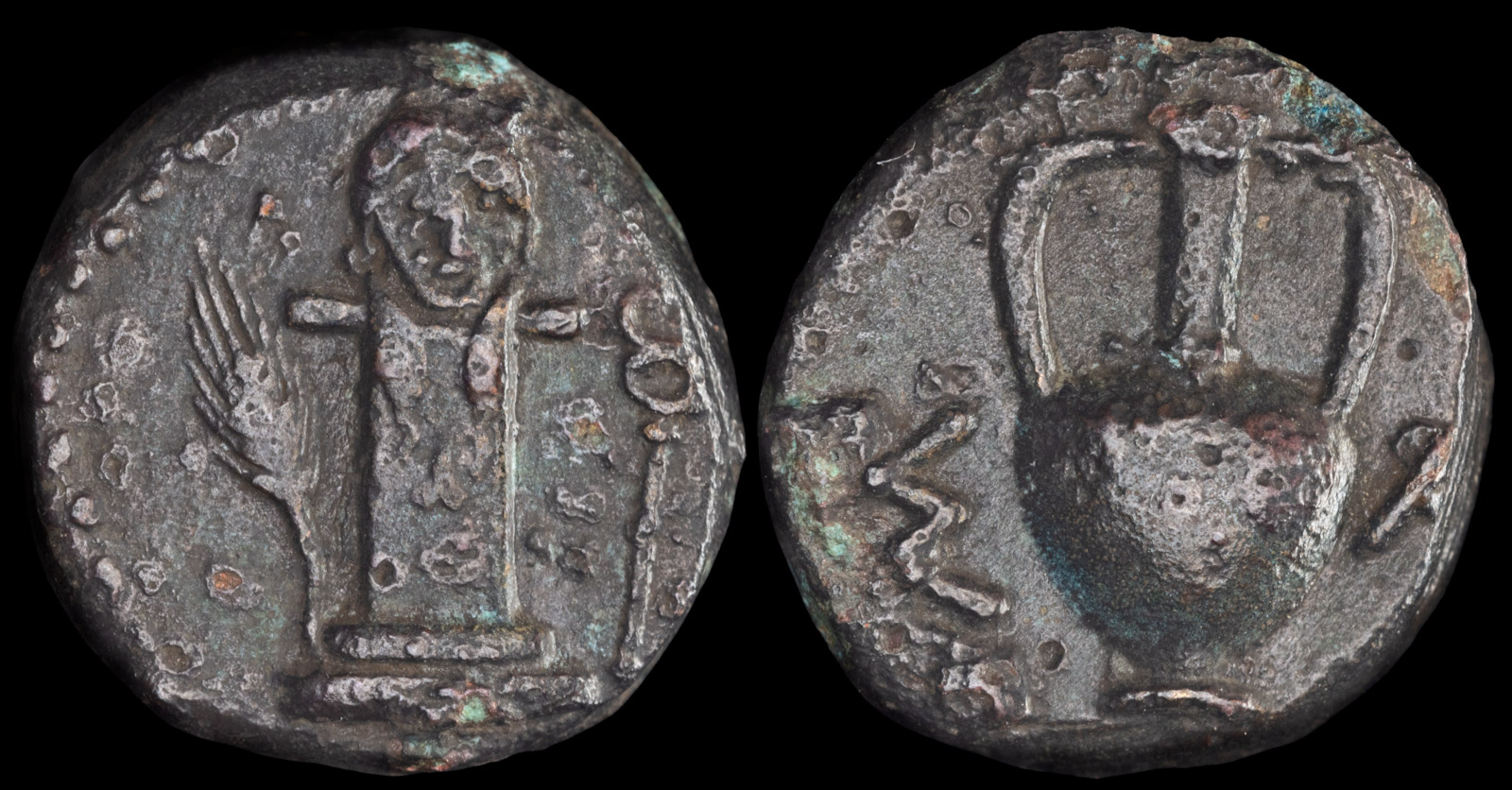
The Thracian Chersonese, Sestos
circa 300 BCE
Æ 10mm, 1,73g
Herm facing; grain ear and kerykeion flanking /
Amphora
Von Fritze, Sestos 5; HGC 3, 1651
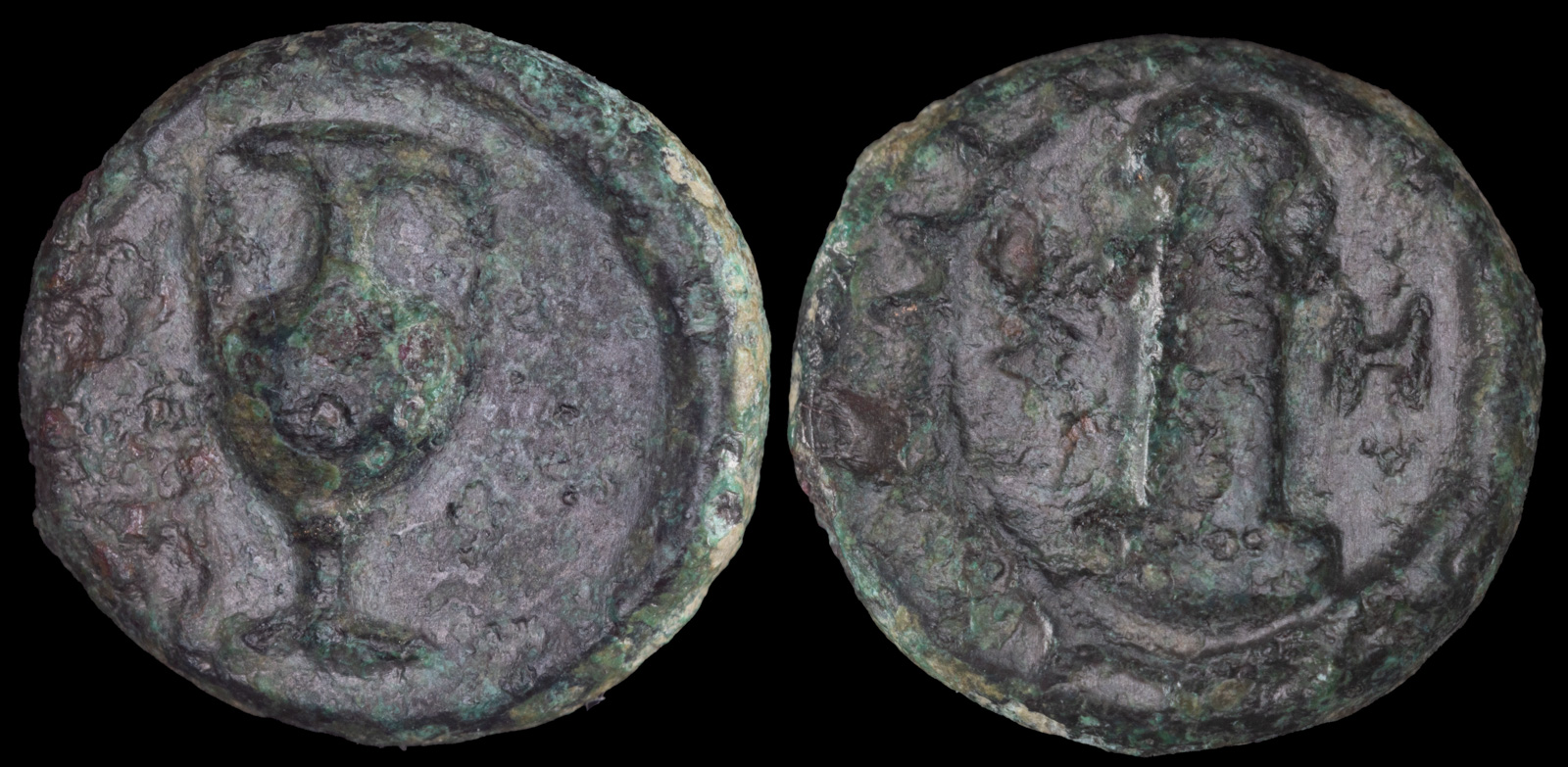
The Thracian Chersonese, Sestos
circa 300 BCE
Æ 11mm, 1,40g
Obv: Σ – H. Facing herm
Rev: Amphora
SNG Copenhagen 932 var
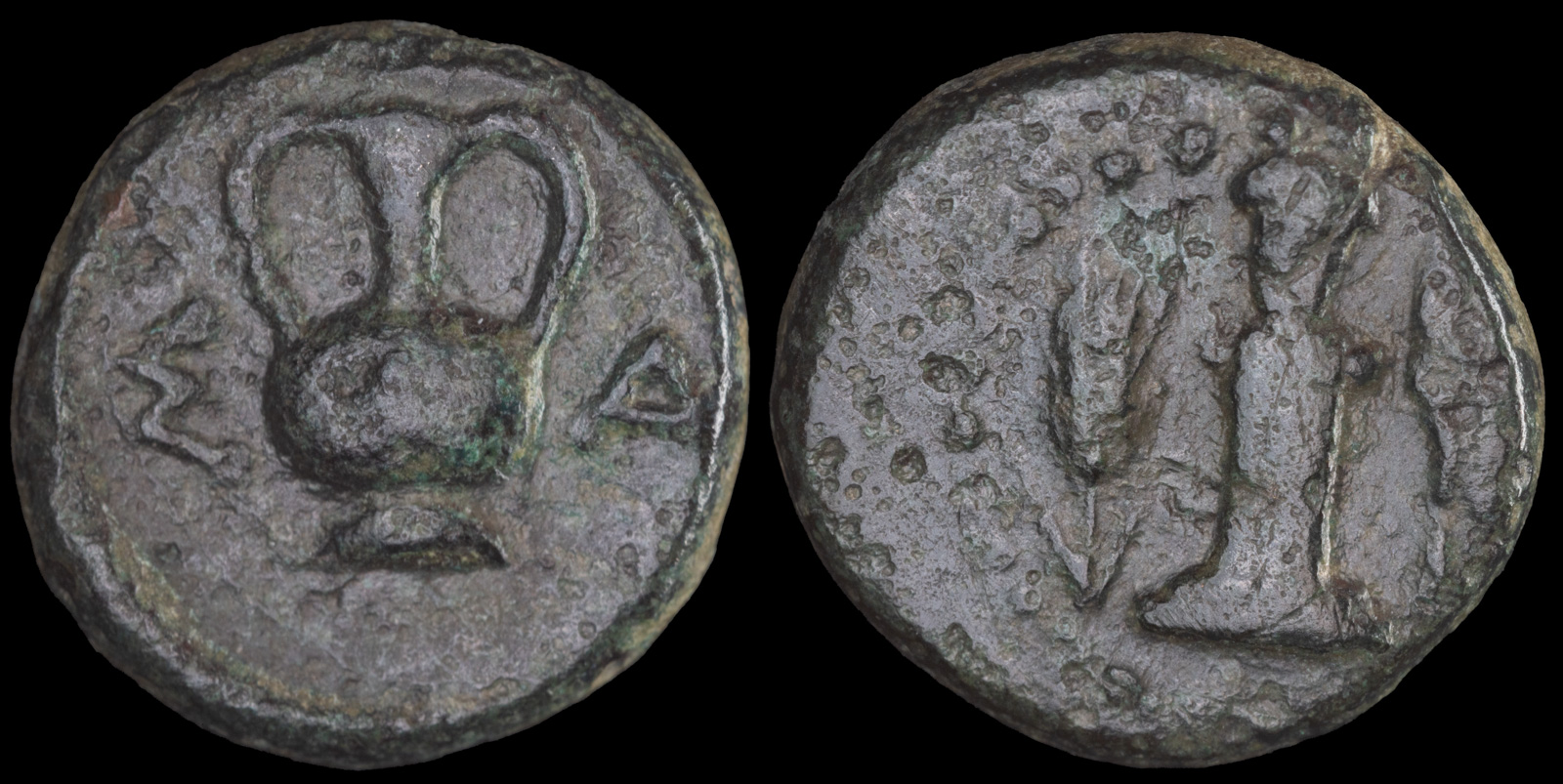
The Thracian Chersonese, Sestos
circa 300 BCE
Æ 13mm, 2,26g
Obv: Herm facing, grain ear and pellet to left, kerykeion to right
Rev: Σ-Α, amphora
SNG Copenhagen 932; HGC 3.2, 1651