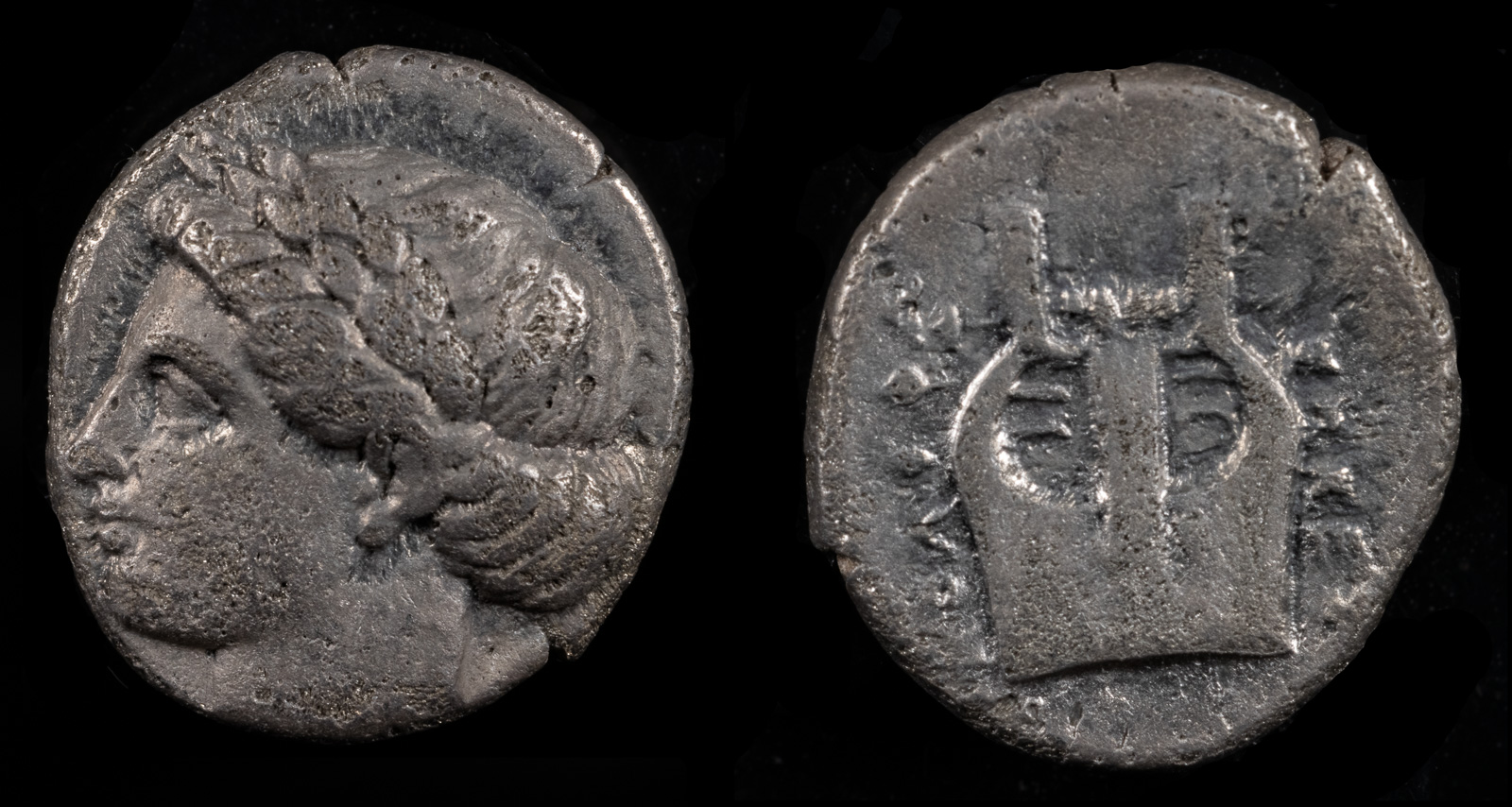
Kolophon, Ionia
c. 375 – 360 BCE
AR diobol 1.035g, 10.5mm
obverse laureate head of Apollo left;
reverse Kithara with six strings, KOΛOΦΩ upward on left, obscure magistrate’s name downward on right
cf. SNG Cop 141; SNGvA 2006; SNG Kayhan 372; SNG Mun 539; SNG Tub 2900; Milne Colophon 57; BMC Ionia p. 37, 11 (none this magistrate)
ex Numismatik Naumann 2019
Kolophon may have been the most ancient of the twelve Ionian cities. It’s name means ‘summit’ in Greek, and from that you may surmise the city’s location.
Legend has it that the seer Kalchas died at Kolophon shortly after the Trojan War. He had prophesied that he would meet his end when he met a better seer, and when he ran up into Mopsos they had a ‘seer contest’ and Mopsos was the better, so Kalchas died. Kalchas lost on a question concerning a fig tree. He asked Mopsos how many figs were on a small tree, and Mopsos answered that it was enough to fill a medimnos (roughly 51.84 liters) but one fig wouldn’t fit. When they discovered that this was the truth, Mopsos died. Personally, I would have stuffed it in.
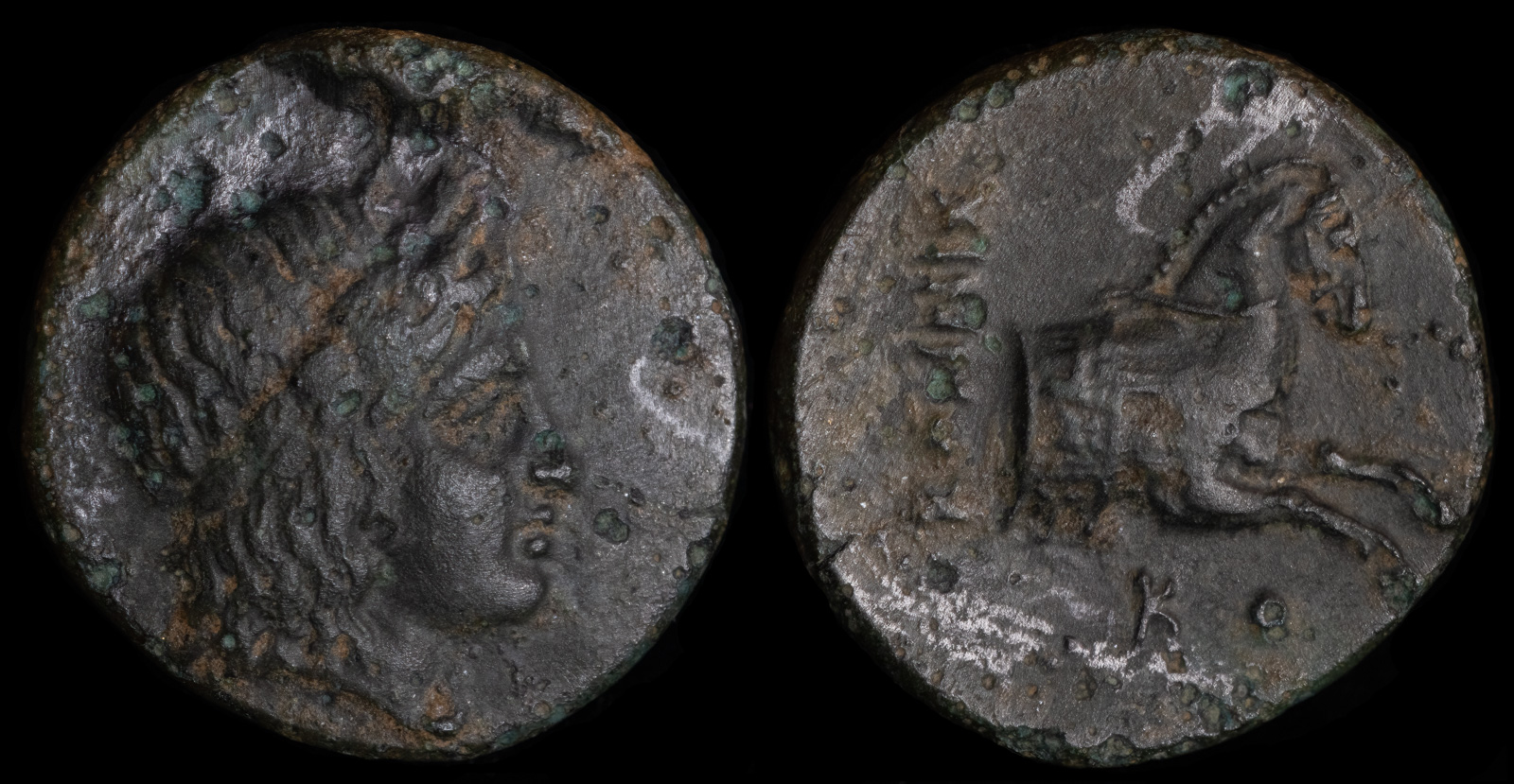
Ionia. Kolophon
circa 330-285 BCE
Æ 15 mm, 1,89 g
Obv: Laureate head of Apollo right.
Rev: KONNIΣ / KO Forepart of horse right.
Kinns 57; Milne, Colophon 114a; SNG Copenhagen 154
Ex Savoca
Strabo mentions there was an ancient saying “he put Kolophon to it” because the city possessed such a notable navy and cavalry that, whenever a battle between two foes went on for a long time, Kololphon would join the dispute and it would be resolved quickly.

Ionia. Kolophon
ΔΙΟΝΥΣΙΦΑΝΗΣ (Dionysiphanes), magistrate
circa 360-330 BCE
Æ 14 mm, 2,20 g
Laureate head of Apollo r. R/
Forepart of bridled horse r.
Kinns 60; Milne, Colophon 104
Famous people from Kolophon included Mimnermos, who was a flute player and poet, and Xenophanes, who was an important philosopher. There was also Polymnastos, who Pindar stated was one of the best musicians.

Ionia, Kolophon
ΕΚΑΤΑΙΟΣ (Hekataios), magistrate
circa 330-285 BCE
Æ 14 mm, 2,10 g
Laureate head of Apollo to right.
Rev. EKATAIOΣ KO Forepart of bridled and saddled horse to right.
Kinns 61. Milne 107. SNG Copenhagen 152
Until the 7th century BCE, Kolophon was the major power in the area. However, by the time Alexander the Great arrived, the city had been eclipsed by Ephesos and Miletos.
In the 3rd century BCE, Kolophon was destroyed by Lysimachos.
The obverse of this coin depicts Apollo, who was by myth the father of Mopsos. Around the time this coin was minted, there was an oracle to Apollo Klarios in Kolophon. Ruins of the temple remain today.
******
When I added this coin, I started with these questions:
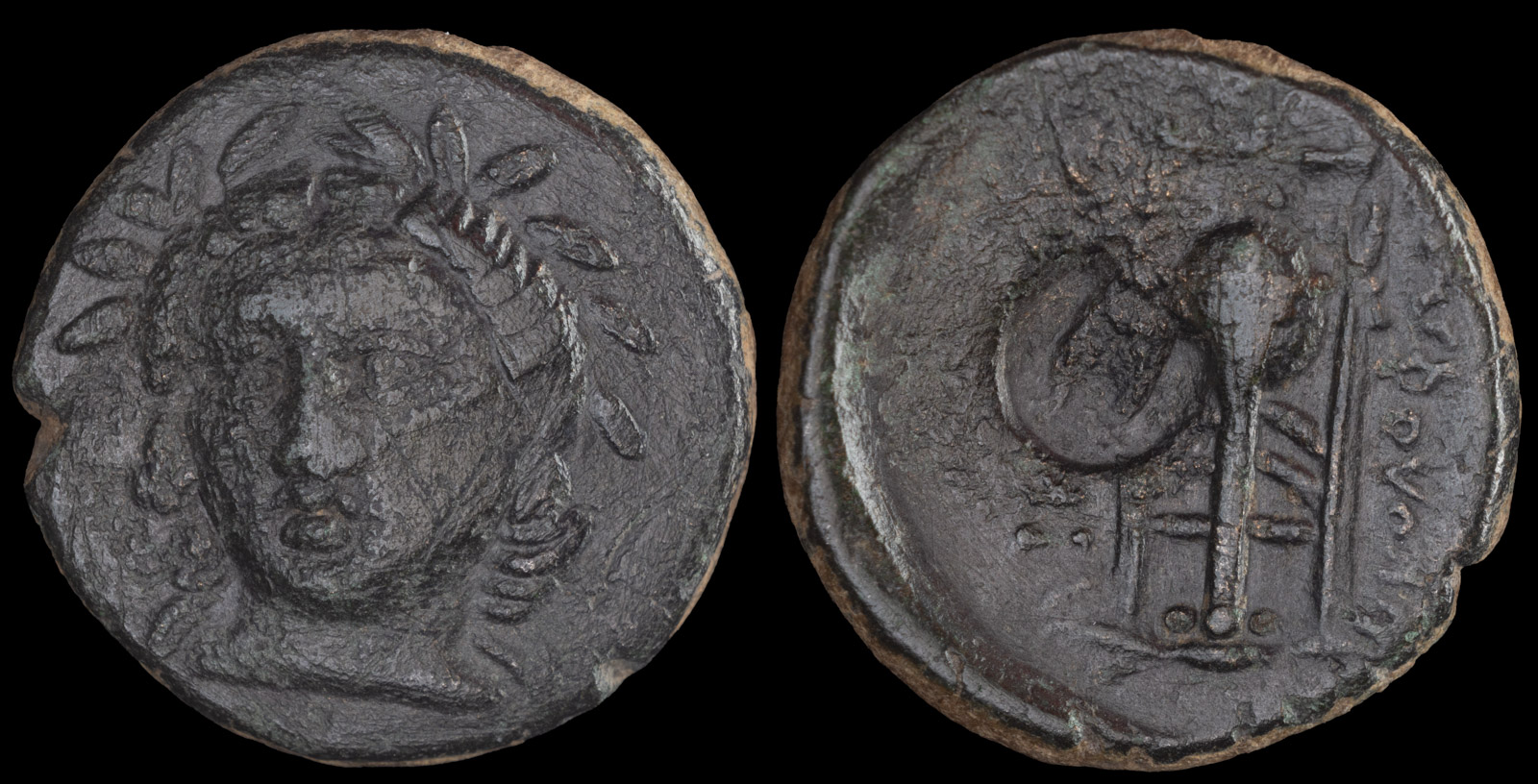
Ionia, Kolophon
Apollonides, magistrate
Circa 190-30 BCE
Ae 18mm 4.76g 18.22mm
Obv: Laureate head of Apollo slightly left.
Rev: KOΛOΦΩNIΩN AΠOΛΛΩNIΔHΣ. Tripod with vessel (lebes); c/m Lyre.
Milne, Colophon 174b; SNG von Aulock -; SNG Copenhagen 182
– Why the facing Apollo? AFAIK this is the only facing Apollo on Kolophon’s coinage. That seems odd.
– Why the tripod? Many other cities commonly used tripods, but not Kolophon. In fact there’s only one other bronze, from considerably earlier, that includes a tripod.-
– Why is there a countermark? It appears to be a lyre, which other examples seem to confirm.
– Now, granted, we can never be sure of the history of these coins. But given that I’m not a professional numismatist with a reputation to tarnish, I can find the most plausible solution and stick to that as my story. So, I set out to determine what I could from the coin.
First, is the issue of the magistrate. The countermark pretty much obliterated the name, but on better preserved reverses I can see AΠOΛΛΩNIΔHΣ. In fact, on all examples that have a legible magistrate, it’s Apollonidis. That alone suggests this coinage was not minted for long. How long? We don’t really know how long magistrates lasted. Kolophon did mint quite a few, of which I have fourteen.
In terms of dies, it’s difficult to tell. My obverse is easily the best preserved of those sold, while another has a better reverse. From what I can tell, all five coins have the same obverse die, but there are at least two reverses. If true, that would seem to confirm that these weren’t minted for long. My guess is magistrates served for a year, but it’s just a guess.
I then performed some research on the name Apollonidos. It was a very popular name in Asia Minor, with a number of cities showing results.
Kolophon had only four entries. Two were references to this coin, while two others were fragments/inscriptions that referenced Kolphon.
SEG XXXVII 957, 2
This mentions a Menippos son of Apollonidos. Menippos was dated to the last third of the second century BCE by L. Robert, L’histoire et ses méthodes. The document praises donations he made to the city.
SEG XXXIX 1244 III, 19, 30
This also mentions a Menippos, son of Apollonidos, son of Eumedios. The document details charity he gave to the city, and also goes into depth his work as an ambassador to the Greek cities on behalf of the Romans. Therefore, this document dates Menippos’ activity to around 129-120 BCE, when King Attalos of Pergamon died and the region was annexed to Rome.
So, was this Apollonidos the father of Menippos? I don’t believe that can be assumed. There could have been many Apollonidi, as evidenced in the query results above.
Next, I looked at the tripod. There are a few other examples of a tripod on Kolophon’s coinage. All have Apollo facing right with a somewhat similar tripod on the reverse. Their weights are in the same range as my coin and they have several different magistrates – Dimokrates (easy to think that’s ‘democracy’ and not a magistrate), Protogras, Artemidoras, and Apollonos. The dates seem debated, but based on the reverse being a tripod and the similar weight, I believe they were minted close to mine.
I then examined which cities more commonly minted tripods, and started with my own collection. Predominantly, on bronzes at least, it was used in this area by cities associated with Macedon.
Working over to the countermark, that got me thinking. Typically countermarks were used for use in either a different city, king, or for re-use under a new administration. This countermark is of a lyre. The lyre is extremely common on Kolophon’s coinage, and thus was likely a symbol of the city. Therefore, I don’t buy that a coin of Kolophon was countermarked with its own symbol in order to be used by another city. Adding to that is the fact that most of these coins are countermarked with the same lyre.
It is my belief that the countermark was used to “reclaim” coinage in the name of a liberated city. Essentially, some party ruled Kolophon. They went away, and the coinage reminded the locals too much of that bad ruler and so they countermarked the coin since finding new engravers was a difficult task.
Looking at history, there were three cases we know of where Kolophon changed hands around the 2nd-1st centuries BCE, which is when Milne dates these coins and which makes sense due to the heavier weight.
188 BCE – Kolophon remains under Antiochos III, but those living at their port – Notion – no longer paid tribute after the Peace of Apamea.
129 BCE – Kolophon becomes part of the Roman Empire
88 BCE – Kolophon is occupied by Mithridates VI. Lucullus attacks and removes the tyrant Epigonos of Kolophon.
84 BCE – Kolophon reverts to Roman control with the surrender of Mithridates VI
If Apollonidos was the father of Menippos, he could have been active around 188 BCE, assuming Menippos was relatively old during his ambassadorship. However, it doesn’t appear that Kolophon’s rule changed much then.
Similarly, 129 BCE doesn’t look to be a great example, since it appears to have been a relatively peaceful transition, and we already know Menippos was active then. Maybe he had a son who was magistrate? Seems possible, but unlikely.
Therefore, I suspect 88 BCE is the best matching date. If Menippos was in his 40’s in 129 BCE, then it’s very possible he could have had a son at that age. Indeed, Aristotle calculated the ideal age for men was 37. Therefore, Menippos’ son would have been in his 40’s in 88 BCE. Since Menippos’ father’s name was Apollonidos, it was common for Menippos’ son to have the same name to honor him.
Of course, we already know that Epigonos ruled Kolophon during this time. Coins exist in the same magistrate’s name, but are dated to much earlier. There is no evidence that magistrates in Kolophon had dictatorial power. They seem to have been more simply in charge of the coinage or some other small facets.
Therefore, I believe that Epigonos, after being installed by Mithridates VI, decided to significantly alter its coinage. Reinforcing this is the fact that other coinage under Mithridates VI – notably of Amisos – also depicted tripods.
The coinage is brief because Epigonos lasted all of a year. We don’t know what happened to Apollonidos, but it’s possible he wasn’t important enough to be affected. Lucullus, or someone affiliated with him, ordered the coinage to be countermarked. The lyre was used to indicate Kolophon’s “freedom”.
However, it appears that after Lucullus left, Kolophon reverted under Mithridates for some time. I suggest it was then that the other coinage, depicting Apollo to the left and also a tripod on the reverse, was minted. The four known magistrates correspond to the four years, though it’s possible that Demokrates corresponds to the institution of democracy. I’ve seen that mentioned on other coins, though I’m still not sure if it’s just a magistrate’s name or actually refers to democracy.
Regardless, that’s my story and I’m sticking to it for at least a day or two.
******
Here are the Colophon magistrates I’ve acquired:
Antenor
Apollonides
Dionysodoros
Dionysios
Dionysiphanes
Epigonos
Hekataios
Konnis
Leodamas
Mitrodoros
Pasi-
Platon
Sokrates
Telegonos
Zenes
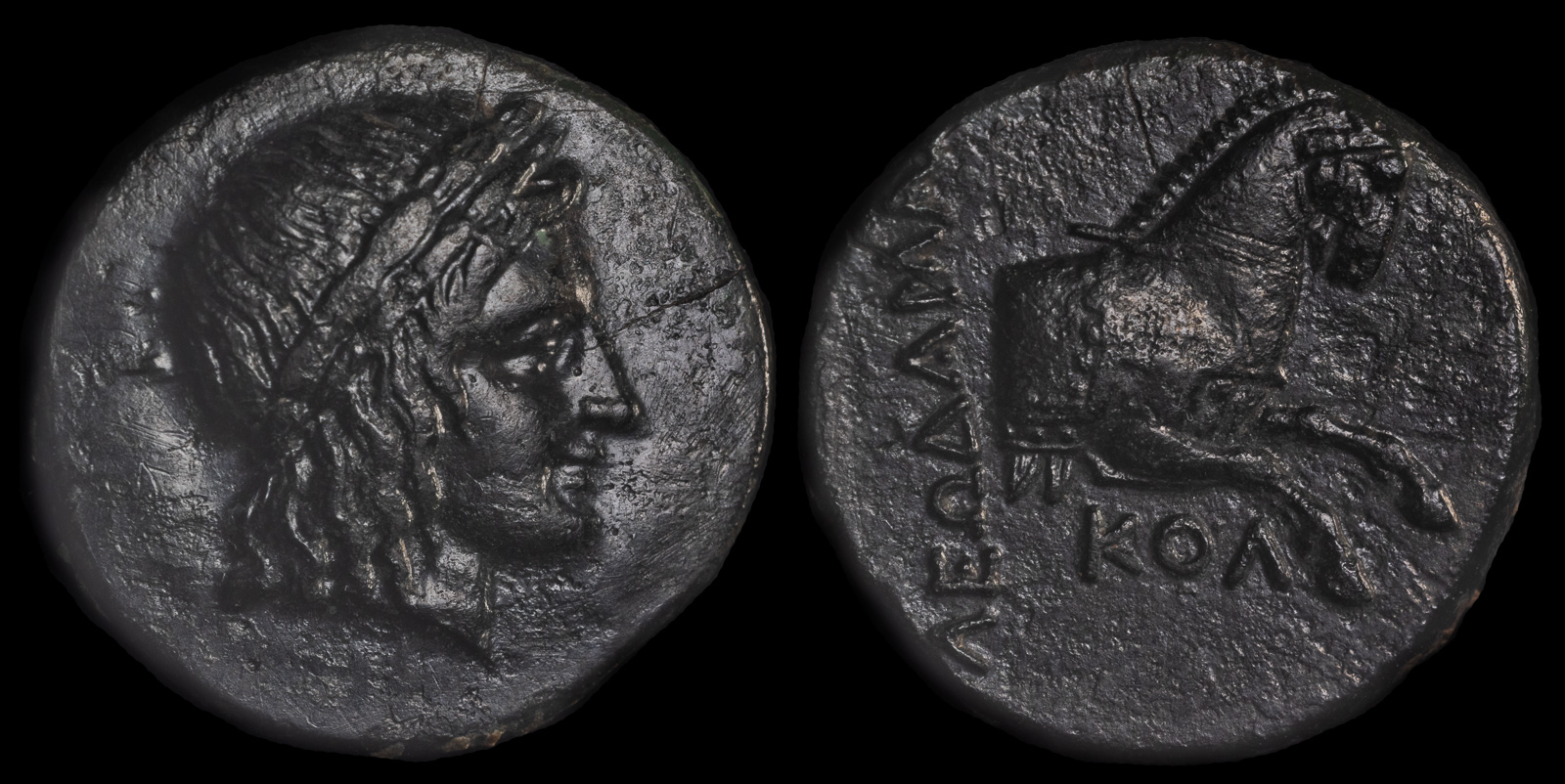
Ionia, Kolophon
Leodamas, magistrate
Circa 360-330 BCE
Ae Chalkous 2.12g 14mm
Obv: Laureate head of Apollo right.
Rev: ΛEΩΔAMAΣ / KOΛ. Forepart of horse right.
Kinns 55; Milne 115; SNG Copenhagen 155
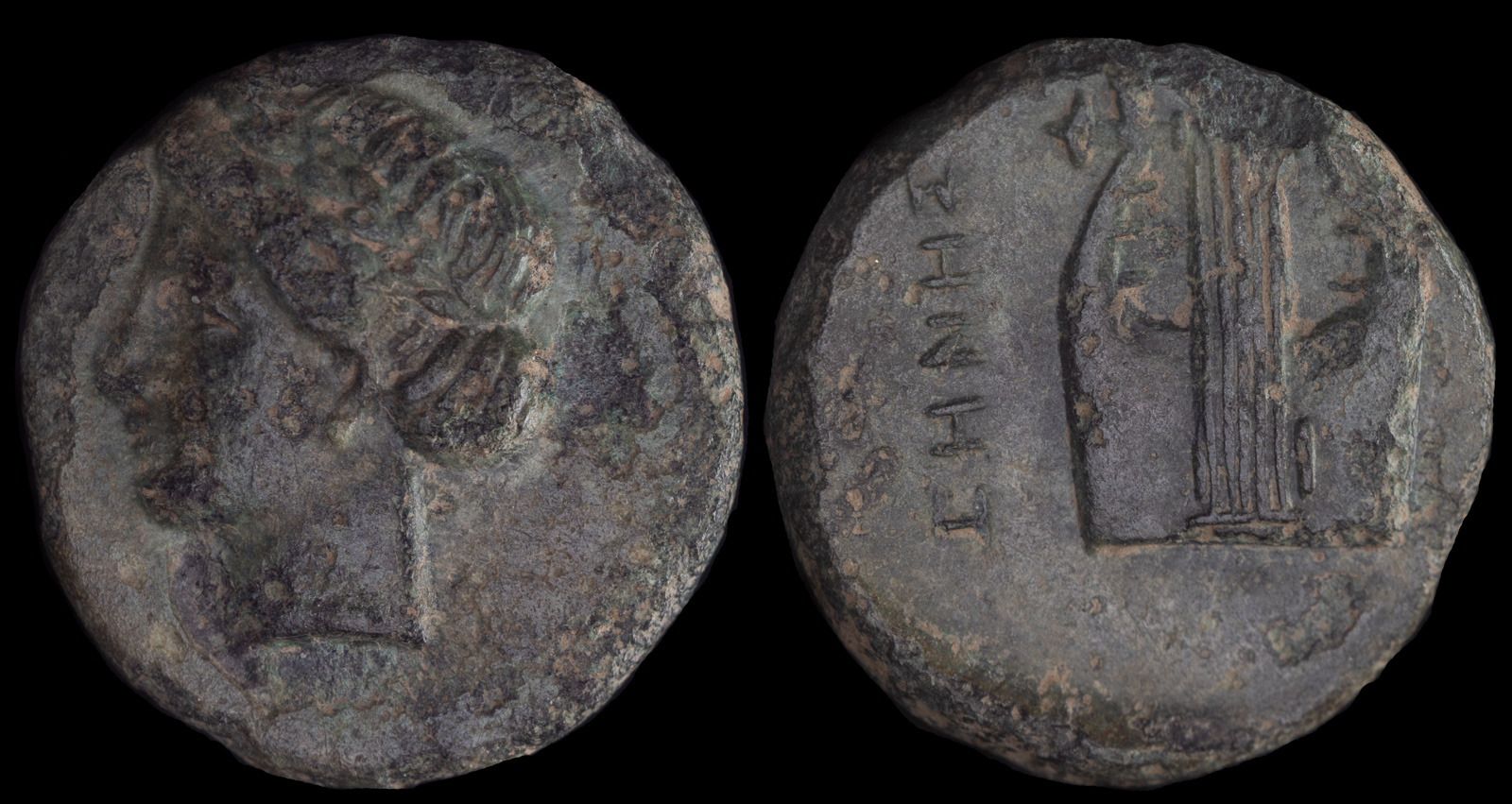
Ionia, Kolophon
Zenes magistrate
circa 330-294 BCE
Æ 13mm, 1,92g
Obv: Laureate head of Apollo left
Rev: ΖΗΝΗΣ Lyre with five strings
Milne Period V 111
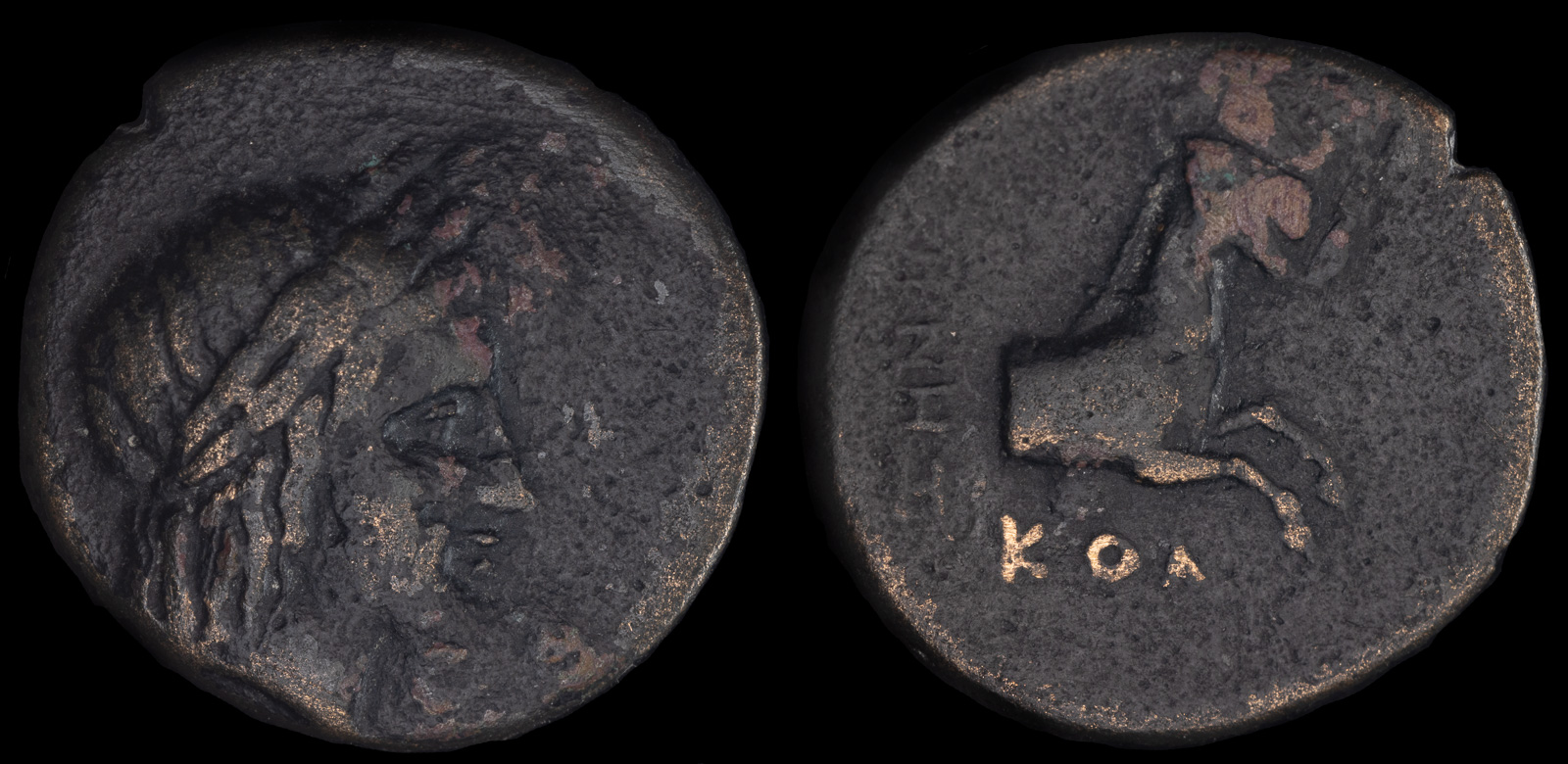
Ionia, Kolophon
Zenes Magistrate
circa 360-330 BCE
Æ Dichalkon 14mm, 1,92g
Obv: Laureate head of Apollo right
Rev: ZHNHΣ / KOΛ. Forepart of a horse right
Milne, Colophon, 111
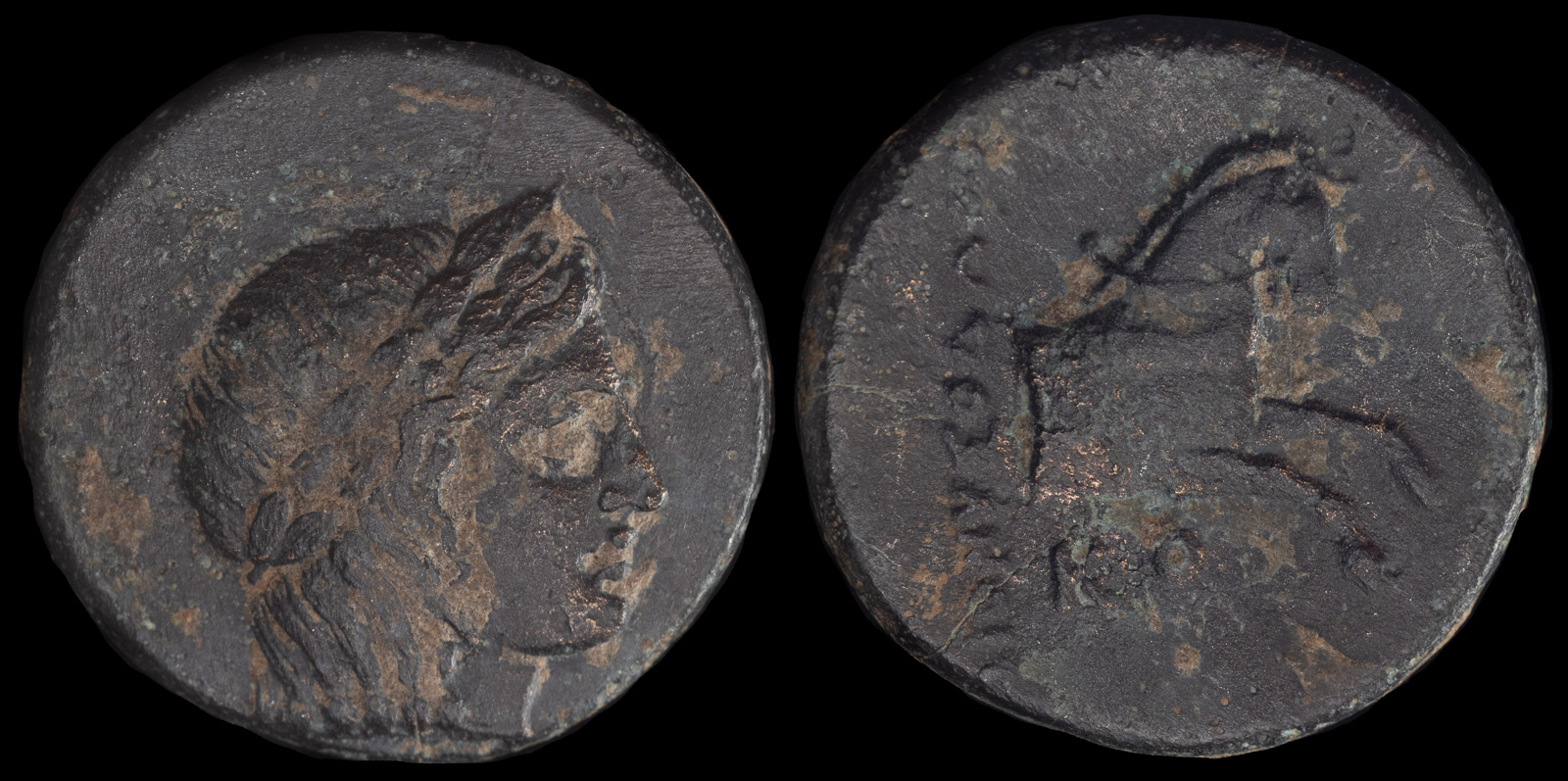
Ionia, Kolophon
Dionysios, magistrate
Circa 330-285 BCE
Ae 2.25g 14.44mm
Obv: Laureate head of Apollo right
Rev: ΔΙΟΝΥΣΙΟΣ KOΛ, Forepart of horse right
Milne 103
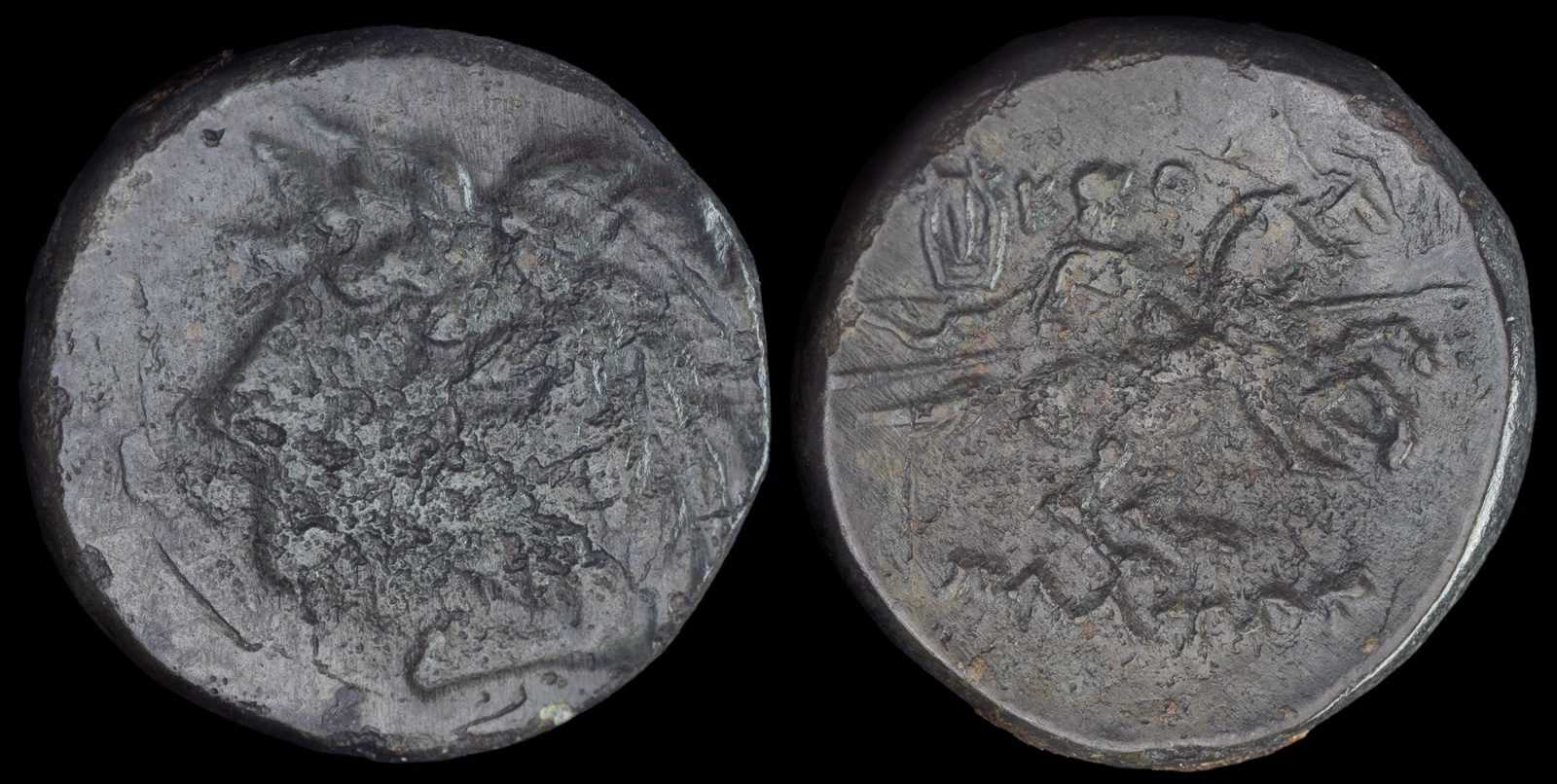
Ionia, Kolophon
Platon, magistrate
ca 330-285 BCE
Æ 18mm, 6.45g, 11h
Laureate head of Apollo r.
R/ Horseman riding r. with chlamys flying behind, holding lance; kithara in upper l
BMC 35
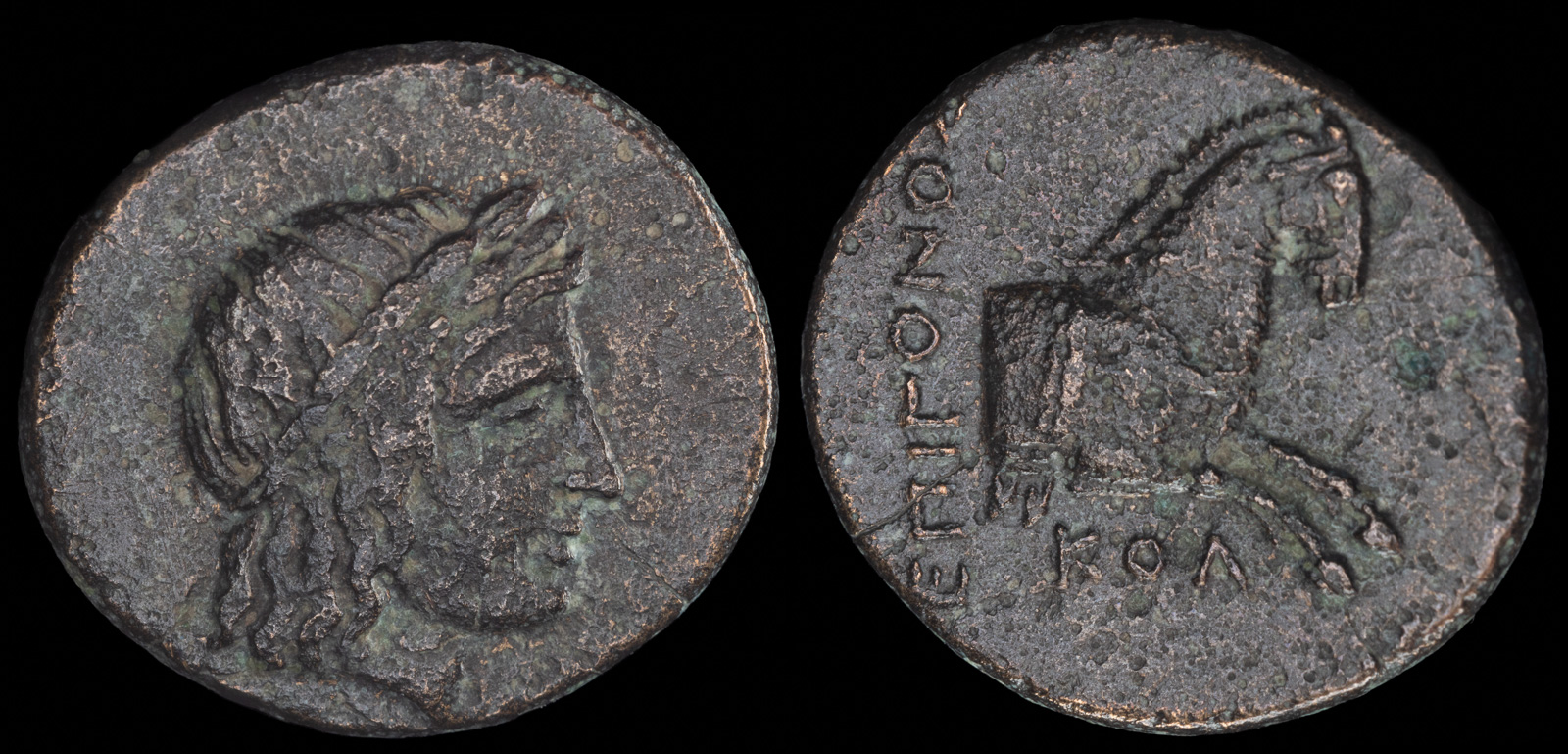
Ionia, Kolophon
Epigonos, magistrate
Circa 360-330 BCE
Ae 14mm 2.10g
Obv.: laureate head of Apollo right
Rev: ΕΠΙΓΟΝΟΣ / ΚΟΛ, forepart of a horse to right
SNG von Aulock 7912; BNC 22; Milne, Colophon, 109
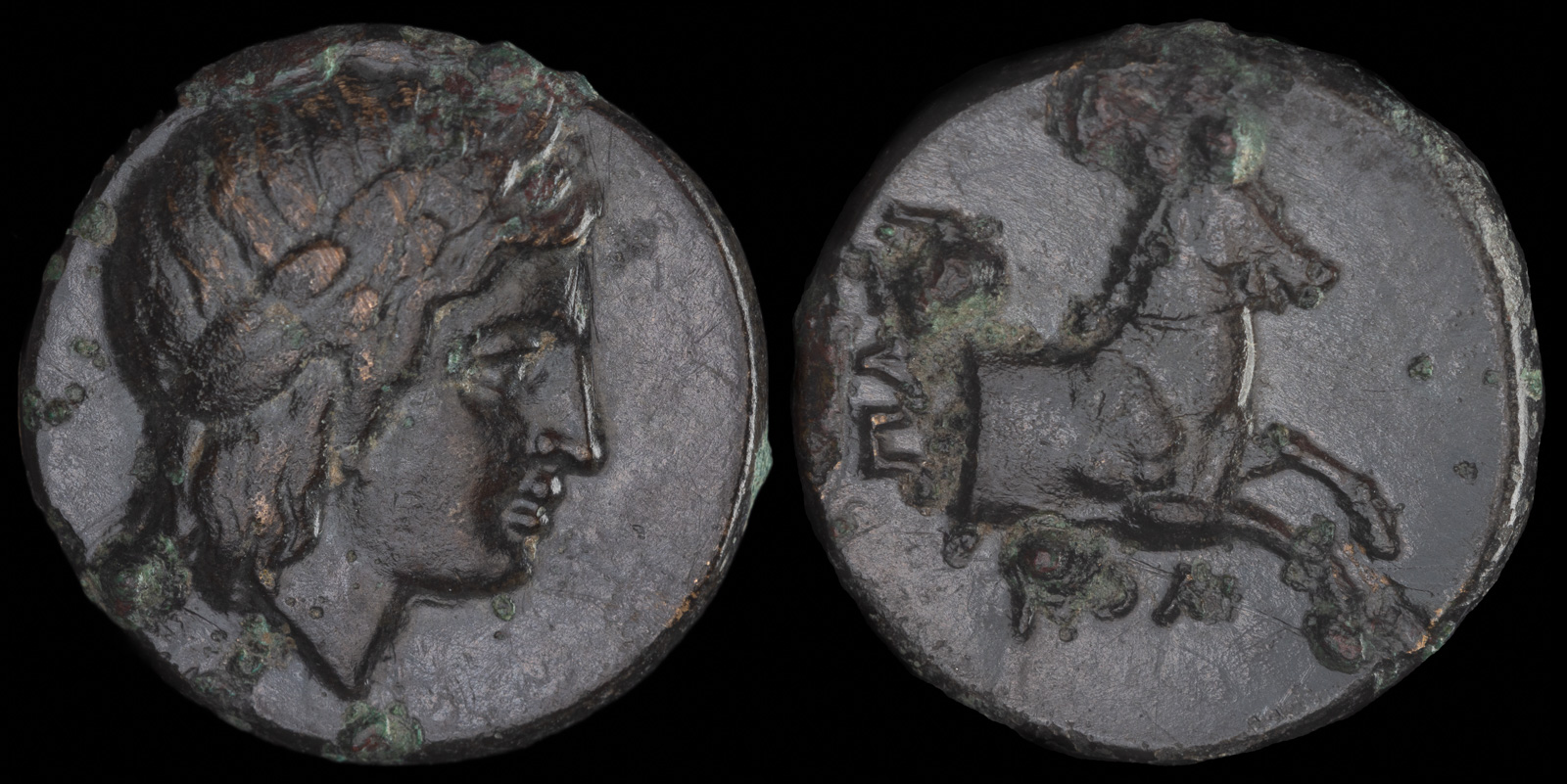
Ionia, Kolophon
circa 330-285 BCE
Pasi- magistrate
Æ 11mm, 2,26g
Laureate head of Apollo to right /
ΠΑΣΙ KOΛ, forepart of horse to right
Milne 118
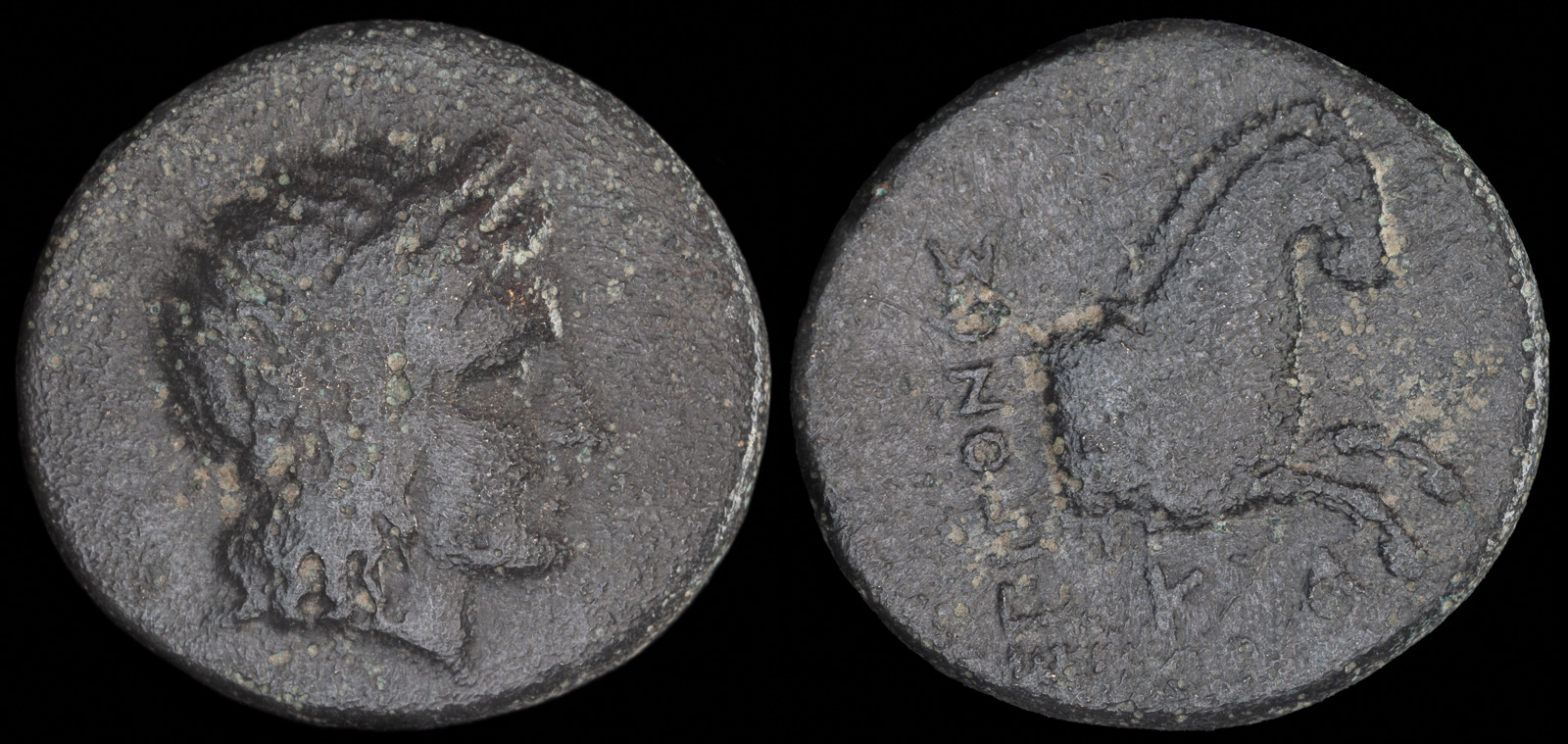
IONIA, Kolophon
Telegonos, magistrate
Circa 285-190 BCE
AE 15,3mm 2.2g
Obv: Laureate head of Apollo right.
Rev: KOΛ / THΛEΓONOΣ. Forepart of bridled horse right.
Milne 140A-C; Waddington 1498
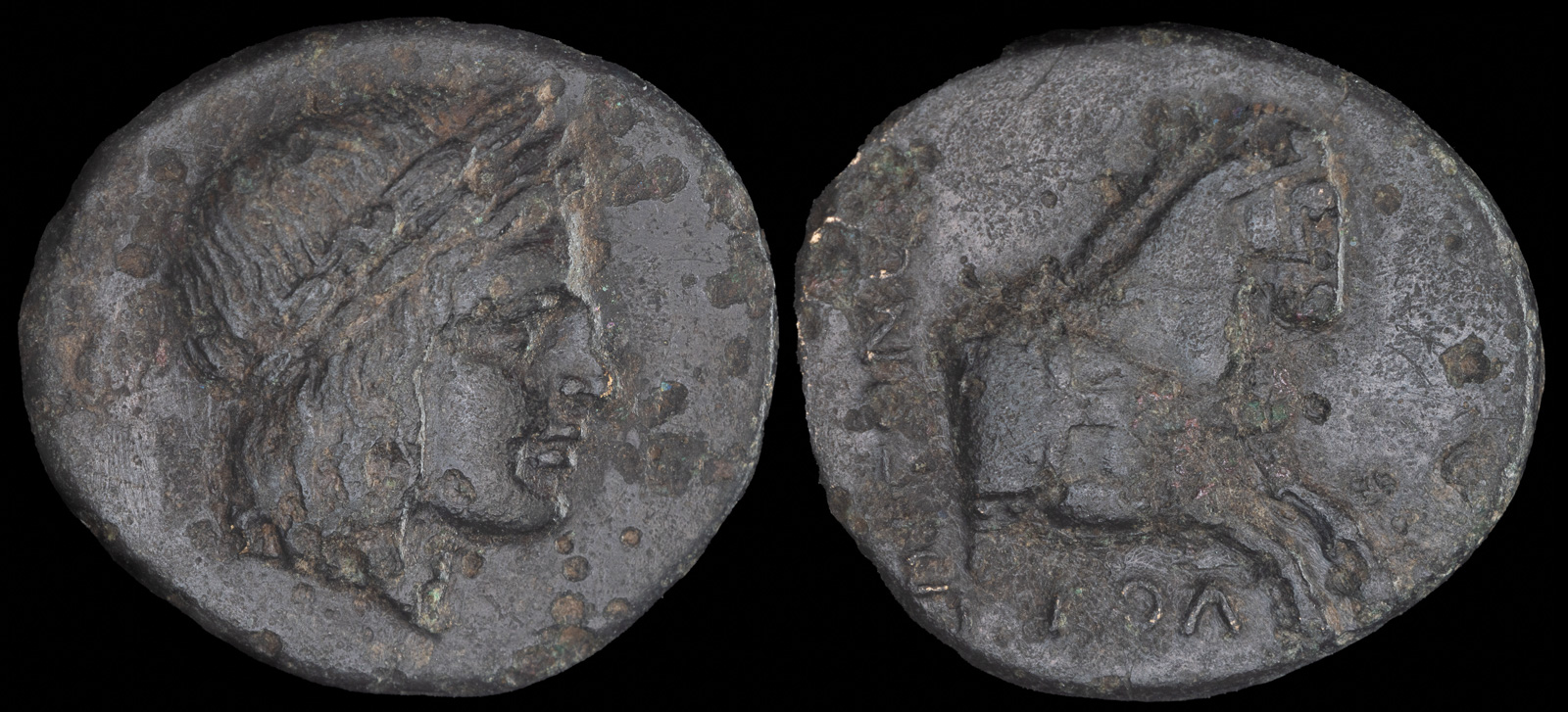
Ionia, Kolophon
Dionysodoros, magistrate
Circa 330-285 BCE
AE 15,2mm 2g
Obv: Laureate head of Apollo right.
Rev: ΔIONYΣOΔΩPOΣ / KO. Forepart of galopping horse right.
Milne, Colophon, 105
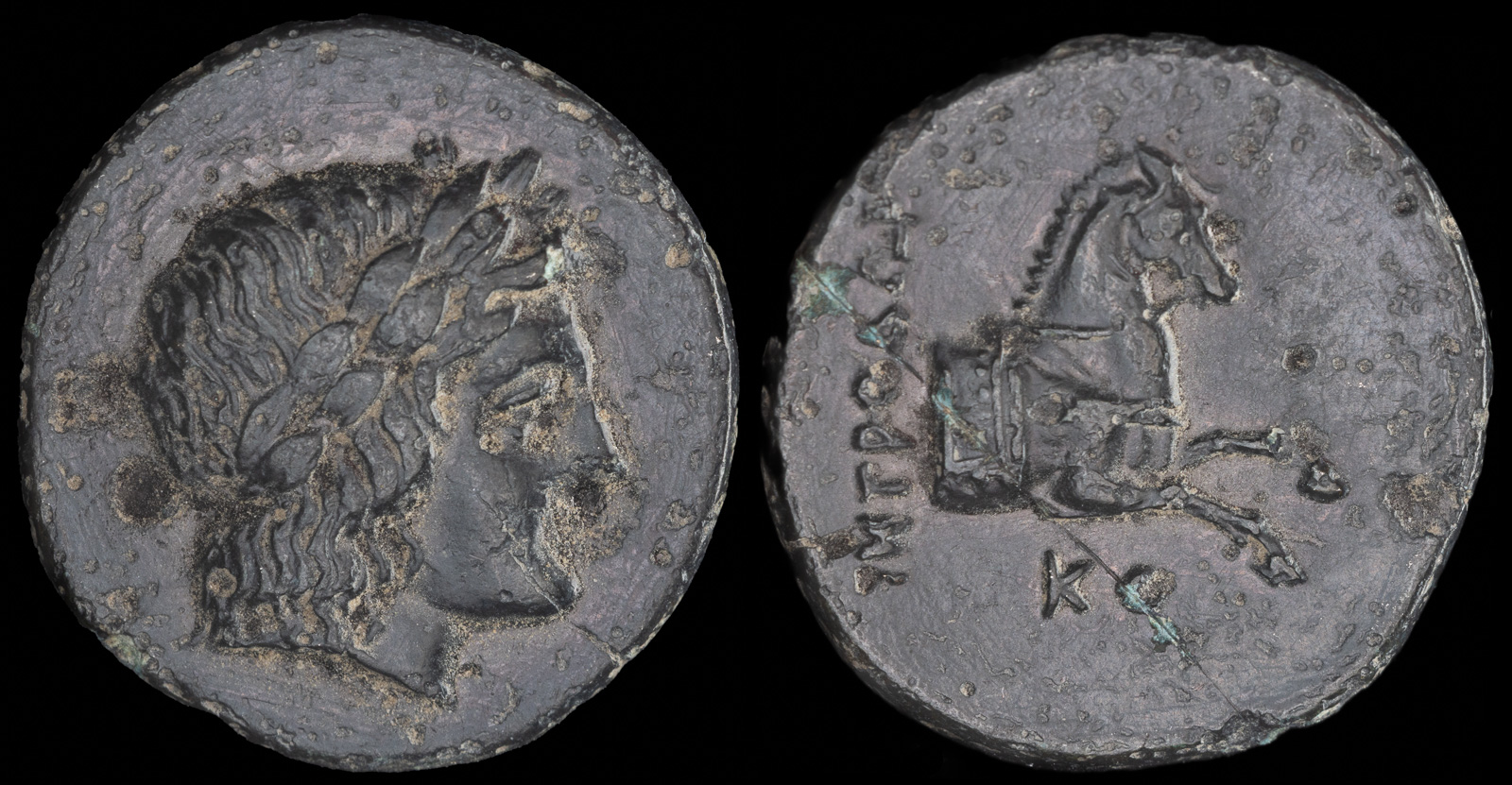
Ionia, Kolophon
Mitrodoros magistrate
330-285 BCE
AE 14,5mm 1,7g
Obv: Laureate head of Apollo right.
Rev: ΜΗΤΡΟΔΩΡΟΣ – ΚΟ Forepart of bridled horse right.
Milne 116; Waddington 1494
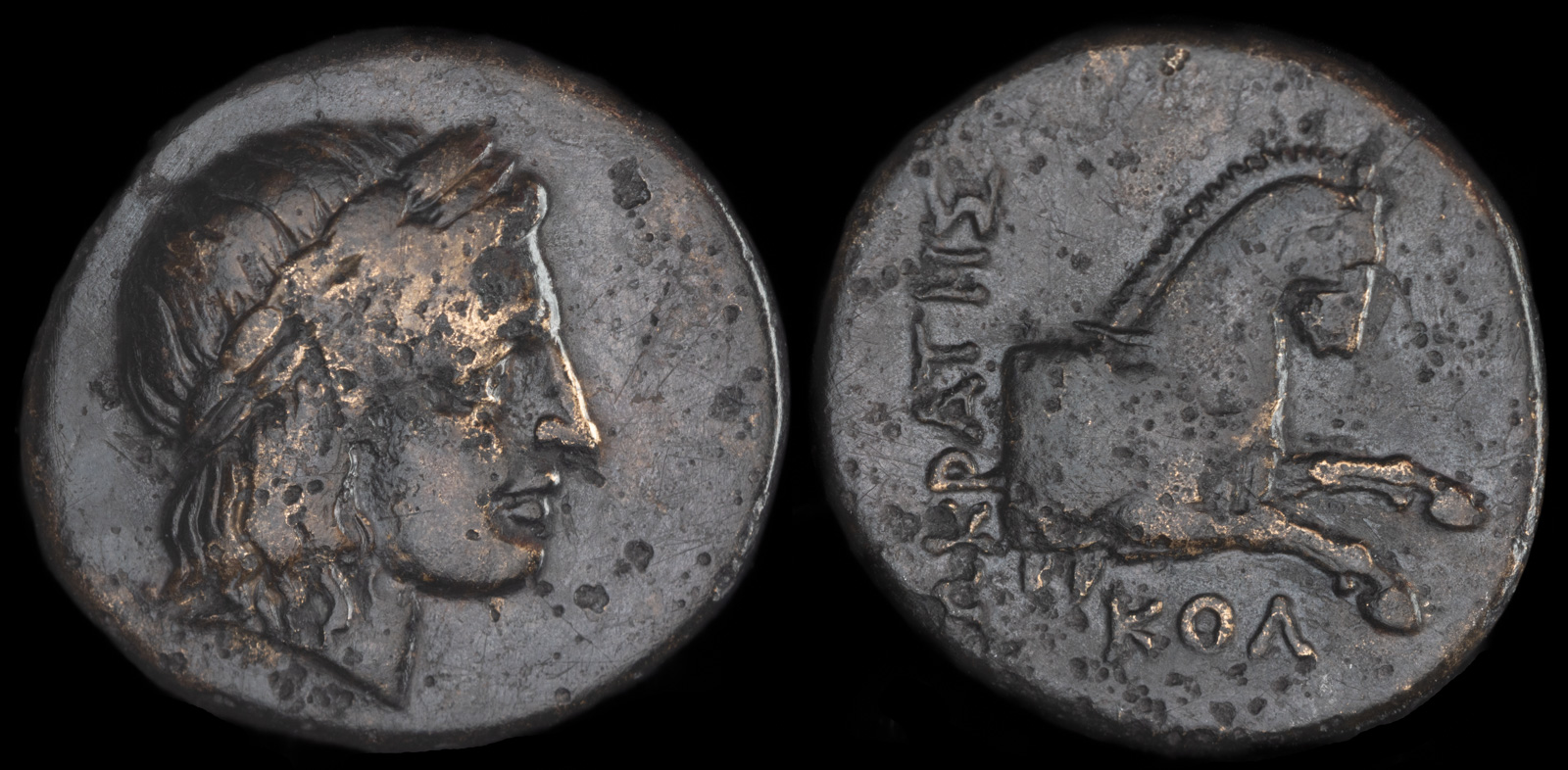
Ionia, Kolophon
Sokrates, magistrate
Circa 330-285 BCE
AE 12,1mm 2g
Obv: Laureate head of Apollo right.
Rev: ΣΩKPATHΣ / KOΛ. Forepart of galopping horse right.
Milne, Colophon, 121
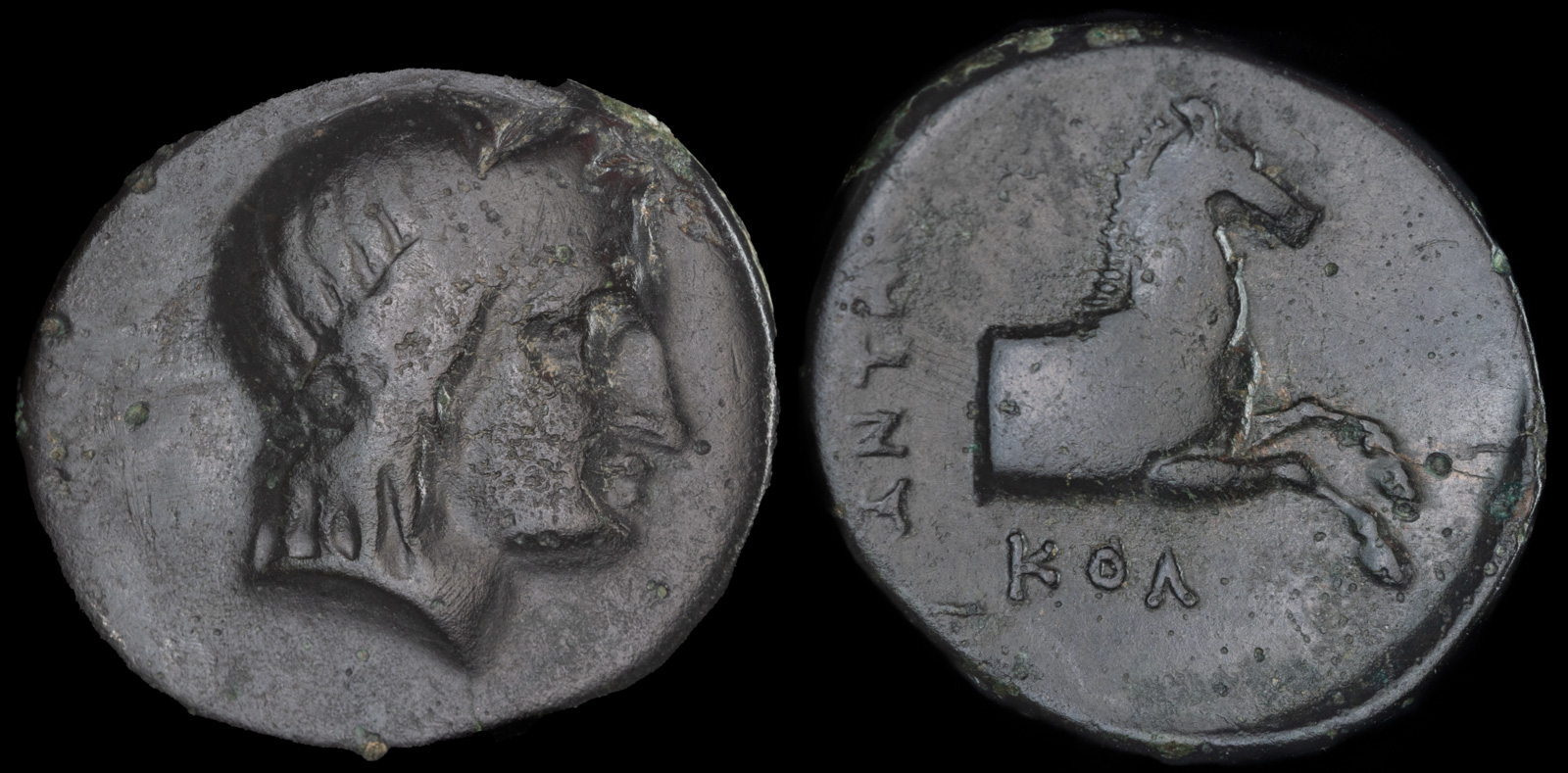
Ionia, Kolophon
Antenor, magistrate
Circa 330-285 BCE
AE 2.00g 13.90mm
Kopf des Apollon / Pferdeprotome
Milne, Kolophon (NNM 96), 102
Approximate year when Kolophon is conquered by Gyges of Lydia.
Approximate foundation of Myrleia by settlers from Kolophon.
Lysimachos convinces Teos and Kolophon to surrender, but Klazomenai and Erythrai are reinforced by Antigonos and are not taken.
Adramytteion, Ephesos, Pergamon, Magnesia, Tralles, Apamea, Samos, Kolophon, Smyrna, and Sardis occupied by Mithridates VI as part of the Mithridatic Wars against Rome.
Sulla defeats Mithridates VI and ends the Mithridatic Wars with the Treaty of Dardanos. Adramytteion, Ephesos, Pergamon, Smyrna, Sardis, Tralles, Kolophon, Apamea, and Magnesia return to Roman control.