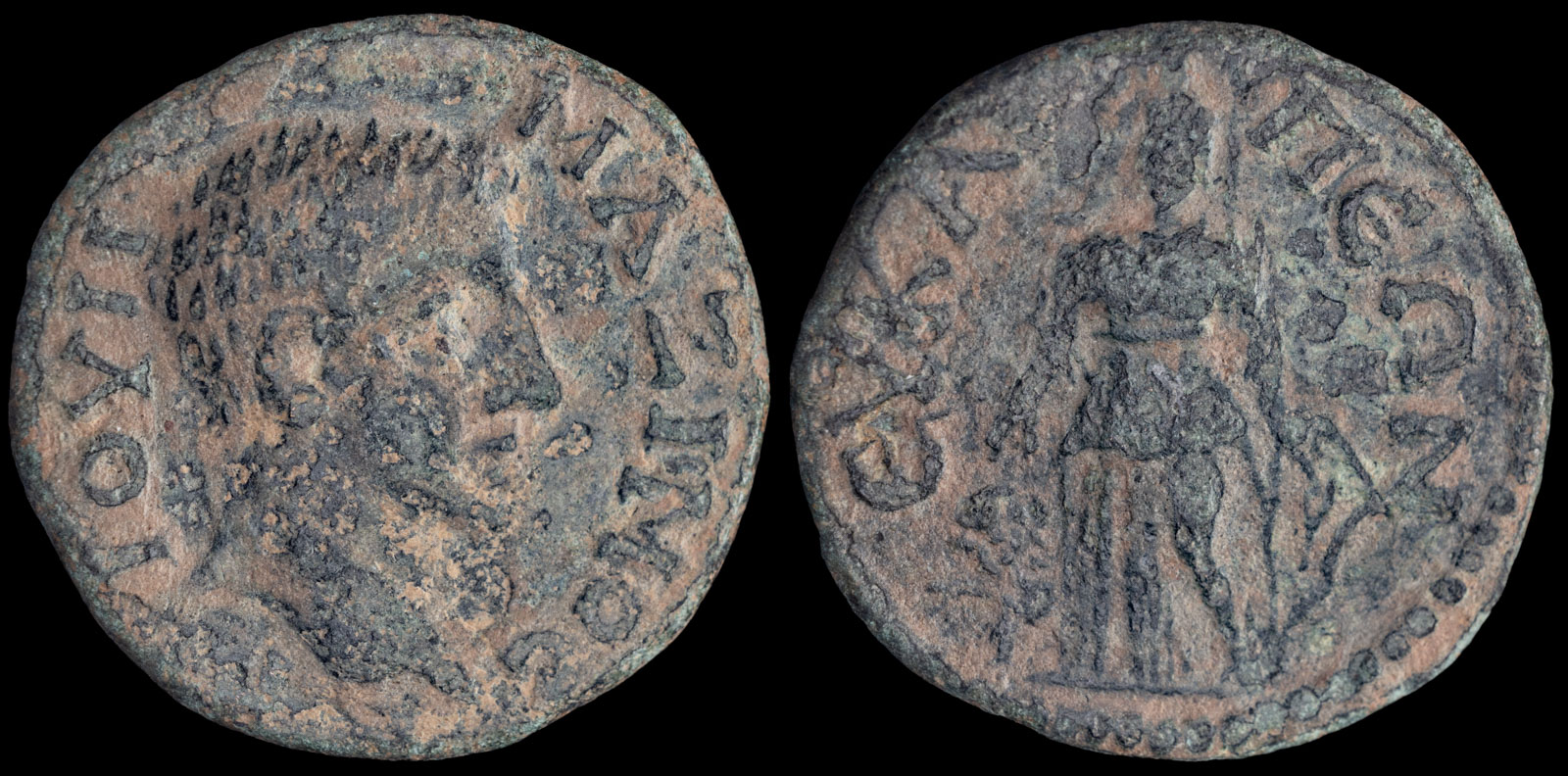
Phrygia, Eukarpeia
Maximus, as Caesar. 235/6–238 CE
AE 21.5mm 5.11g
Ob.: Κ Γ Ι ΟΥΗ ΜΑΞΙΜΟϹ, bare head right.
Rev: ΕΥΚΑΡΠΕΩΝ, Cybele standing facing, wearing long veil and chiton; to left, lion seated.
RPC VI 5608; BMC 26
Eukarpeia literally means ‘fruitfulness’ or ‘fertility’ and I assume was the result of plentiful crops. In line with this, local tradition believed the land was given by Zeus to Demeter and Dionysos. The city was located not far from the Maeander River and on the road from Dorylaion to Eumeneia.
In 1837, the ruins were described as impressive. However, constant plundering by the locals for building materials have removed nearly all traces.
It was the primary city of the Pentapolis of ancient Phrygia, consisting also of Hierapolis, Otros, Stentorian, and Bruzos.
On this coin, the presence of Kybele is consistent with other Phrygian cities at the time, where Kybele was widely worshipped.