Carian
View All Tags
For many years, the Carian script remained one of the great undeciphered writing systems of the ancient Mediterranean. Although its alphabet resembles Greek at first glance, many of the letters represented completely different sounds, which confused early scholars. Significant progress in decipherment was made only in the late twentieth century, especially through bilingual inscriptions and improved understanding of Anatolian linguistics. Today, researchers can read many Carian texts, though the surviving corpus is still relatively small and often fragmentary.
Most surviving Carian inscriptions are short: funerary epitaphs, graffiti, dedications, and ownership marks. These texts have been found both in Caria itself and in Egyptian sites connected to Carian mercenaries. The language shows grammatical features typical of Anatolian Indo-European languages, including distinctive noun endings and verb forms. Because the evidence is limited, however, many aspects of Carian vocabulary and syntax remain uncertain, and scholars continue to debate details of pronunciation and interpretation.
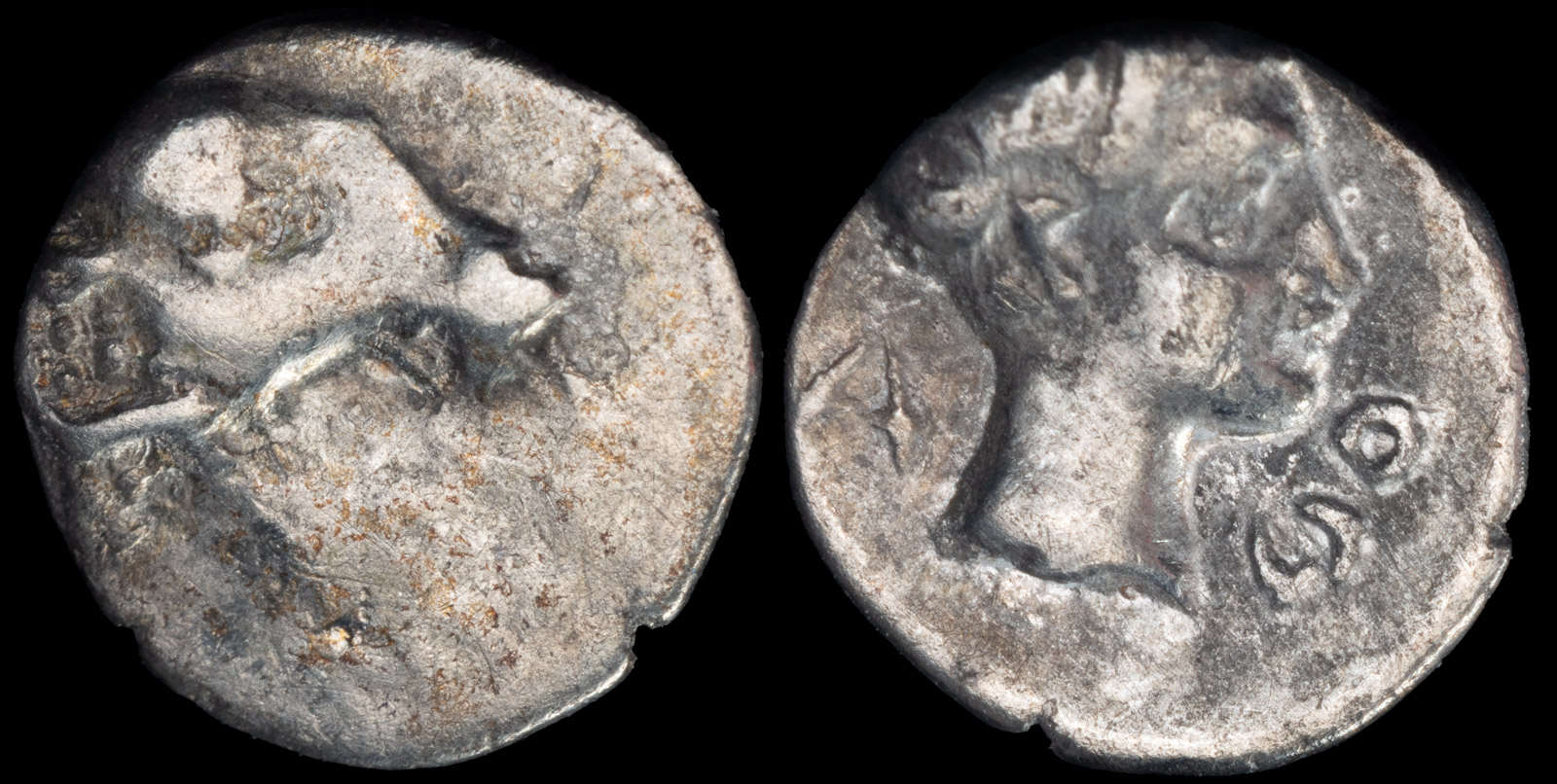
Caria, Kasolaba
AR Obol 7mm .41g
400-350 BCE
Obv: Young male head right; Carian letters below chin and behind.
Rev: Head of ram right.
Konuk, Kasolaba, 5; Klein 496-8 (uncertain); cf. SNG Keckman 866-902