Chariot
View All Tags
The technology spread quickly, influencing civilizations across the ancient Near East and beyond. In Mesopotamia, Egypt, and Anatolia, chariots were incorporated into military tactics, often used by elite warriors or royalty. The Egyptians, particularly during the New Kingdom (c. 1550–1070 BCE), refined chariot design by making them lighter and more agile, using them effectively in battles such as the famous Battle of Kadesh. Chariots also played ceremonial and symbolic roles, depicted in art and associated with divine or royal status.
In the Indo-European world, particularly among the Hittites and later the Mycenaeans and early Vedic societies in India, chariots held both martial and mythological importance. They were essential in warfare, hunting, and religious rituals, often linked to the gods or heroic figures. The speed and shock value of a chariot charge could break enemy lines, although their usefulness declined with the advent of more sophisticated infantry and cavalry tactics.
By the end of the first millennium BCE, the military dominance of chariots had waned due to the rise of mounted cavalry, which was more versatile on rough terrain and in variable weather. However, the legacy of the chariot endured in mythology, literature, and cultural memory, continuing to symbolize nobility and martial valor in various ancient traditions.
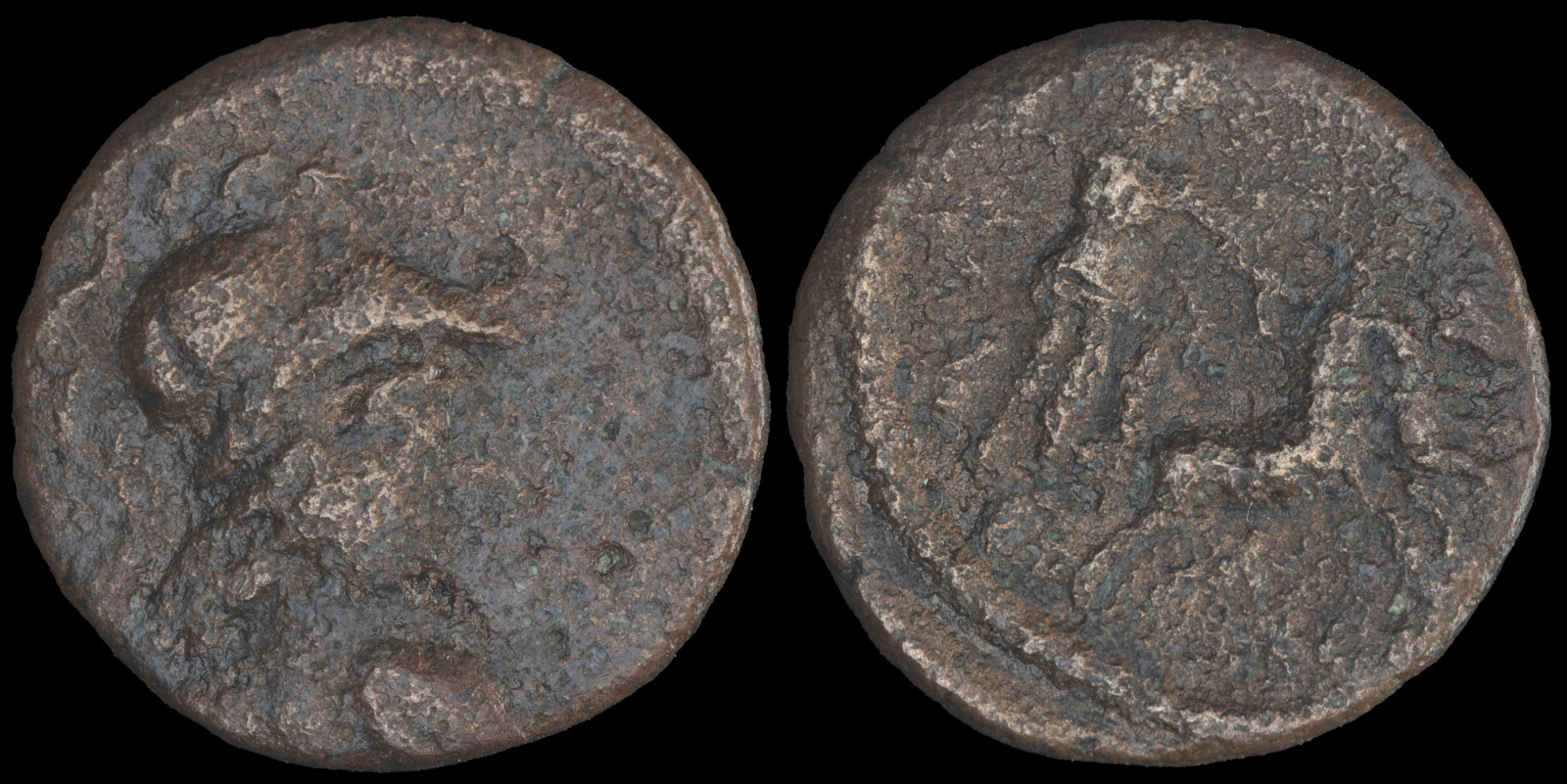
Attica. Athens
Ca 120-150 CE
15.32mm 2.54g
Obverse: Helmeted bust of Athena right
Reverse: Athena right in chariot drawn by two horses
Svoronos Plate 88, Coin 10; Kroll 210 Period VB/C