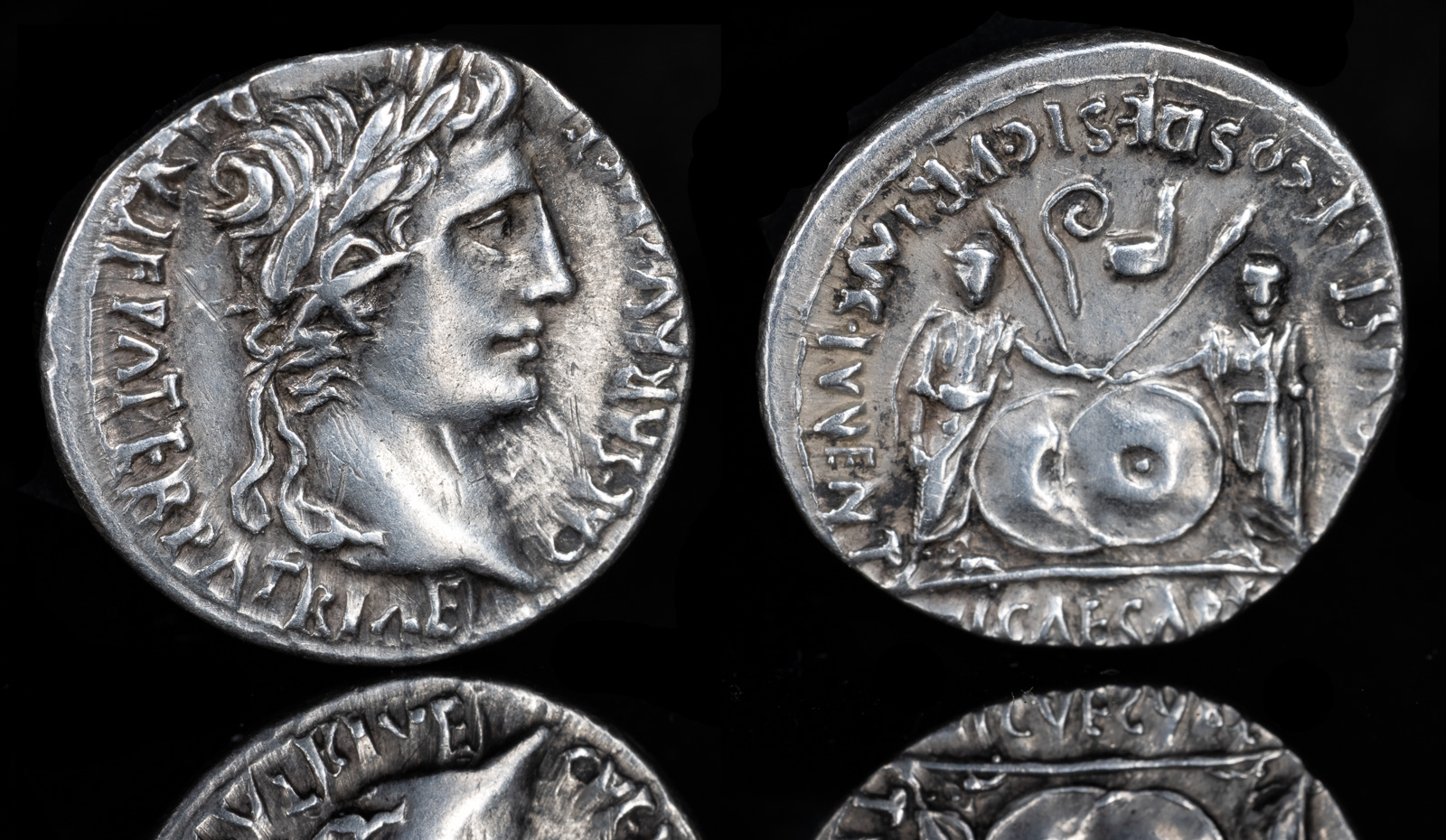
AUGUSTUS (27 BCE-14 CE)
Denarius. Lugdunum.
19mm 3.77g
Obv: CAESAR AVGVSTVS DIVI F PATER PATRIAE. Laureate head right.
Rev: AVGVSTI F COS DESIG PRINC IVVENT / C L CAESARES.
Caius and Lucius Caesar standing facing; two shields, two sceptres; lituus and simpulum above.
RIC² 209
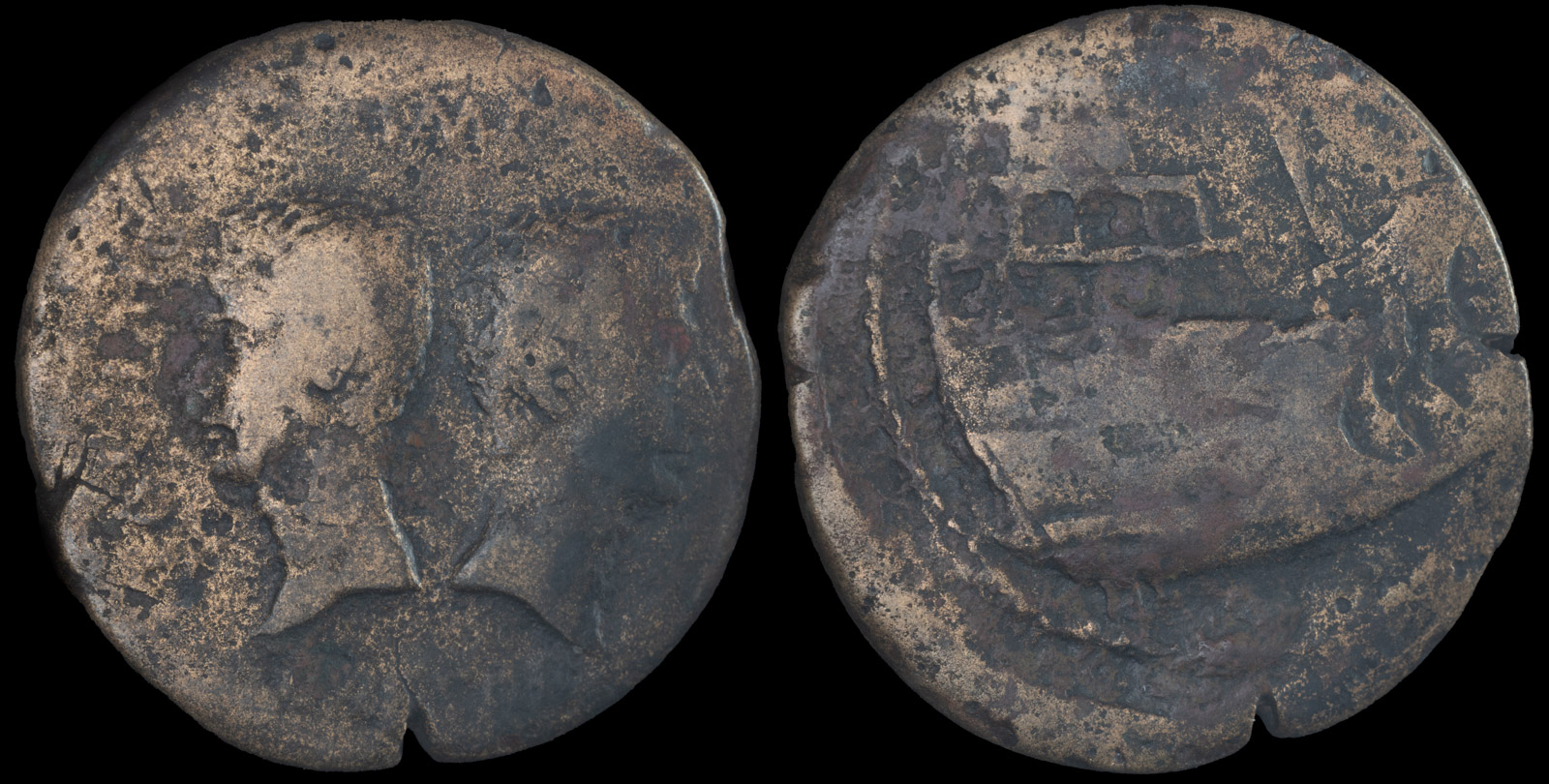
Octavian as Imperator, with Divus Julius Caesar
Vienna mint in Gaul
Ca 36 BCE
Ae Dupondius 29.5mm, 19.0g
Obv: Back-to-back bare heads of Divus Julius Caesar left and Octavian right; •IMP• above, CAESAR below, •DIVI•IVLI• to left and •DIVI•F to right
Rev: Prow of galley right with multi-tier superstructure and mast
RPC I 517
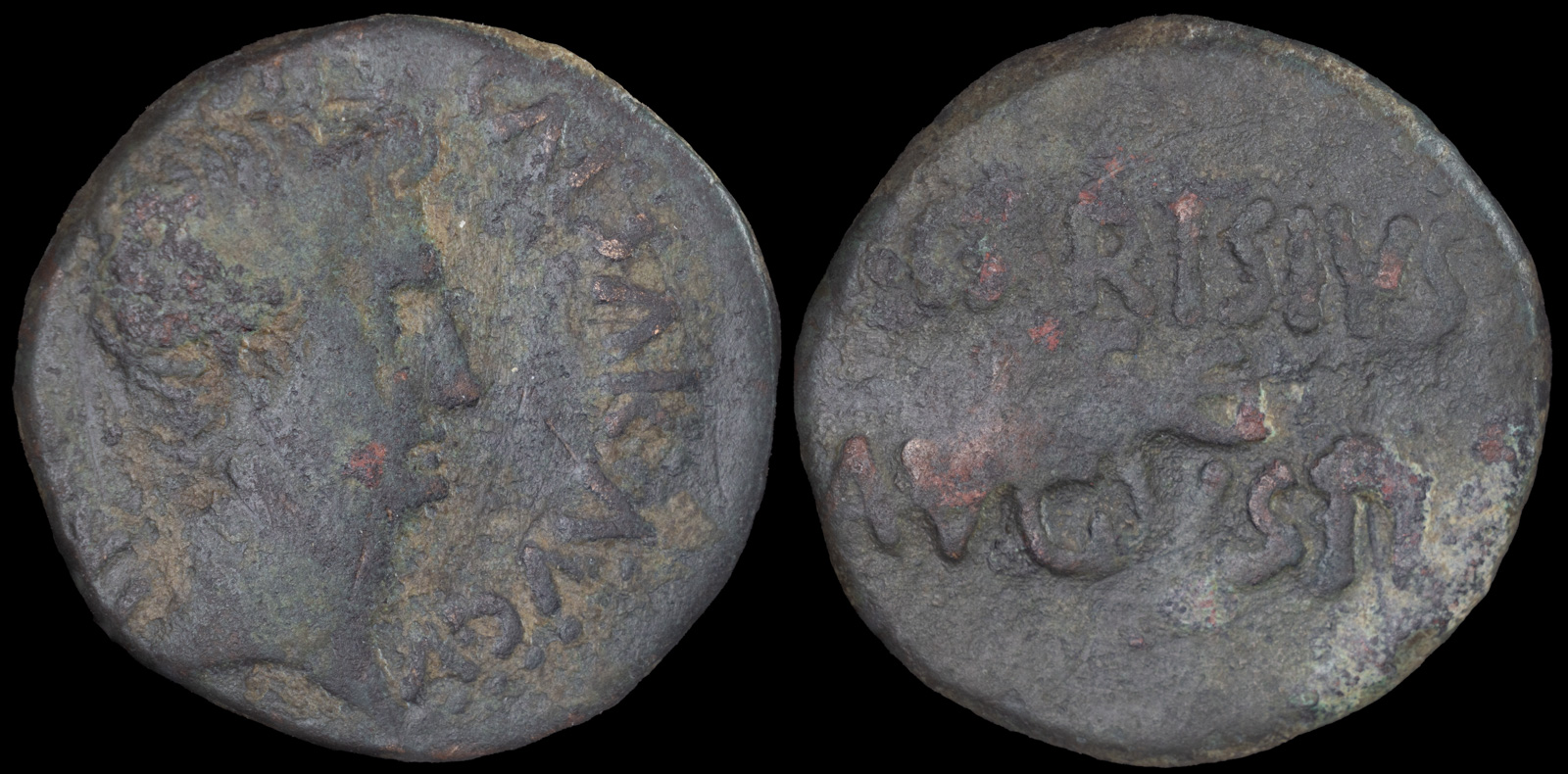
Emerita, Hispania
Minted under P. Carisius, legate
Struck 25-23 BCE
Ae As 24.5mm, 8.1g
Obv: TRIBVNIC POTEST CAESAR AVGV; Bare bust right
Rev: P CARISIVS LEG AVGVSTI in three lines
Burgos 984
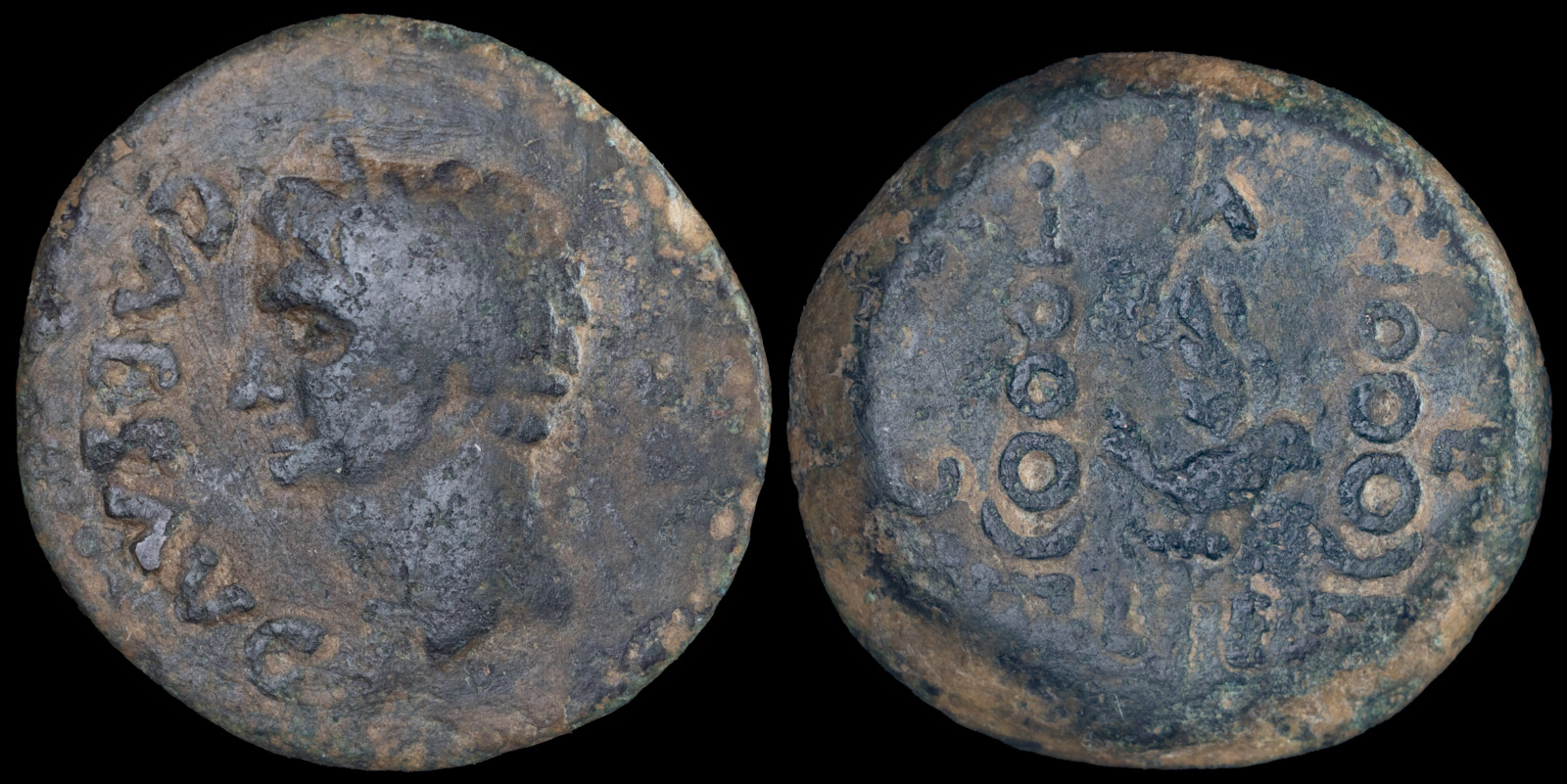
Emerita, Hispania
Augustus (27 BCE – 14 CE)
Ae As (or Semis) 5.62g 19.59mm
Obv: PERM CAES AVG; Laureate bust left
Rev: Eagle between standards, LE / VX below
ABH 1016 var. (head left); Hess LX 17
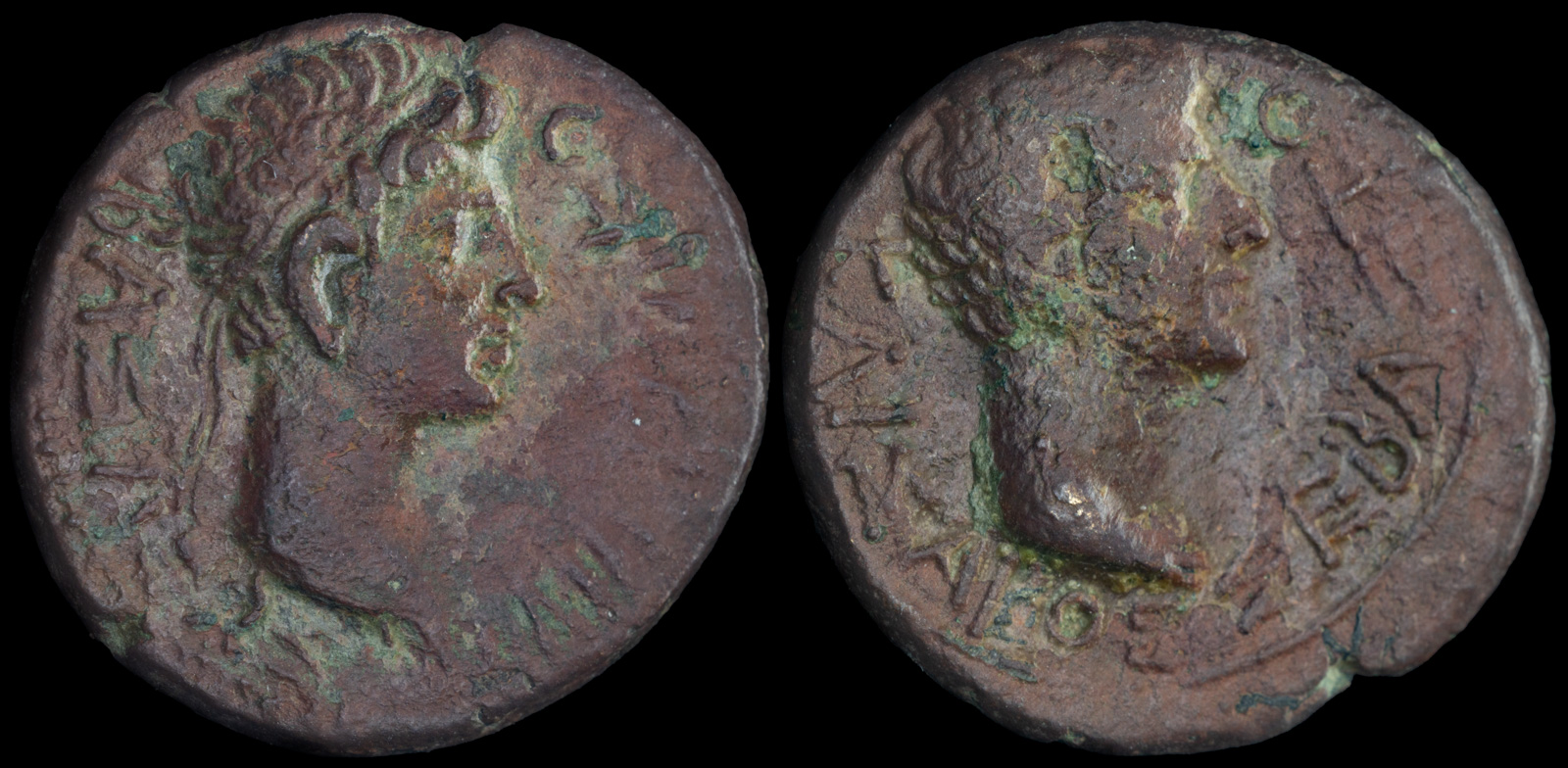
Thracian Kingdom, Rhoimetalkes I and Augustus
11 BCE – 12 CE
AE 19mm 4.44g
Obv: BAΣ[IΛEΩΣ] POIMHTAΛKOY, diademed head of Rhoimetalkes right.
Rev: KAIΣAPOΣ ΣEBAΣTOY, bare head of Augustus right.
RPC I 1718; SNG Stancomb 908; Yurukova 194-200
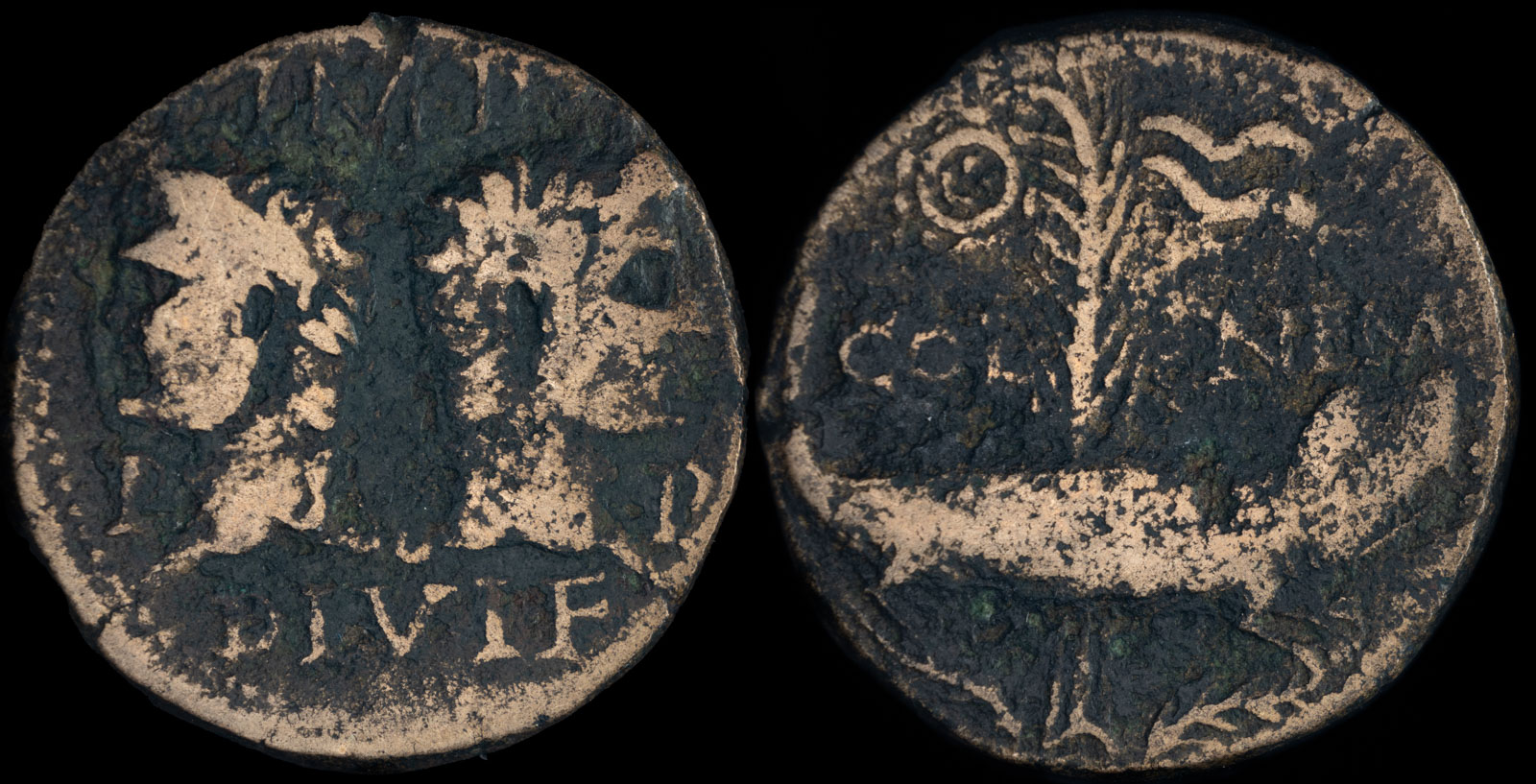
Nemausus, Gaul
Augustua and Agrippa
ca. 27 BCE -14 AE
AE 25.4mm, 12.5g
Obv: Back-to-back laureate busts of Agrippa (on left) and Augustus (on right): IMP above and DIVI F below
Rev: Crocodile to right chained to palm branch, wreath above and palms below; COL-NEM across fields
RIC I 158, RPC I 524
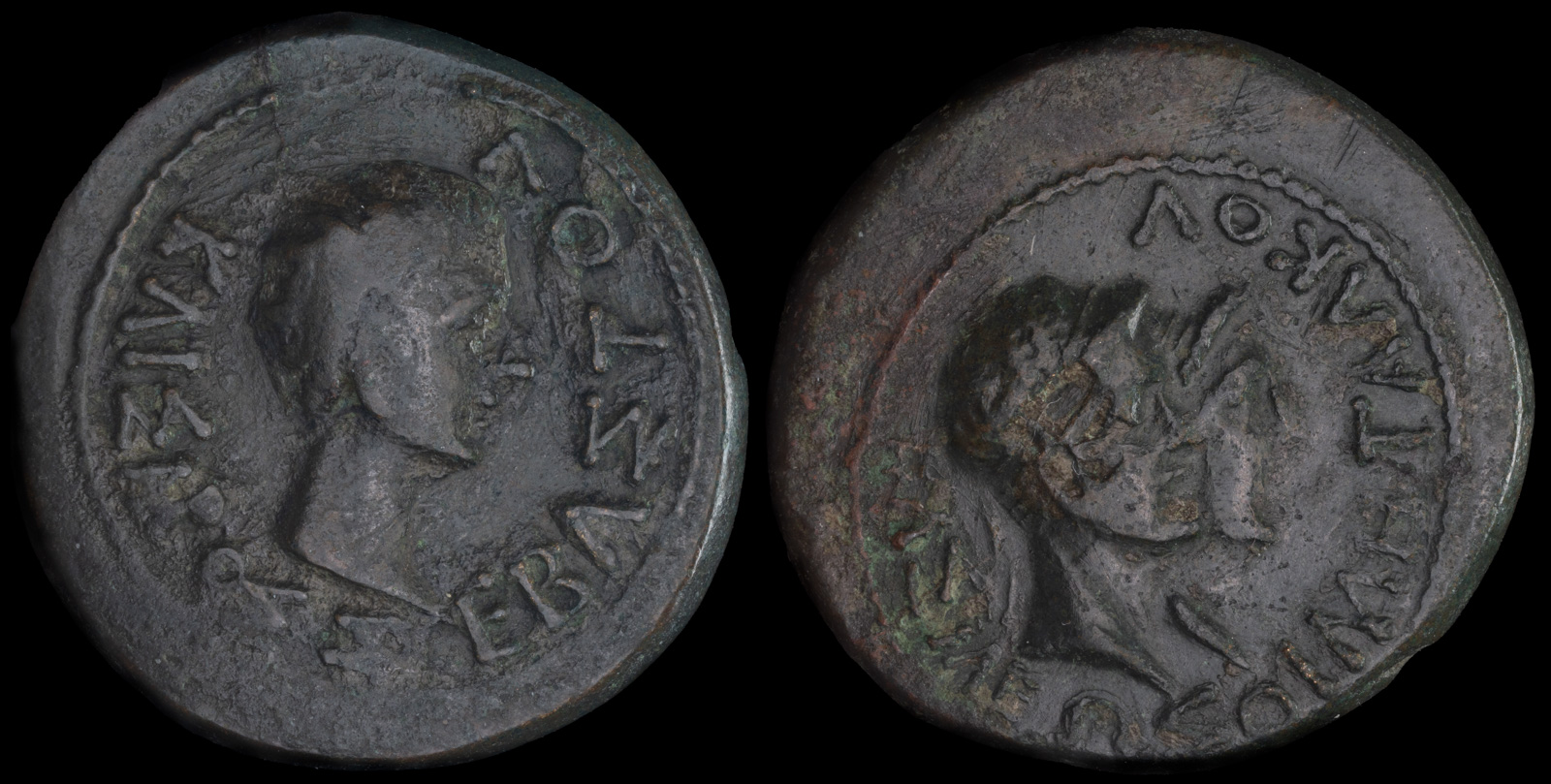
Kings of Thrace. Rhoemetalkes I and Pythodoris, with Augustus
11 BCE – 12 CE
Æ 27mm, 11,83g
Obv: ΒΑΣΙΛΕΩΣ ΡΟΙΜΗΤΑΛΚΟΥ. Jugate heads of Rhoemetalces, diademed, and his queen Pythodoris, right.
Rev: ΚΑΙΣΑΡΟΣ ΣΕΒΑΣΤΟΥ. Head of Augustus, right.
Youroukova 204–8, pl. XXIV; RPC 1711
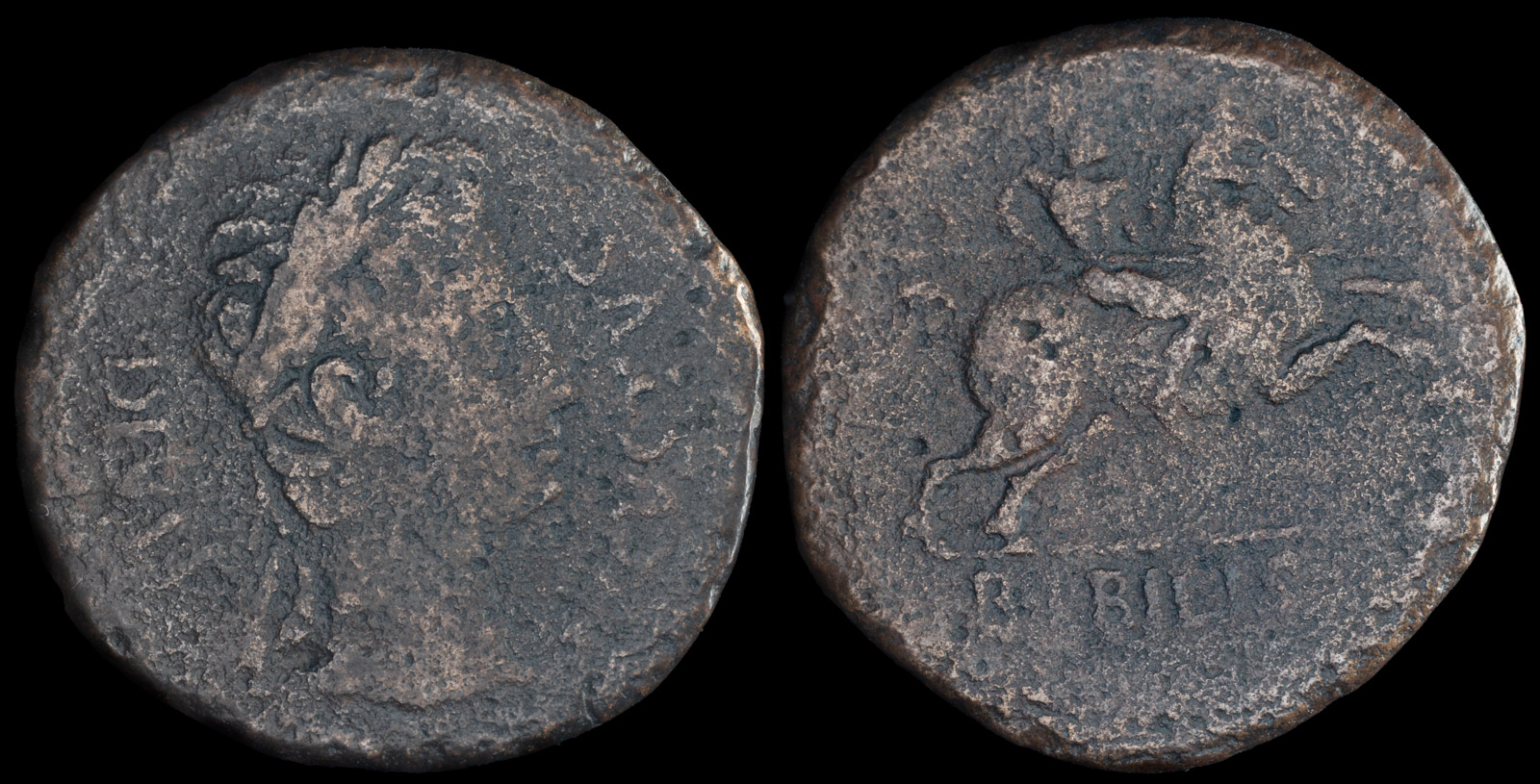
Bibilis, Spain
Augustus 27 BCE – 14 CE
Ae As 29mm, 12.0g
Obv: AVGVSTVS DIVI F; Laureate bust of Augustus right
Rev: Horseman riding right holding lance; BILBILVS below
Abh-276; Hess Pl XIX 12
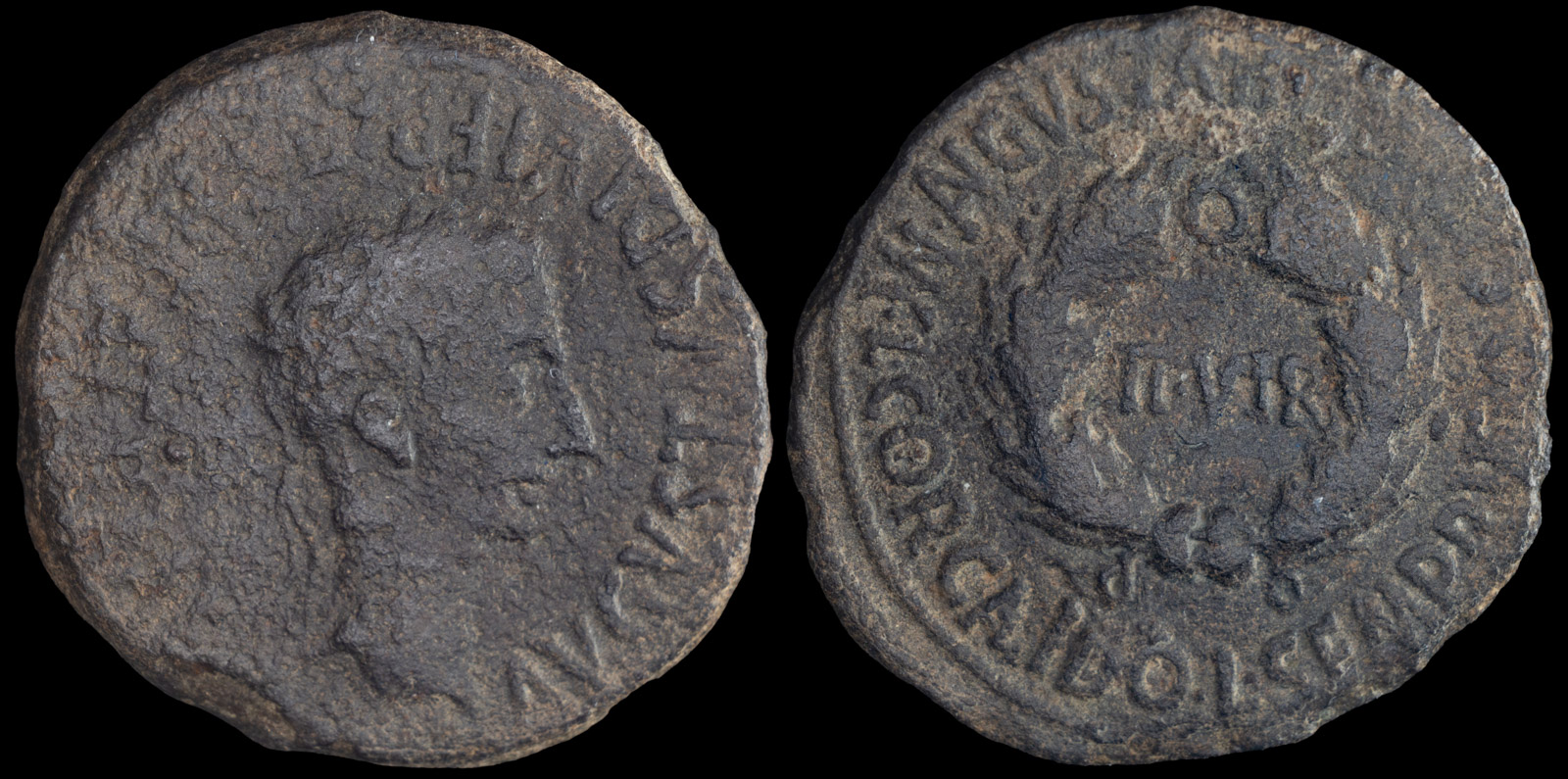
Bilbilis, Iberia
Augustus, minted 2 BCE – 14 CE
AE 29mm 9.5g
Obv: AVGVSTVS DIV F PATER PATRIAE; Laureate bust of Augustus right
Rev: MVN AVGVSTVS BILBILIS L COR CALDO L SEMP RVTLO around II VIR within laurel wreath
RPC I 395; Heiss XIX 16
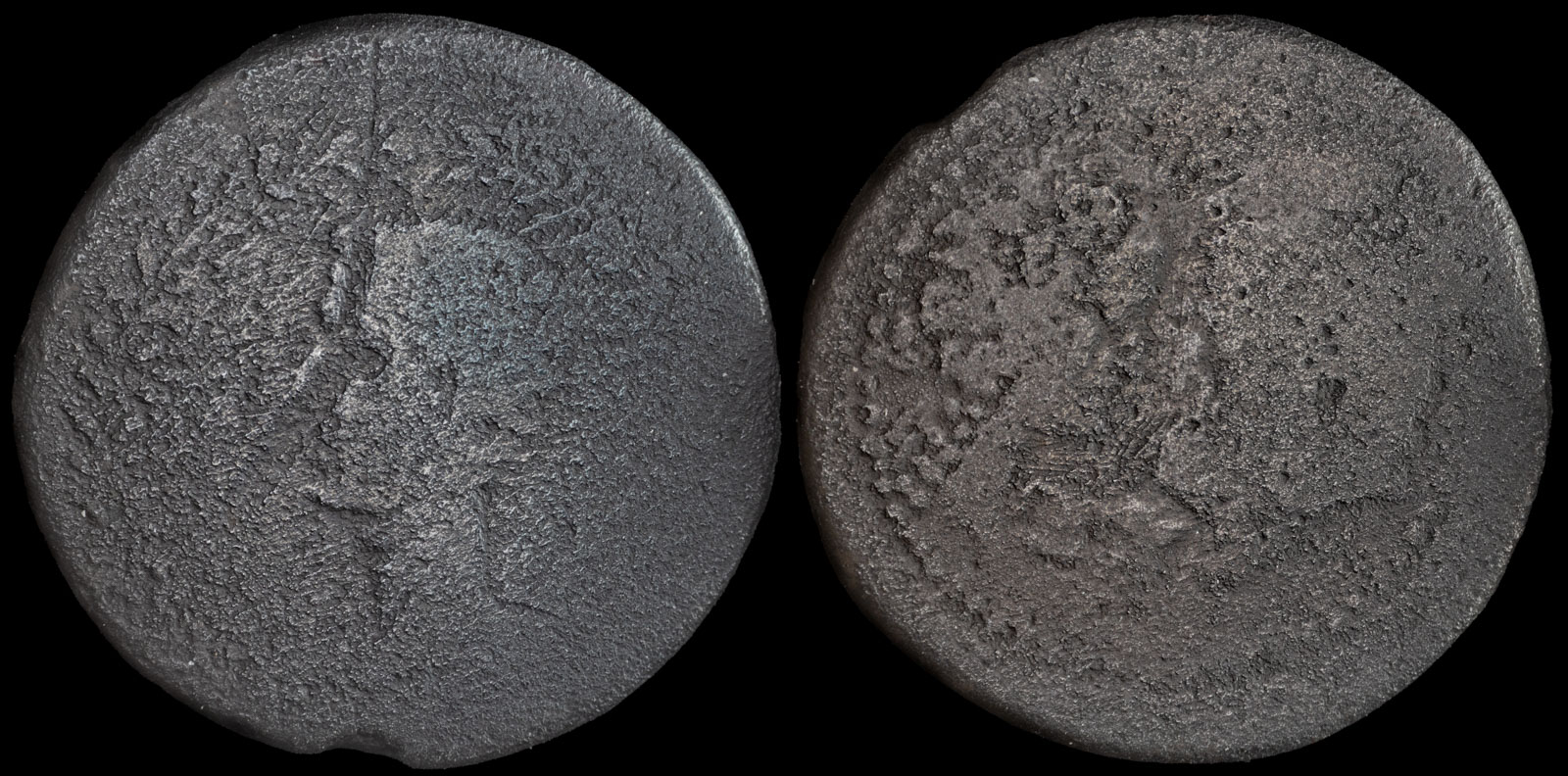
Syrtica, Leptis Magna
Augustus. 27 BCE – 14 CE
Æ Dupondius 33mm, 19.45g, 8h
Bare head of Augustus left within laurel wreath /
LPQY in neo-Punic across field, busts of Dionysus-Shadrapha wearing taenia and ivy-wreath vis-à-vis bust of Herakles-Milk-Ashtart wearing taenia and lion’s skin tied around his neck.
RPC I 842; MAA 11; Müller 14
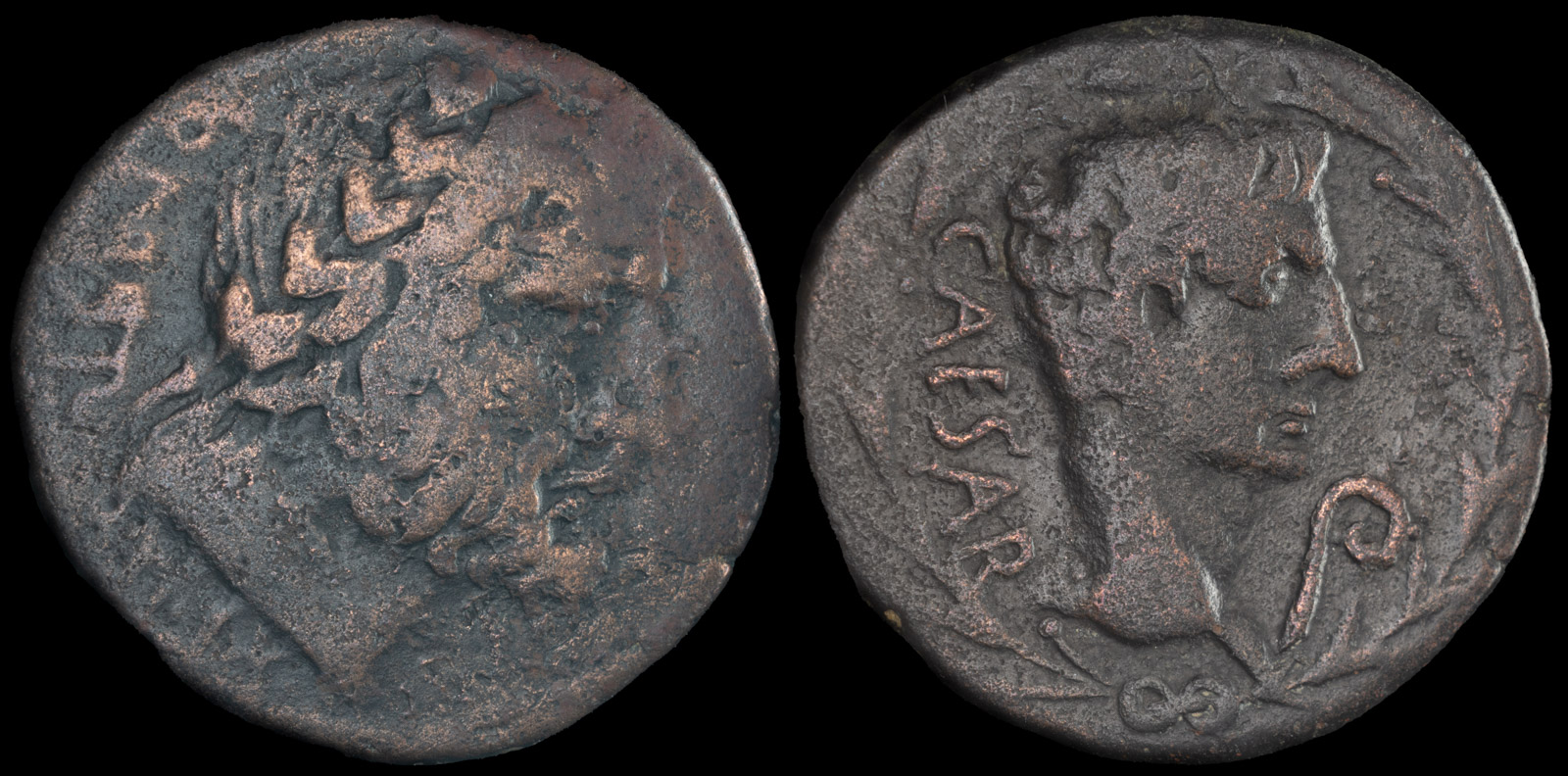
Syrtica, Sabratha
Augustus 27 BCE – 14 CE
AE 15.69g 30mm
Laureate head of Baal-Melqart right “MNSY” below and “SBRTN’N” to left, both in Neo-Punic.
Head of Augustus right “CAESAR” to left, lituus to right, all within a wreath.
RPC 813
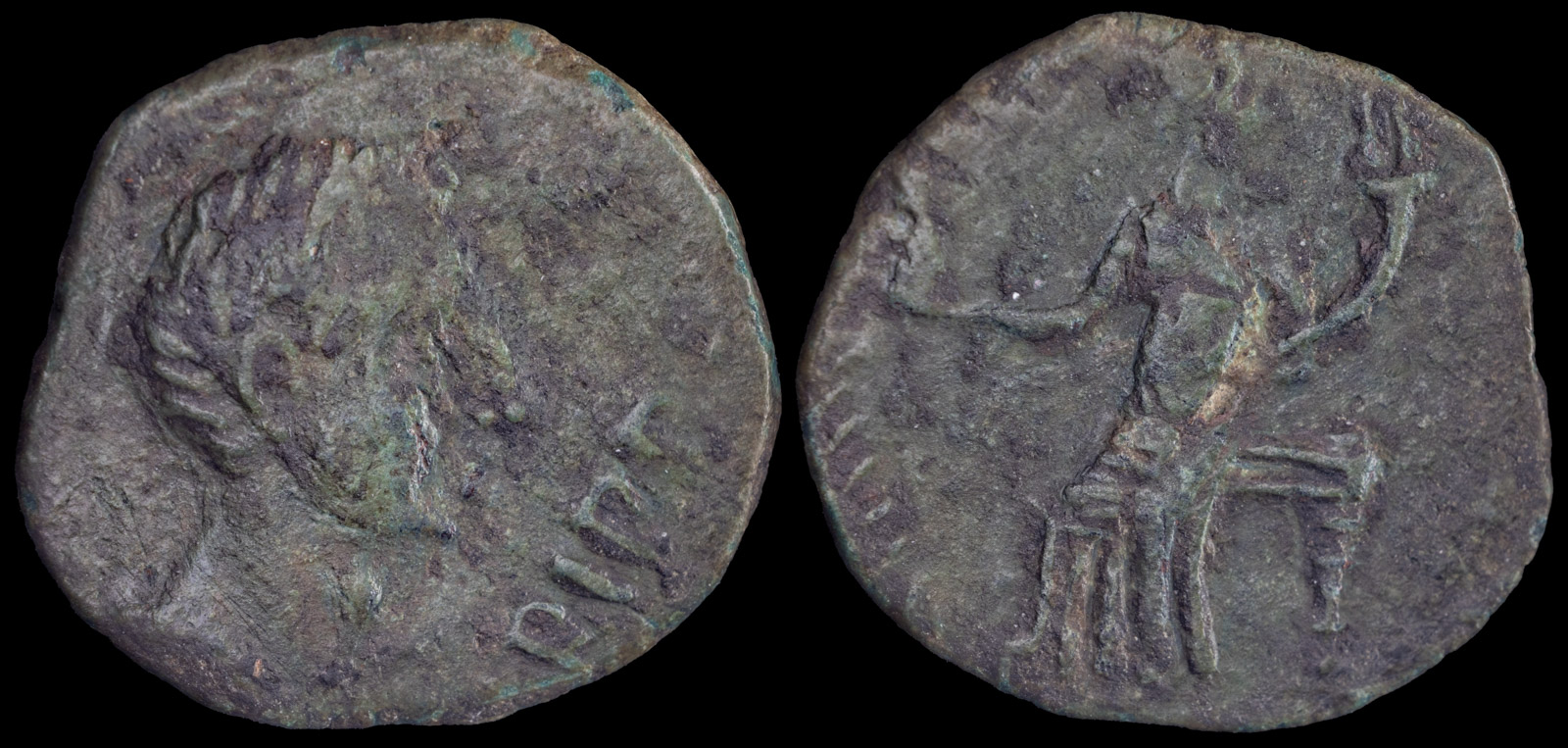
Spain, Irippo
AE 5.27g 25mm
Ca 30 BCE
Obv: Male head right – possibly Octavian.
Rev: Woman seated with pine cone and cornucopia.
Heiss p. 318 1
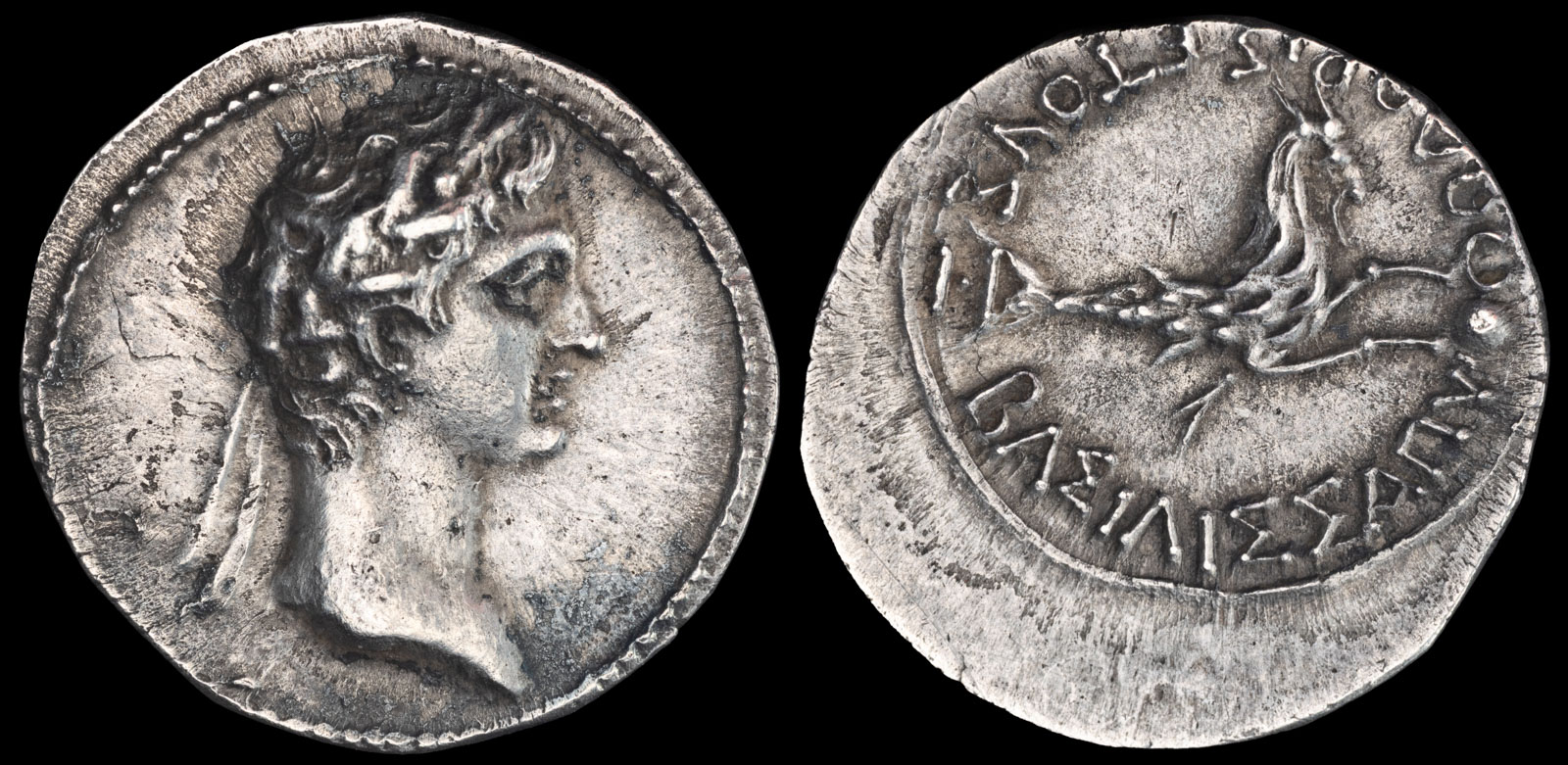
Kings of Pontus, Pythodoris, with Divus Augustus
Dated CY 60 (A22/3 or 23/4 CE)
AR Drachm 18.5mm, 3.70g, 12h
Struck under Tiberius
Laureate head of Divus Augustus right /
Capricorn right, globe between its forehooves; ETOYΣ Ξ (date) in legend.
Leschorn, Antike Ären 1a; RPC I 3803; RG 19
September 23
Gaius Octavius Thurinus (later Augustus) is born in Rome. He is the son of Gaius Octavius, a senator and governor, and Atia, the niece of Julius Caesar.
Death of Augustus’ father.
Gaius Octavius’s father dies. His mother, Atia, marries Lucius Marcius Philippus, a former consul.
Lucius Marcius Philippus, the stepfather of Augustus, is made a consul.
Death of Augustus’ grandmother, Julia, who raised him. She was the sister of Julius Caesar.
Octavius joins Julius Caesar in Hispania (Spain) during Caesar’s campaign against the sons of Pompey.
Augustus, then known as Octavian, studies in Apollonia
March 15
Julius Caesar is assassinated. In his will, Caesar adopts Octavius as his son and heir, naming him Gaius Julius Caesar Octavianus (Octavian).
Octavian, Mark Antony, and Marcus Lepidus form the Second Triumvirate, a political alliance aimed at avenging Caesar’s assassination.
October 23
Octavian and Mark Antony defeat Brutus and Cassius at the Battle of Philippi in Greece, effectively ending the resistance of Caesar’s assassins.
Octavian marries Scribonia, who gives birth to his only biological child, Julia the Elder.
Livia and her husband flee from Octavius and join Sextus Pompey in Sicily.
January 17
Octavian divorces Scribonia and marries Livia Drusilla, despite her being pregnant with her previous husband’s child.
September 3
Octavian defeats Sextus Pompey, the son of Pompey the Great, in the naval Battle of Naulochos, solidifying his control over Rome’s grain supply.
Augustus donates a public statue to Livia. Ovid later mentions this as a great place to pick up women.
The Second Triumvirate ends. Octavian begins a propaganda campaign against Mark Antony, accusing him of betraying Rome by allying with Cleopatra, Queen of Egypt.
Augustus removes Strato, tyrant of Amisos.
Augustus gives Kydonia its freedom due to their assistance.
Malichos I has a bitter rivalry with Kleopatra VII, resulting in his failing to show up for the Battle of Actium, a victory for Octavian.
September 2
Octavian’s forces defeat Antony and Cleopatra at the Battle of Actium.
October
Octavian (later Augustus) enters Alexandria and annexes Egypt into the Roman Empire. Cleopatra VII commits suicide, ending the Ptolemaic Dynasty.
Straton’s Tower is given to Herod I, who renamed it to Caesarea Maritima in honor of Augustus.
Augustus makes Dyrrhachion a colony for veterans of the Battle of Actium.
Octavian removes Philopator I, the son of Tarkondimotos, from the throne of Cilicia.
Octavian resettles Potidaia and renames it Colonia Iulia Augusta Cassandrensis.
Augustus appears before Pelusion and is admitted to take Egypt
August 10
Antony and Cleopatra commit suicide. Octavian conquers Egypt, making it a Roman province.
Augustus completes the rebuilding of Carthage, which becomes the center of Africa Proconsularis, a key province of the Roman Empire.
Corinth becomes the capital of the Roman province of Achaia under Augustus.
Philippi is renamed to Colonia Iulia Philippensis by Augustus.
The administration of Cirta is modified by Augustus, splitting it into two cities of Numidians and Romans
January 16
Octavian is granted the title Augustus by the Roman Senate, marking the end of the Roman Republic and the beginning of the Roman Empire. He becomes the first Roman Emperor.
Tralleis is severely damaged by an earthquake. Augustus provides funds for the reconstruction, so Tralleis renames itself to Caesarea.
Augustus raises Ankyra to the status of polis.
Augustus falls seriously ill and nearly dies. He arranges for his political succession by granting more power to his trusted lieutenant, Agrippa.
Death of Marcellus, nephew to Augustus. Livia is suspected of poisoning him.
Carisius of Emerita removed by Augustus due to a revolt by the Asturians
Augustus visits Ilion.
Artaxias II is removed as king of Armenia by Augustus, upon receiving a letter from his unhappy subjects. Tigranes III is installed as king.
The kingdom of Cilicia is restored by Augustus to Tarkondimotos II.
Augustus settles veterans of his conflict with Marc Antony and Kleopatra in Aesernia.
July 4
Ara Pacis Augustae constructed in Rome to honor the return of Augustus.
Roman Italy established by Augustus with the name ‘Italia’.
Augustus is given the title Pater Patriae (Father of the Country) by the Senate.
Death of Lucius, grandson to Augustus and an heir to the Roman Empire with his brother Gaius.
The Neapolitan Isolympic Games founded by Augustus
Death of Gaius, grandson to Augustus the sole remaining heir to the Roman Empire.
June 26
After the death of Gaius Caesar, Augustus considers making Germanicus his heir. Livia persuades him to choose Tiberius, and Augustus does so on condition that Tiberius adopt Germanicus.
The poet Ovid is banished to Tomis by Augustus
September 8
Three Roman legions are destroyed under Varus in the Battle of the Teutoburg Forest, causing Augustus severe angst.
Augustus appoints Germanicus as commander of forces in the Rhein.
Augustus adopts his stepson, Tiberius, as his heir, ensuring a smooth transition of power.
Augustus attends the Neapolitan Isolympic Games
August 19
Augustus dies in Nola, Italy, at the age of 75. He is succeeded by Tiberius.