Overstruck
View All Tags
One of the primary motivations for overstriking was economic efficiency. Minting coins required a significant amount of resources, including precious metals like silver, gold, and copper, as well as the labor and infrastructure needed to produce blank coin flans. By reusing older coins, mints could bypass the costly process of refining and recasting metal, saving both time and material. Overstriking was particularly useful during periods of rapid economic expansion or when a sudden increase in coinage was needed, such as during wars or political upheavals.
Overstriking also served a political purpose, as it allowed rulers or cities to assert their authority over a region or population. When a new ruler or regime came to power, overstriking existing coins was a way to quickly circulate new currency bearing their symbols, portraits, or inscriptions, signaling their dominance. This practice was especially common during territorial conquests, where the coins of the conquered were repurposed to reflect the authority of the victor. For example, during the Roman Republic and early Empire, Roman mints overstruck coins of defeated peoples to affirm Roman sovereignty.
In some cases, overstriking was part of broader monetary reforms. Changing standards of weight or metal content often necessitated the withdrawal of older coins from circulation. Overstriking these coins allowed the issuing authority to adjust the currency supply while ensuring consistency with new standards. This was particularly relevant in regions with fluctuating economic conditions or shifts in trade networks, where standardizing coinage was crucial for maintaining trust in the monetary system.
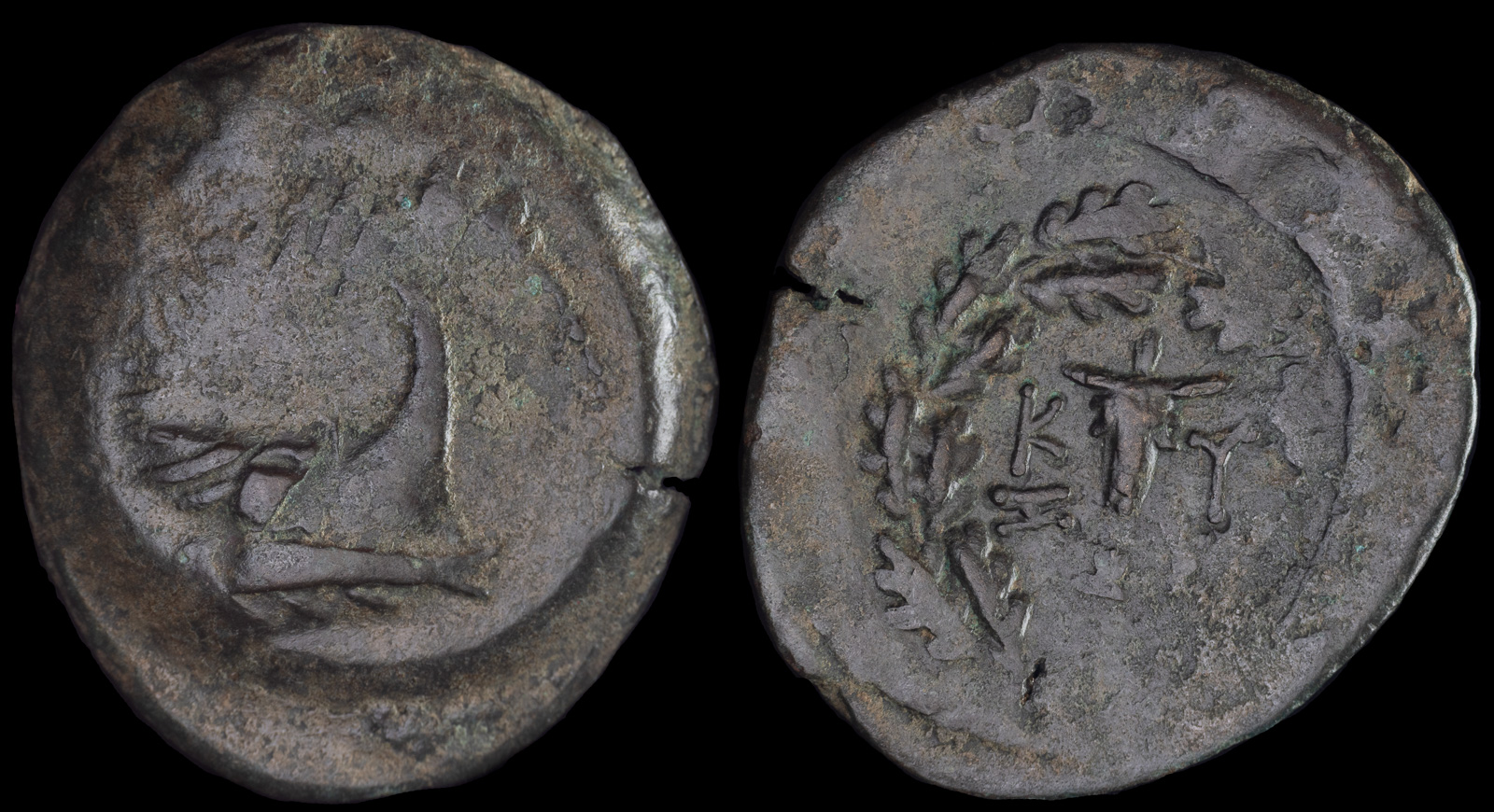
Mysia, Kyzikos
circa 300-200 BCE
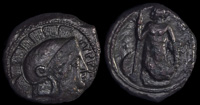
Overstruck on an earlier issue from Kyzikos (SNG Paris 436)
Æ 31mm, 15,82g
Prow to right /
Bucranium; K-Y/Z-I across fields; all within oak wreath
Von Fritze III, 11; SNG BnF 438; SNG von Aulock 1231
Kyzikos 300-200 BCE
Menelaus 315-306 BCE
Odessos, Moesia 238-244 CE
Tyrrhenoi, Sicily 354-336 BCE