
Crispus, as Caesar
Treveri, 322-323 CE
BI Nummus 3.55g, 21mm, 6h
IVL CRISPVS NOB CAES, laureate and cuirassed bust to left, holding spear and shield /
BEATA TRANQVILLITAS, globe set on altar inscribed VOTIS XX in three lines; three stars above, •STR• in exergue.
RIC VII 372
Ex Terner Collection

Postumus
Treveri, 260 CE
AR Antoninianus 4.36g, 22mm, 1h
IMP C POSTVMVS P F AVG, radiate, draped and cuirassed bust to right /
HERC DEVSONIENSI, Hercules standing facing, head to right, leaning on club and holding bow and lion’s skin.
RIC V.2 64; J. Mairat, The Coinage of the Gallic Empire, Wolfson College, Trinity, 2014 (unpublished PhD Thesis), 17; RSC 91a
Ex Fritz Rudolf Künker 2008
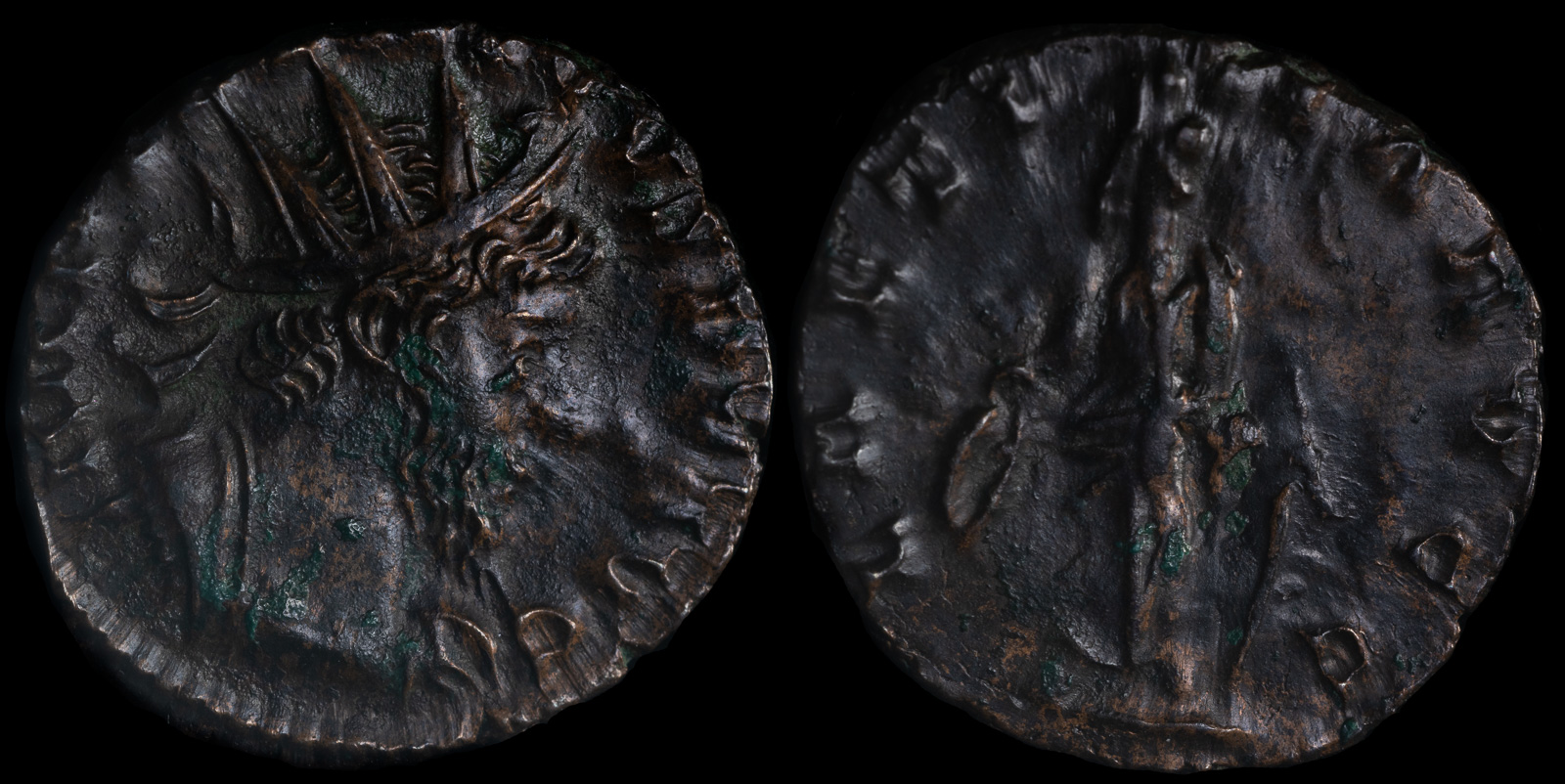
Tetricus I
Treveri, 272-273 CE
BI Antoninianus 2.23g, 18mm, 6h.
IMP [C TETRI]CVS P F AVG, radiate and cuirassed bust to right /
LAETITIA AVGG, Laetitia standing facing, head to left, holding wreath and anchor
RIC V.2 87 var. (bust type); J. Mairat, The coinage of the Gallic Empire, Wolfson College, Trinity, 2014 (unpublished PhD Thesis), 797
Ex Fritz Rudolf Künker 2009.

Magnentius
BI Centenionalis 4.85g, 23mm, 6h.
Treveri, 351 CE
D N MAGNENTIVS P F AVG, bareheaded, draped and cuirassed bust to right; A behind / VICTORIAE DD NN AVG ET CAE, two Victories facing each other holding between them a wreath inscribed VOT V MVLT X in four lines; TRP in exergue
RIC VII 307
Ex Dieter Alten Collection
Ex Fritz Rudolf Künker GmbH & Co. KG, March 2009
Ex Roma
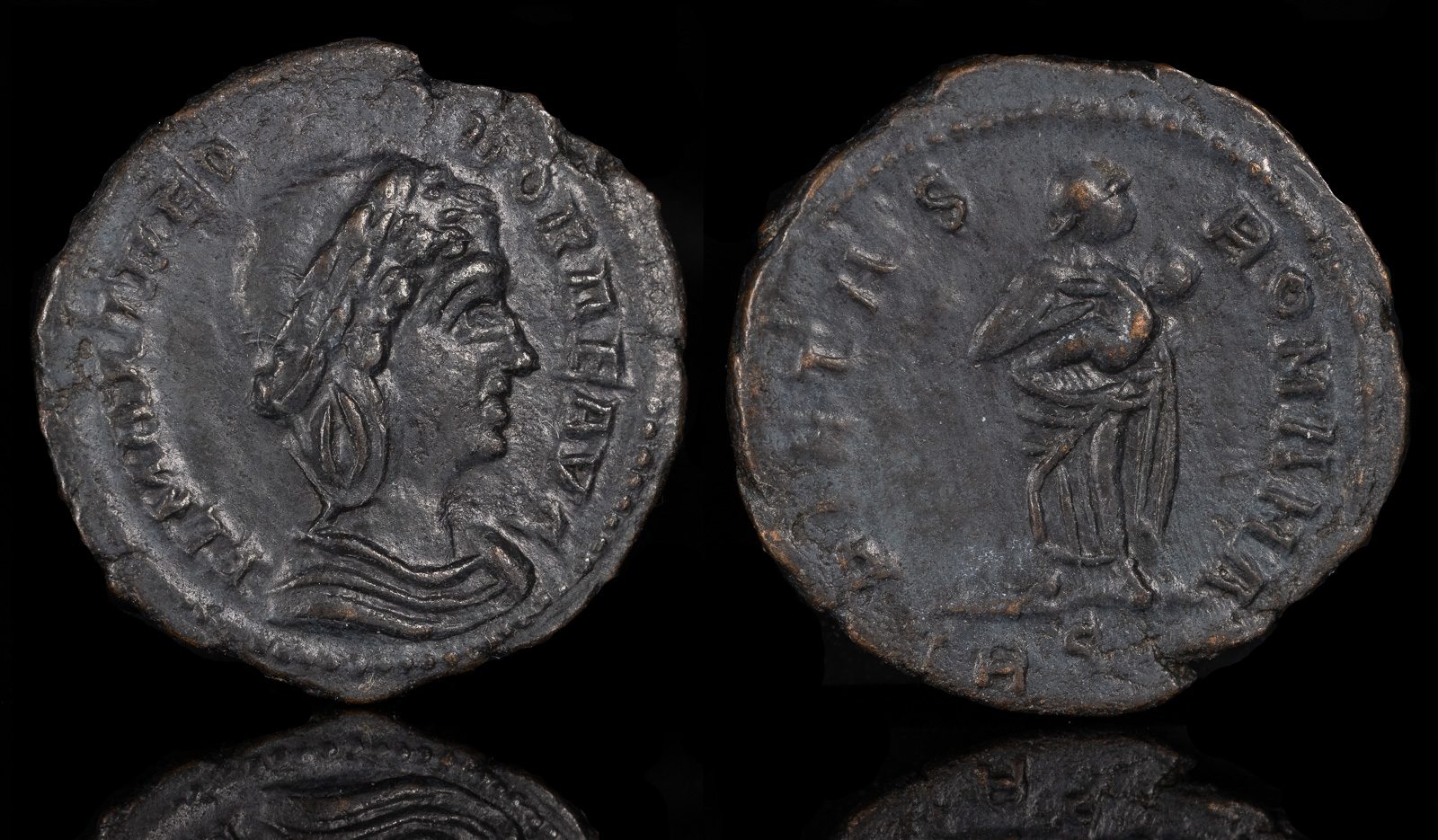
Theodora (deceased wife of Constantius I)
Treveri, 337-340 CE
BI Nummus 1.61g, 16mm, 6h.
FL MAX THEODORAE AVG, laureate and draped bust to right
PIETAS ROMANA, Pietas standing facing, head to right, holding child; TRS in exergue
RIC VIII 43
Treveri is today Trier, Germany, and is considered Germany’s oldest city. It was founded in the 1st century BCE as Augusta Treverorum and was populated by the Treveri tribe. It would grow to serve as one of the capitals of the Roman Empire.
During the Gallic Empire, it was the second most important city. It later became one of the residences of the Western Roman Emperor. During the time of Constantius, a mint was started there.
Today, numerous Roman ruins remain in the city and area and are major tourist attractions.
16 BCE
Augustus names Treveri as the capital of the Roman province of Belgica
99 CE
Amphitheater at Treveri is constructed
275 CE
Treveri destroyed by the Alamanni
314 CE
Roman baths completed at Treveri under Constantius