Sagittarius
View All Tags
One important tradition identified Sagittarius with **Crotus**, a mythological companion of the Muses who was said to have invented archery and to have been an accomplished hunter and musician. According to this interpretation, the gods placed him among the stars in recognition of his skill. Other ancient writers associated the constellation more loosely with the race of **centaurs**, creatures that could symbolize both wildness and extraordinary ability. Sagittarius was sometimes confused in later tradition with **Chiron**, the wise centaur, although Chiron was more commonly associated with the neighboring constellation Centaurus. The Archer therefore embodied not merely brute force but **skill, precision, hunting, martial ability, and mastery of the bow**.
The bow and arrow themselves carried strong symbolic meaning in the ancient Mediterranean world. An arrow could strike from a distance, making it an image of **speed, direction, purpose, and deadly accuracy**. Gods such as Apollo and Artemis were closely associated with archery, and arrows could represent both destruction and divine intervention. In the figure of Sagittarius, the drawn bow suggests energy held under control and directed toward a specific target. The constellation could therefore evoke the disciplined use of strength rather than uncontrolled violence.
In ancient astrology, Sagittarius was considered the **house of Jupiter**, the Roman equivalent of Zeus. This connection gave the sign associations with expansion, authority, fortune, religion, wisdom, and divine favor. Sagittarius was also classified as a **fire sign**, further emphasizing vigor, movement, and active force. Astrological writers could therefore associate people born under Sagittarius with qualities such as courage, restlessness, independence, hunting, travel, and a tendency toward bold action.
For Greeks and Romans, Sagittarius was thus more than simply a centaur carrying a bow. It combined ideas of **martial skill, hunting, disciplined force, movement, and divine favor**, while its relationship with Jupiter gave it an additional aura of greatness and expansiveness. Its central image is ultimately one of directed energy: the Archer does not merely possess strength, but **aims it toward a chosen goal**.
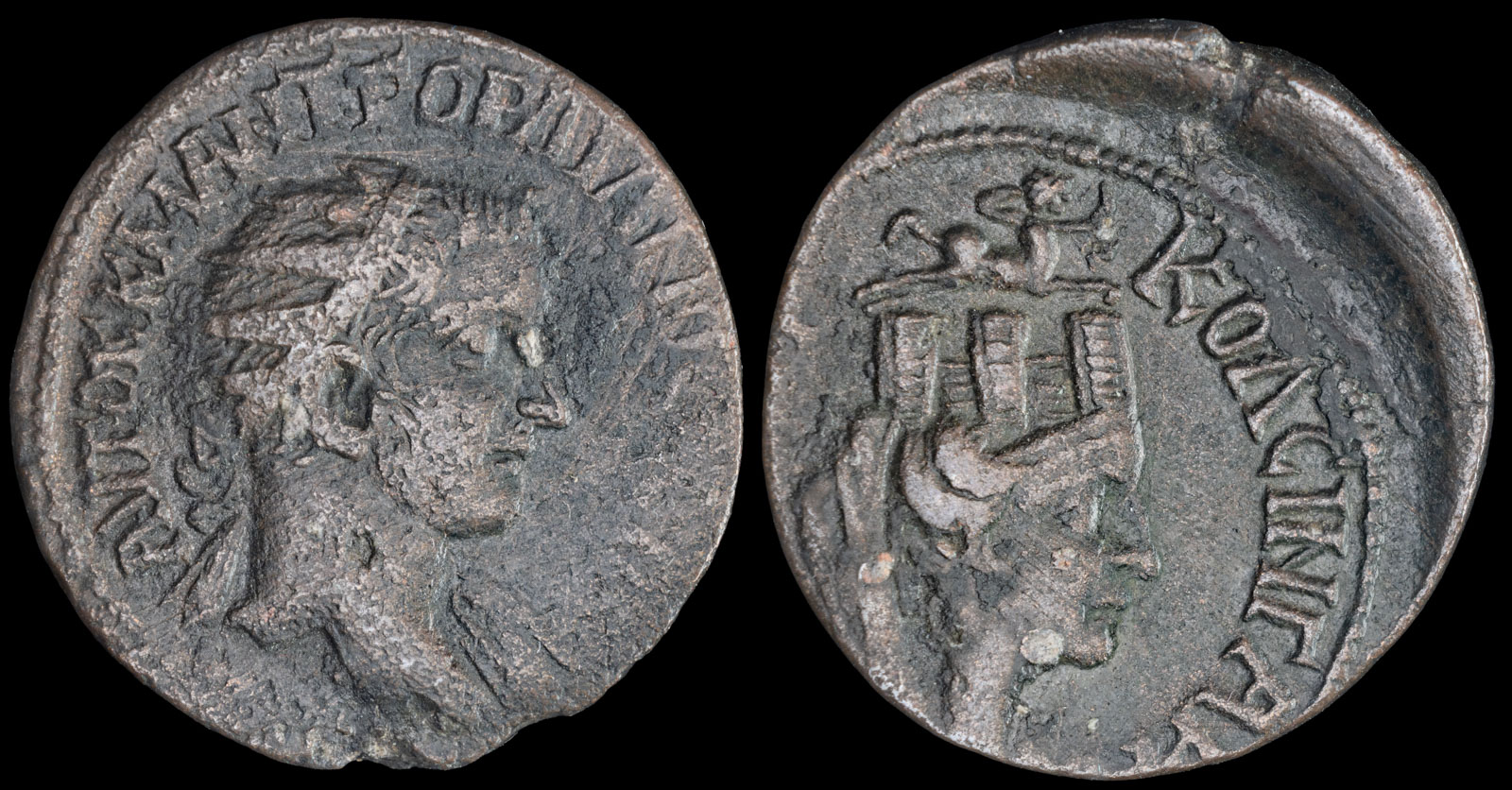
Mesopotamia, Singara
Gordian III (238-244 CE)
AE 25.02mm 11.39g
Obverse: AVTOK K M ANT ΓOPΔIANOC [CЄB], laureate and draped bust of Gordian right
Reverse: [AVP CЄΠ] KOΛ CINΓAPA, turreted veiled and draped bust of Tyche right, the centaur Sagittarius leaping right and shooting bow above
SNG Copenhagen 255
Ex Ed Flinn Collection