Rearing
View All Tags
One of the key symbolic meanings of a rearing horse was military prowess. Horses were central to ancient Greek warfare, particularly in cavalry units and chariot races. The rearing horse, therefore, signified a warrior’s or a city-state’s strength and preparedness for battle. The image could represent the might of a king, a ruler, or a heroic figure, with the horse acting as a representation of their ability to lead and command in battle. Coins depicting rearing horses often commemorated military victories or the strength of a ruler’s reign.
In addition to military symbolism, the rearing horse was also associated with victory and competition. The Greek passion for chariot racing, especially at events like the Olympic Games, meant that the horse was linked to athletic and competitive success. A horse in this pose might celebrate victories in chariot races or symbolize the city’s achievements in public games. This connection to victory was not only military but also athletic, underlining the cultural importance of both competition and triumph in Greek society.
The rearing horse, with its dramatic and powerful posture, also conveyed the wealth and prestige of the issuing city-state. It was often used to communicate the elite status of the ruler or the city, as horses themselves were expensive and valuable animals. Thus, these coins were more than just a reflection of economic power; they were also expressions of cultural pride, showcasing the city’s heroic achievements, its military dominance, and its athletic prowess.
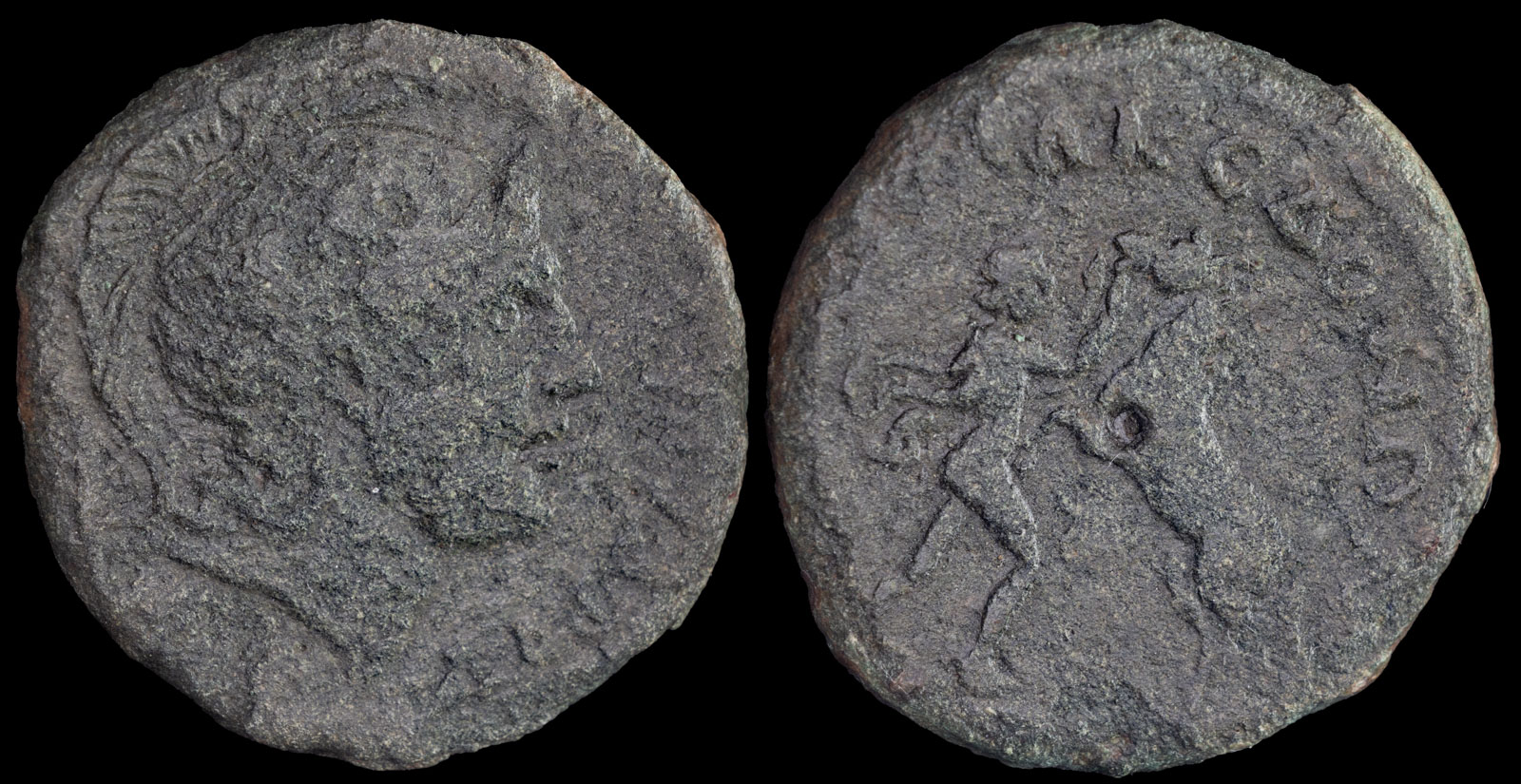
Macedon, Koinon of Macedon
temp. Severus Alexander. 222-235 CE
Æ 25mm, 7.99g, 7h
Head of Alexander the Great right, gazing upward, wearing crested Athenian helmet decorated with griffin /
Alexander standing right, nude but for cloak flowing out behind him, placing harness on Bucephalas rearing left.
RPC VII.2 Online 282; AMNG 442a var. (reverse legend)
Ex Joseph A. Dow Collection
Ex Classical Numismatic Group Electronic 2022
Filter coins

Koinon of Macedon 222-235 CE
Koinon of Macedon 238-244 CE
Krannon, Thessaly 350-300 BCE
Mopsion, Thessaly ca 350 BCE
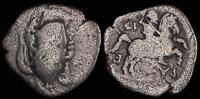
Peirasia, Thessaly 4th century BCE
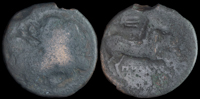
Salapia, Apulia 225-210 BCE