Argolis, Troizen
Septimius Severus, circa 198-208 CE
AE 23mm, 5.55g, 6h
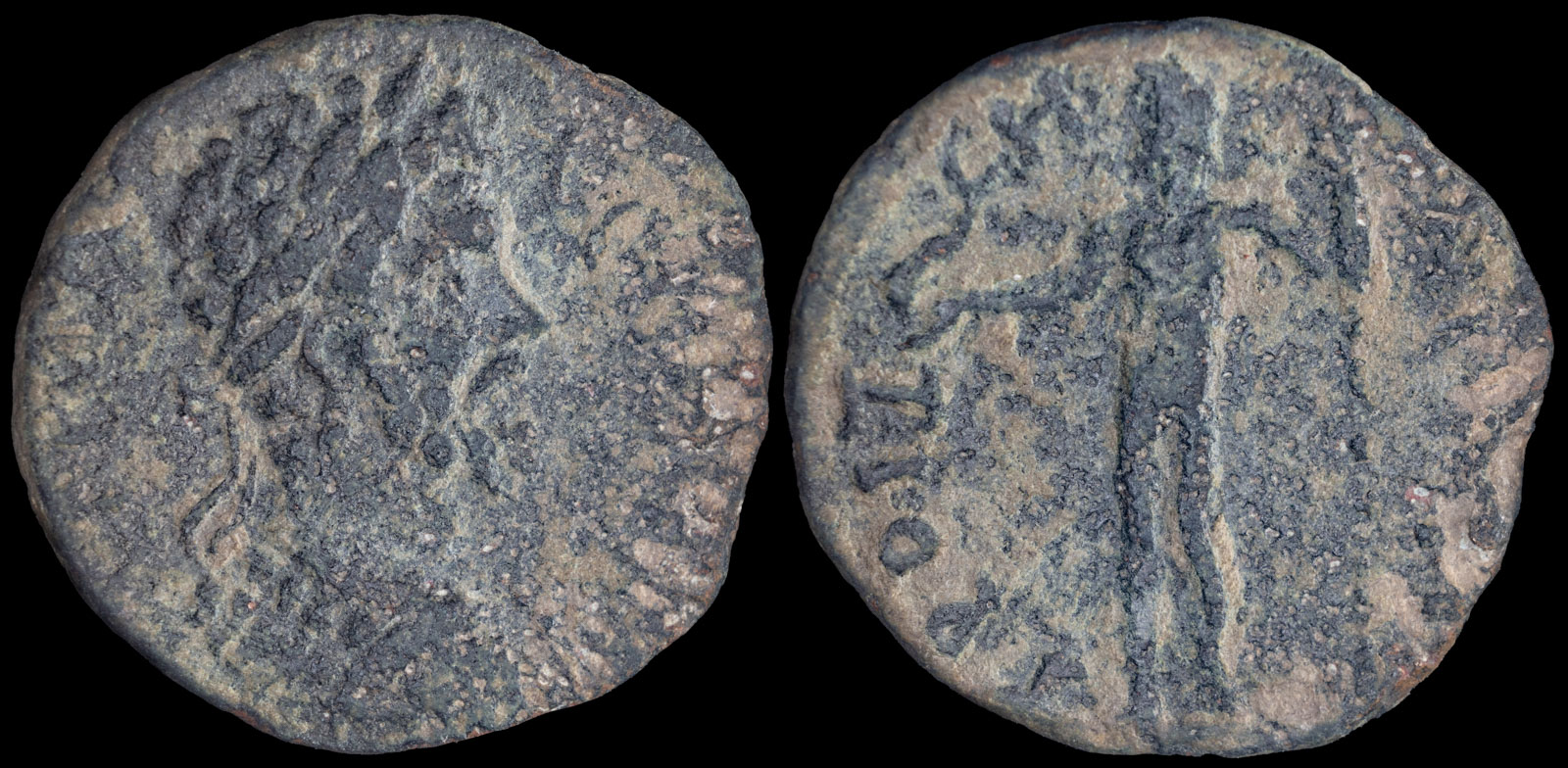
AY KAI Λ[OY CEΠT CEOV…] (or similar) Laureate, draped and cuirassed bust of Septimius Severus to right.
Rev. ΤΡΟΙΖ-ΗΙωΝ Poseidon standing to left, holding a dolphin in his right hand and a trident with his left.
Seemingly unpublished, but cf. BCD Peloponnesos 1345.3 (this obverse die, but with Aphrodite on the reverse)
NCP –
Pausanias wrote (10.9.8):
in the territory of Troezen; the Artemis, Poseidon and also Lysander by Dameas; the Apollo and Zeus by Athenodorus
This coin may depict that statue of Poseidon. As far as I know, it’s the only provincial from Troizen depicting Poseidon, and statues were common subjects on this era’s coinage. The image somewhat represents the Poseidon at Orchomenos, but here his hand is held out. Of course, we’ll never know whether this truly depicted the statue, but the image appears to be unique.
So who was Dameas? Pretty much all we know about him comes from this passage and another by Pliny, who mentions that he was from Kleitor and was a pupil of Polykleitos. Polykleitos was active in the 5th century BCE and is believed to have died around 420 BCE, so Dameas is presumed to have flourished around the mid-late 5th century BCE.
What I find tantalizing is this very rough theory:
– We only know of three statues that Dameas completed – those of Artemis, Poseidon, and Lysander
– There are no known coins of Troizen depicting Poseidon
– There is a type known of Artemis, a typical “Artemis huntress” that NCP attributes to a possibly separate temple
– Therefore, this may be the only type depicting a statue of Dameas
– I’ve found no other example of this type. None are listing in coin searches and NCP didn’t mention the type
– We know of no extant copies of his works
Therefore, and I admit this is a stretch, but this coin may be the ONLY depiction of one of Dameas’ works that survives. It’s possible that Dameas worked for his entire life on sculptures, and all that remains of them are a few fragments in Pliny and Pausanias and this coin.