Poppy
View All Tags
The most prominent association of the poppy in Greek mythology is with the goddess Demeter, the deity of agriculture and fertility. Demeter’s grief over the abduction of her daughter Persephone was so deep that it caused the earth to wither and crops to fail. During this mourning, poppies were said to have sprung from the earth as a symbol of the goddess’s sorrow and mourning. Later, the poppy became an offering to Demeter during the Eleusinian Mysteries, which celebrated the seasonal cycle of life, death, and rebirth that Demeter and Persephone personified.
The connection of poppies with sleep and death is most famously embodied by the god Hypnos, the personification of sleep, and his brother Thanatos, the personification of death. According to myth, Hypnos often used poppies to induce a restful or death-like slumber. The calming, soporific qualities of the poppy made it a natural symbol for sleep, a state that both allowed for healing and rejuvenation, but also mirrored the idea of death’s temporary nature as part of the cycle of life.
In addition to its associations with death and sleep, the poppy also came to represent the fleeting nature of life and the impermanence of beauty.
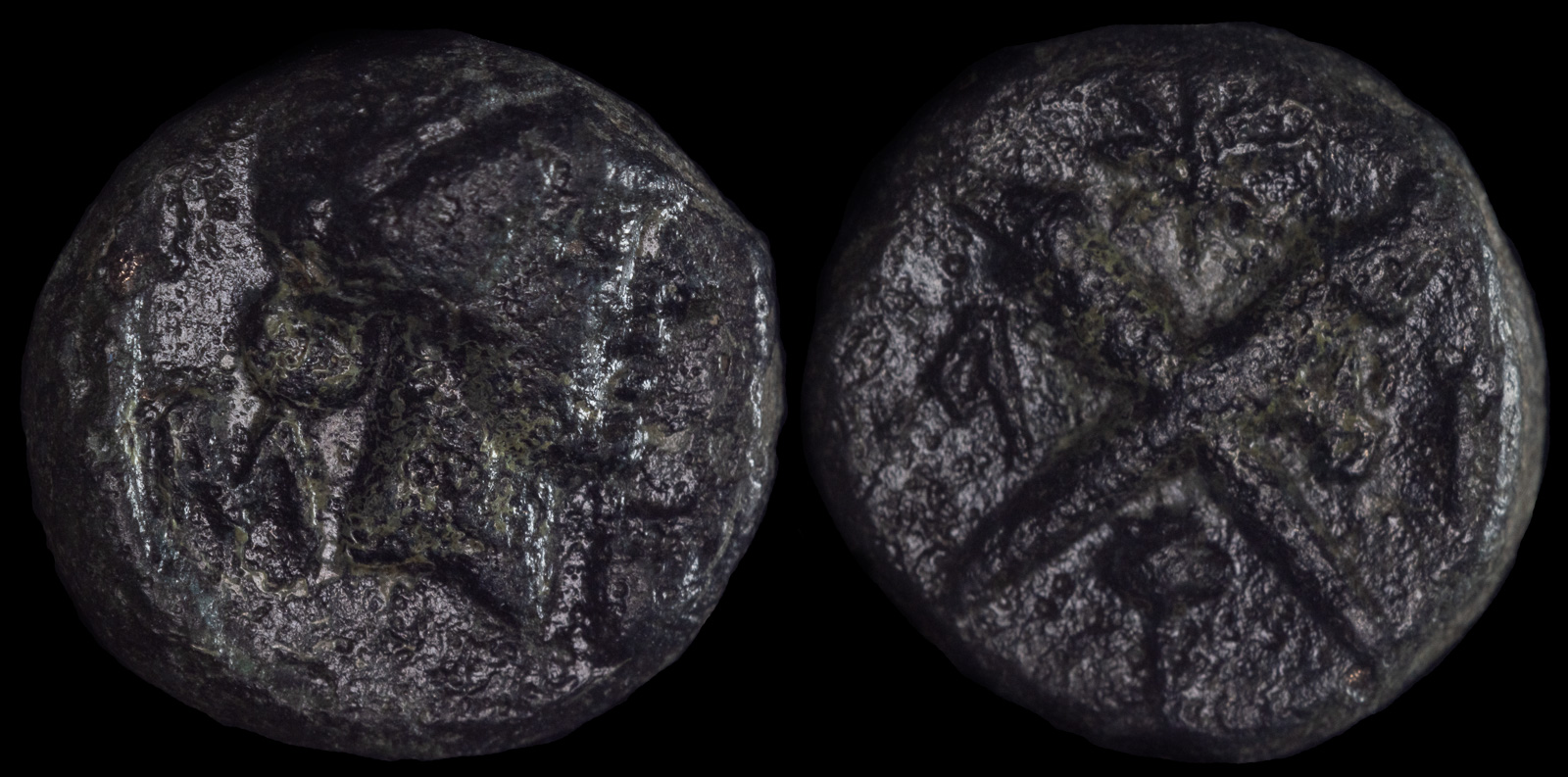
Abydos, Troas
320-200 BCE
Æ 12mm, 2,11g
Obv: Laureate head of Artemis right, bow and quiver over shoulder.
Rev: A – BY. Crossed torches; star above; poppy head below.
BMC 44; Coll. Weber 5278
Abydos, Troas 300 BCE
Argos, Argolis 193-211 CE
Athens, Attica 270-261 BCE
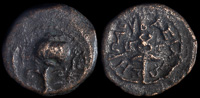
Herod I 40-4 BCE