Ploq
View All Tags
For the Romans, the plow held an even more pronounced civic and political symbolism. The act of plowing was tied to the founding ritual of cities, known as the sulcus primigenius, where Romulus himself was said to have drawn the first furrow marking the boundary of Rome. On Roman coinage, the image of a plow often evoked this founding myth, signifying not only Rome’s origins but also the legitimacy of expansion, colonization, and renewal. Colonies established throughout the Roman world sometimes marked their foundation with coins showing a plow or oxen drawing a furrow, underscoring both their ties to Rome and their role in spreading Roman order across new lands.
Economically, the plow on coins spoke to the agrarian base of wealth and power. For both Greeks and Romans, agriculture was the foundation of society, and the plow was its primary instrument. Thus, when rulers or cities placed the plow on coinage, they projected images of abundance, security, and the blessings of peace, when fields could be tilled rather than ravaged by war. In this way, the plow symbol on coinage was not only a reminder of the gods’ favor but also a political statement: that the issuing authority was a guarantor of stability, prosperity, and continuity for its people.
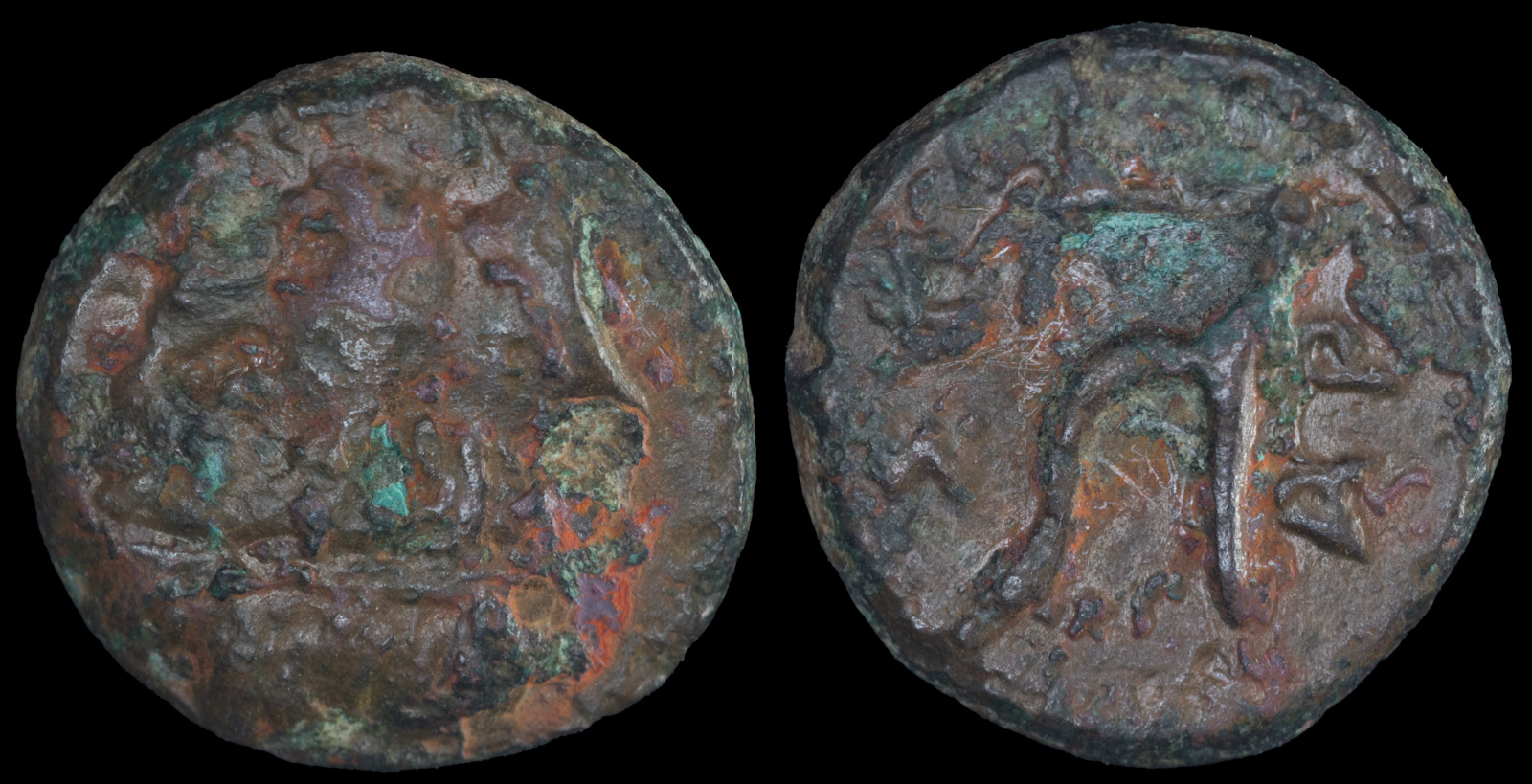
Macedon. Bottiaia Spartolos
ca 400 BCE
Æ 10,5mm 1,40g
Male head of hero r.
R/ ΣΠ ΑΡ Plow
Unpublished