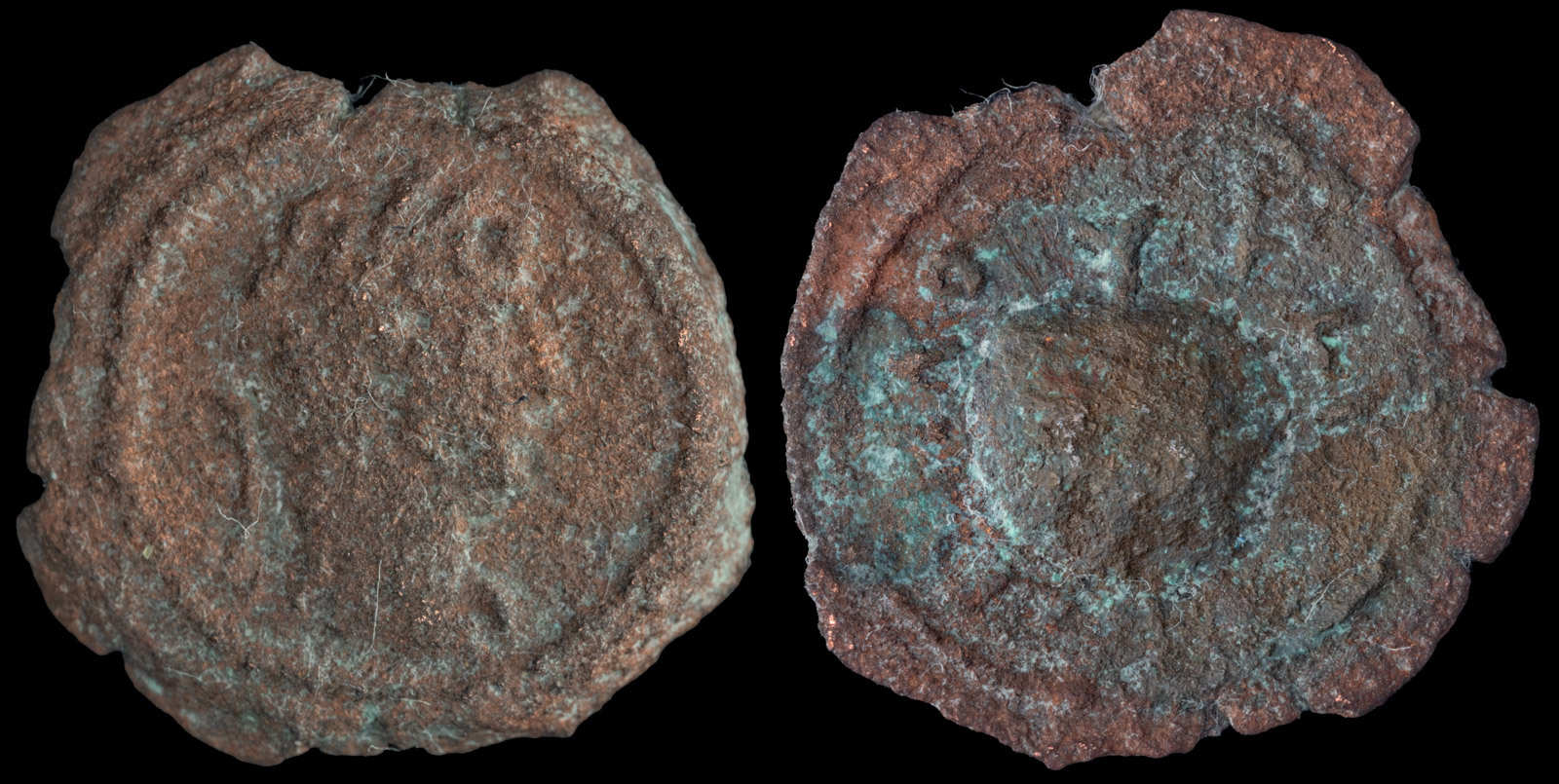
Egypt, Pelusion
Hadrian, Dated RY 11 (126/7 CE)
Dichalkon Æ 12.00mm, 1.22g
Laureate bust right, slight drapery on left shoulder /
Pomegranate; L IA (date) in legend
Köln 3419; Dattari 6348; K&G N40.3; Poole 1892 p. 351 No. 46
Ex Naville Numismatics 2025
Pelusion was located in the far north of Egypt, roughly four kilometers from the sea. By the 1st century BCE the port was already choked by sand, though its production of flax and beer kept the economy running. Since it was on the border between Egypt and Syria, it was heavily fortified. Numerous battles were fought there.
Indeed, taking Pelusion in antiquity was akin to taking Egypt itself. Significant archeology is currently underway there.
Sennacherib, the Neo-assyrian emperor, approaches Pelusion but declines an attempt to take it
At the Battle of Pelusion, the Persians under Cambyses II take Egypt
Pharnabazos approaches Pelusion, but declines to take it
Pelusion is taken by the Persians under a command of Greeks
Pelusion opens its gates to Alexander the Great
Antiochos Epiphanes defeats the forces of Ptolemy Philometor at the Battle of Pelusion
Romans under Mark Antony defeat the Egyptians at Pelusion and take the country
September 29
Pompey arrives for Alexandria and is killed near Pelusion.
Mithridates of Pergamon storms and takes Pelusion in an effort to support Julius Caesar
Augustus appears before Pelusion and is admitted to take Egypt