Oxen
View All Tags
Oxen also carried strong sacral and ritual meaning. They were the premier sacrificial animals in Greek and Roman religion, offered at major festivals, treaty ratifications, and moments of civic renewal. A coin showing an ox could therefore evoke piety and divine approval. In myth and cult practice, the ox often stood at the boundary between human effort and divine order, a creature given by the gods yet guided by human hands. Its appearance on coinage suggested harmony between the city and the divine forces governing fate and abundance, particularly in traditions associated with Zeus and agrarian deities.
Beyond agriculture and ritual, the ox was a symbol of controlled strength. Unlike predators that represent chaos or raw violence, the ox conveyed power that was disciplined, patient, and purposeful. This made it an especially potent emblem for civic identity. Cities, leagues, and kingdoms used the ox to project the idea that their strength was not reckless but ordered, capable of building rather than destroying. In some contexts, paired or yoked oxen reinforced ideas of cooperation, law, and collective effort, values essential to polis life and imperial administration alike.
Finally, ox imagery on coins often carried foundation and territorial symbolism. In several ancient traditions, the plowing of a city’s sacred boundary with oxen marked its official founding. Coins depicting oxen could thus allude to origins, legitimacy, and ancestral continuity.
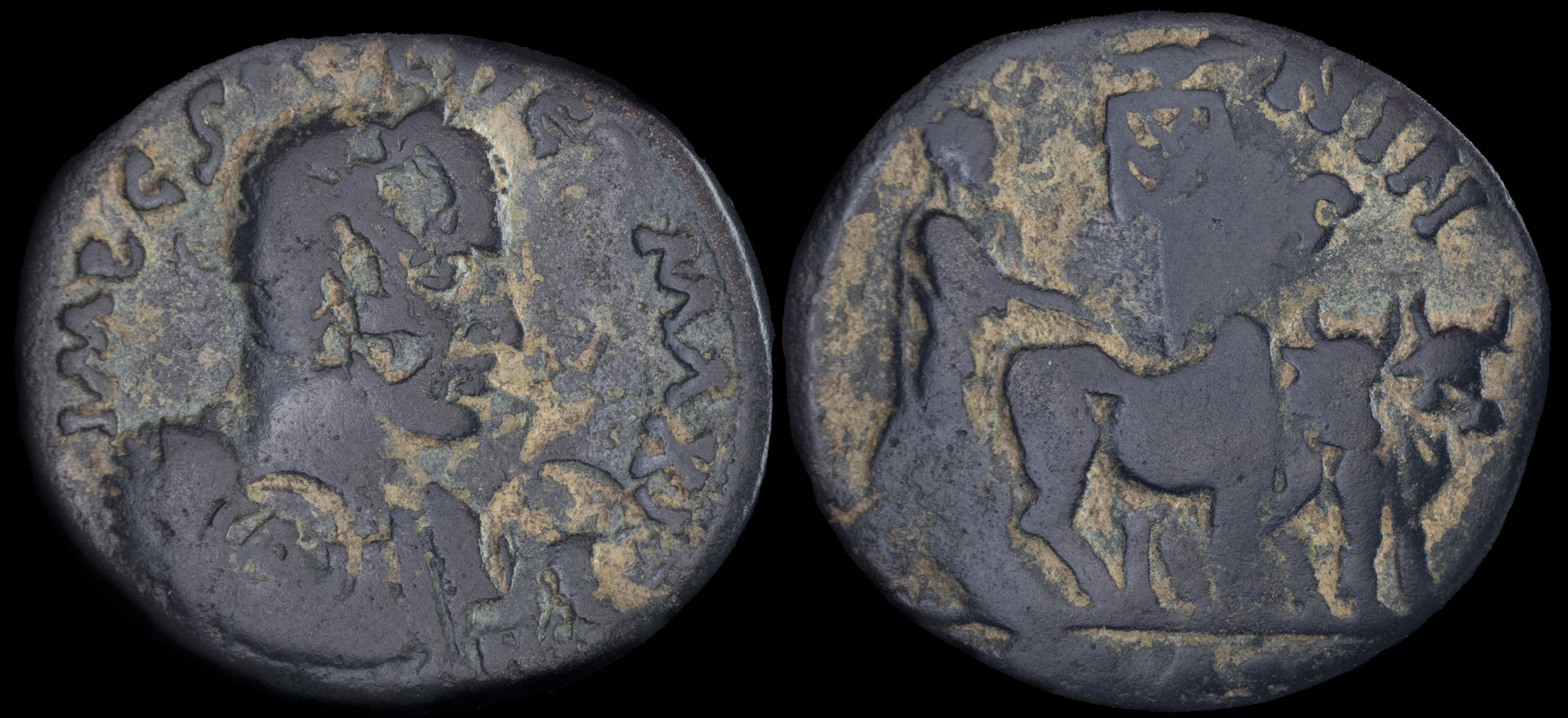
Cilicia, Ninica Claudiopolis
Maximinus I, 235-238 CE
Æ 27.30mm, 10.82g
Laureate, draped and cuirassed bust r.
Rev: NIN C CLAV Colonist ploughing veiled, r., with yoke of oxen; in the background, standard topped by aquila.
RPC Temp. 6911. SNG von Aulock 5776
Ex Stoecklin collection