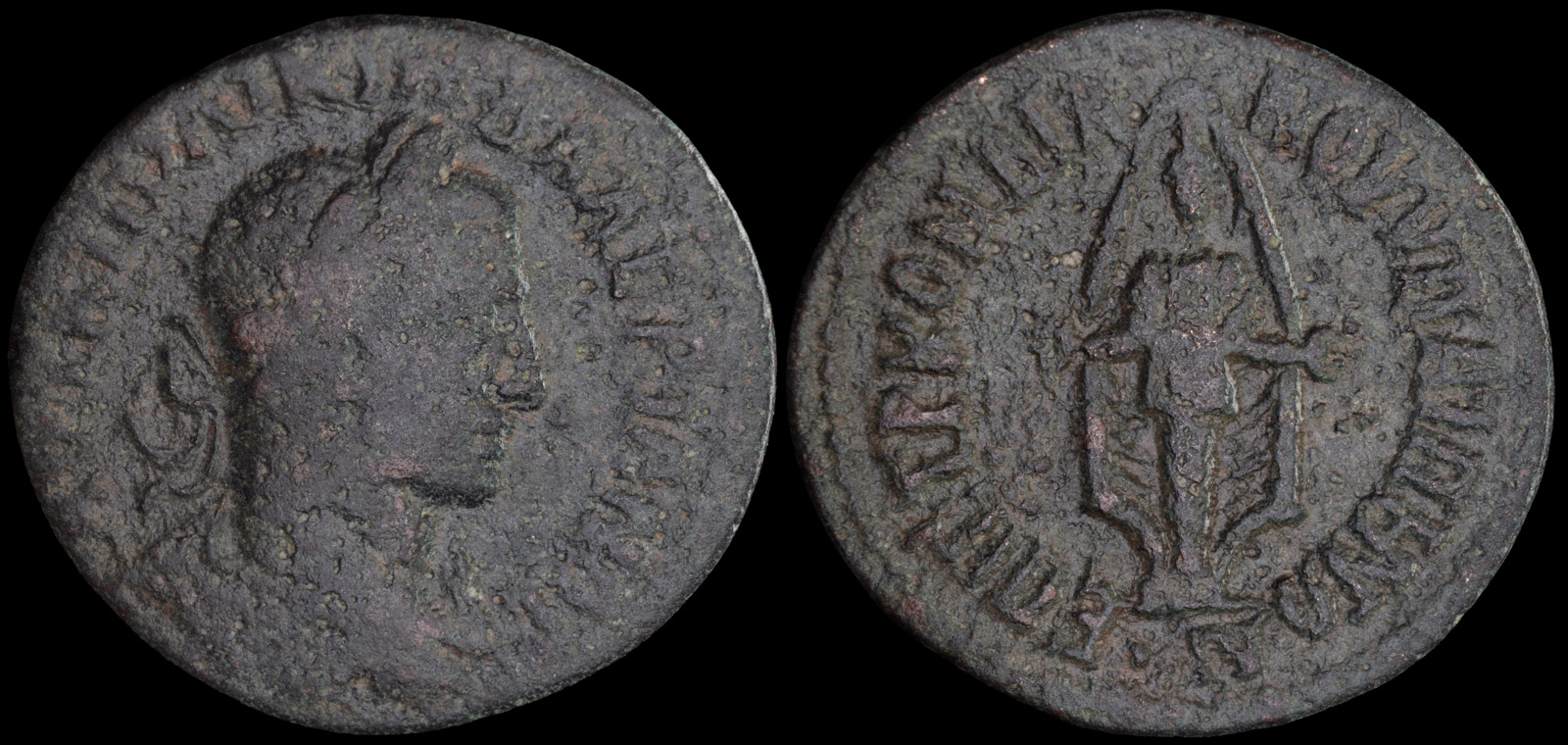
Lydia, Hypaepa
Valerian I 253-260 CE
Æ 27mm, 7,90g
Obv: ΑΥΤ Κ ΠΟ ΛΙΚΙΝ ΒΑΛΕΡΙΑΝΟϹ, laureate, draped and cuirassed bust of Valerian, right, seen from rear
Rev: ΕΠΙ ϹΤΡ ΚΟΝΔΙΑΝΟΥ ΥΠΑΙΠΗΝΩΝ, cult statue of Artemis Anaïtis
RPC X, — (unassigned; ID 61505)
Hypaepa was located on the north bank of the Cayster River, near the village of Günlüce, Turkey. It revolted against Mithridates VI in 88 BCE and was harshly punished. Under the Romans, it was considered as a location for at temple for the worship of Tiberius, but it was considered too insignificant.
Ovid mentioned the city in his Metamorphoses.
He followed Pan up to the lofty mount Tmolus, which from its great height looks far across the sea. Steep and erect it stands between great Sardis and the small Hypaepa. While Pan was boasting there to mountain nymphs of his great skill in music, and while he was warbling a gay tune upon the reeds, cemented with soft wax, in his conceit he dared to boast to them how he despised Apollo’s music when compared with his — .
According to the same author, the city was the home of Arachne until she was turned into a spider. The women there were supposedly renowned for their beauty and dancing, which they received from Aphrodite. In Sardis, an inscription was found in a synagogue referring to a benefactor from Hypaepa, indicating it contained a fair-sized Jewish community.
In ancient times, the city was famed for its worship of Artemis Anaitis.
Few ruins of the ancient city remain, since they were used as building materials.
Hypaepa and Tralleis revolt against Mithridates VI and are harshly punished