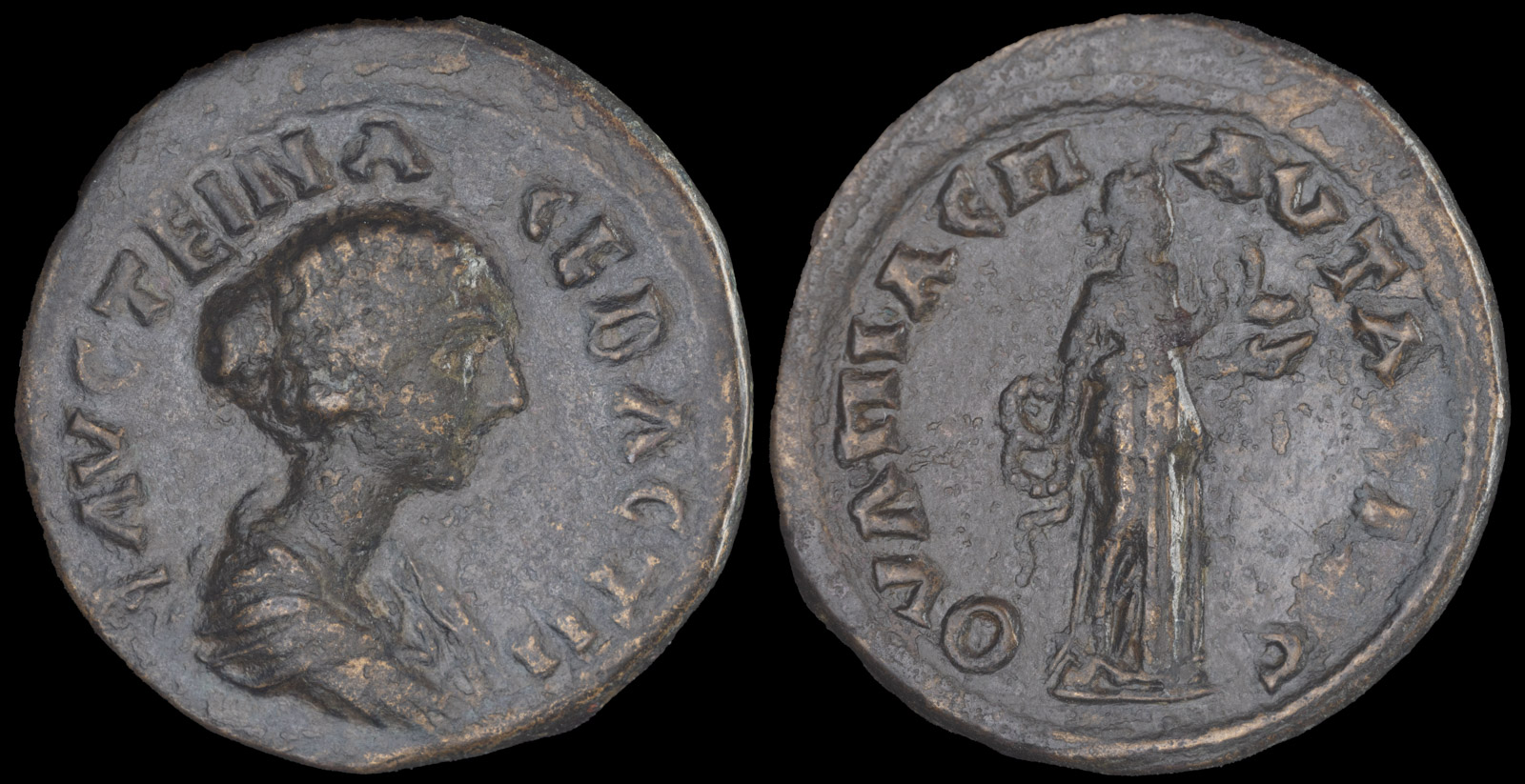
Thrace, Pautalia
Faustina II 147-175 CE
Æ 23mm, 6,99g
Draped bust right /
Hygieia standing right, feeding serpent from phiale
Ruzicka 119; SNG Copenhagen -; BMC 11
This coin may depict the statue of Hygieia that existed at the entrance to the Acropolis in Athens. Although we do know that such a statue existed there per Pausanias, we’re not really sure what it looked like. A statue of Hygeia was found near the Acropolis in Athens, but it was without a head and the snakes, so we can only presume she was standing as she is in this coin. Megara, whose coinage copied some of the statuary from Athens, did mint a coin with Hygieia and Asklepios together, but Pausanias mentions that in Athens she was paired with Athena.
What I do believe is this coin depicts a statue that was somewhere. Most likely it was in Pautalia, which like many other Thracian cities depicted statues often on its coinage. However, that statue was almost certainly a copy from somewhere else, and I wonder whether that was Athens.
So who was Hygieia? She was the daughter of Asklepios, hence her kindness to snakes. As his daughter, she was also responsible for healing. Our word “hygiene” today comes from her. She was in particular in charge of cleanliness and longevity. Her Roman name was Salus, and she was often depicted on their coinage. While her father Asklepios was more associated with healing, Hygieia was responsible for never getting sick in the first place.
Besides her statue in Athens, there were also temples to her in Epidauros, Kos, Corinth, and Pergamon. Thus, this statue may have come from one of them too. It was a tradition for women to cut off small locks of hair and adorn her statues with it, and also provide snippets of clothes.
Per Plutarch, the statue to Hygieia was erected in Athens after a workman nearly died from a fall from the Parthenon, but then had a dream about Athena and was healed.
Per Pliny the Elder, both statues were sculpted by Polykleitos. However, we really have no idea if this is an image of his work
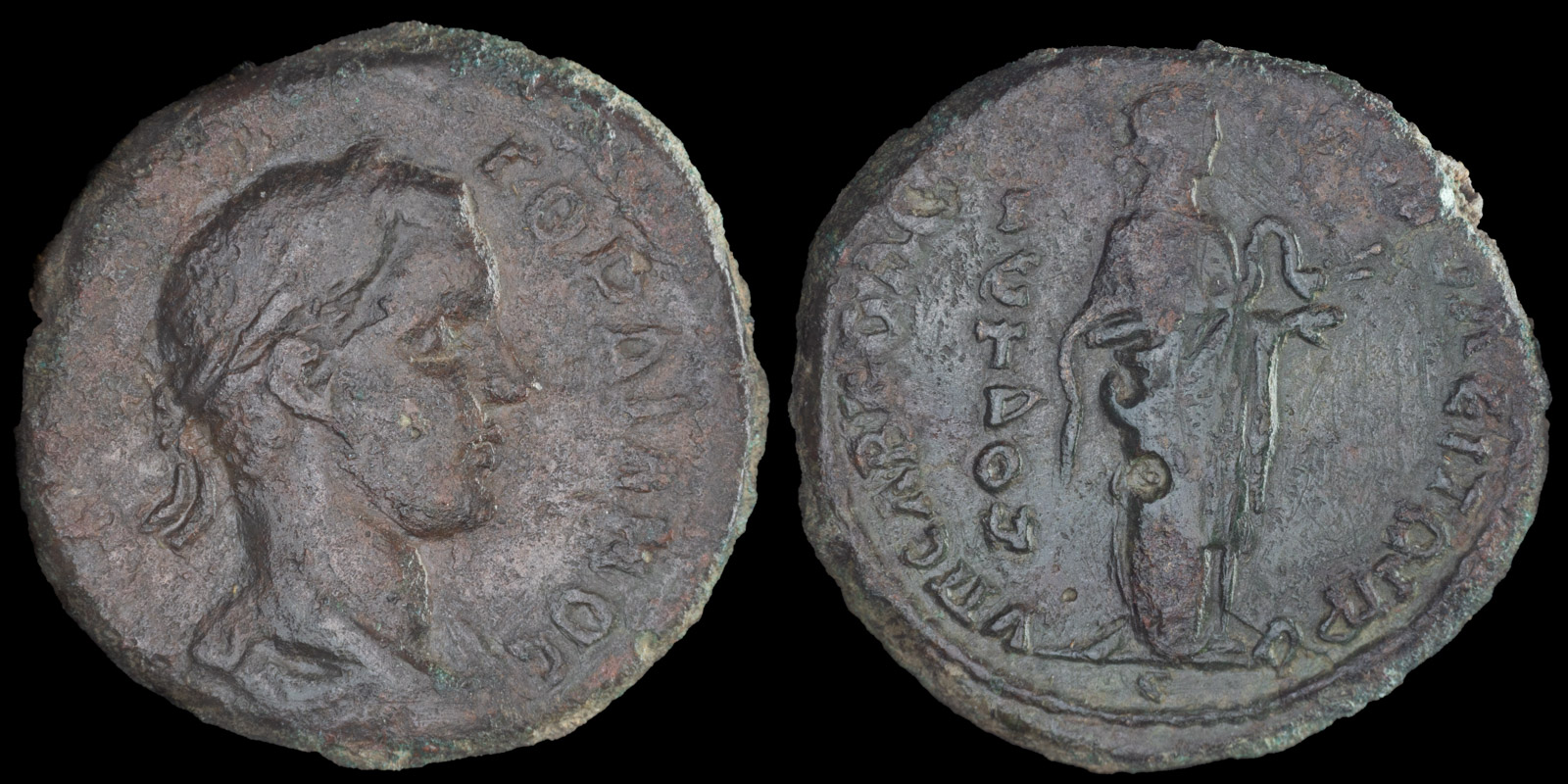
Nikopolis ad Istrum, Moesia Inferior
Magistrate Modestus
Gordian III, 238-244 CE
Æ 26.00mm, 12.93g
AYT K M ANTΩ ΓOΡΔIANOC, laureate, draped and cuirassed bust of Gordian III to right.
Rev. YP CAB MOΔECTOY NIKOΠOΛEITΩN ΠΡOC ICTPON around and downwards in left field, Hygieia standing right, holding patera, feeding serpent in arms.
Varbanov 4207; AMNG 2063; Moushmov 1519