Hygieia
View All Tags
In Greek art and coinage, Hygieia was typically depicted as a serene young woman feeding or stroking a serpent, which often coiled around her or a bowl she held. The serpent was a potent symbol in Greek medicine, representing rejuvenation, healing, and sometimes divine wisdom. Unlike more militant or dramatic goddesses, Hygieia’s iconography emphasized calm, order, and nurturing care. She frequently appeared alongside her father, especially in the healing sanctuaries known as Asklepieia, such as the famous one at Epidaurus, where both were worshipped with rituals and dedications.
Hygieia’s cult gained particular prominence during periods of plague and public health crises, such as during the Peloponnesian War, when the importance of sanitation and disease prevention became a matter of survival. Her worship extended beyond Greece into the Roman world, where she was syncretized with Salus, the Roman goddess of public welfare and health. Offerings to Hygieia were not only acts of piety but also public declarations of civic responsibility, especially in urban centers where disease could easily spread.
Philosophically, Hygieia represented more than physical health; she was tied to the idea of harmony between body and soul. In this sense, her worship paralleled emerging medical theories of balance and moderation, such as those championed by Hippocrates.
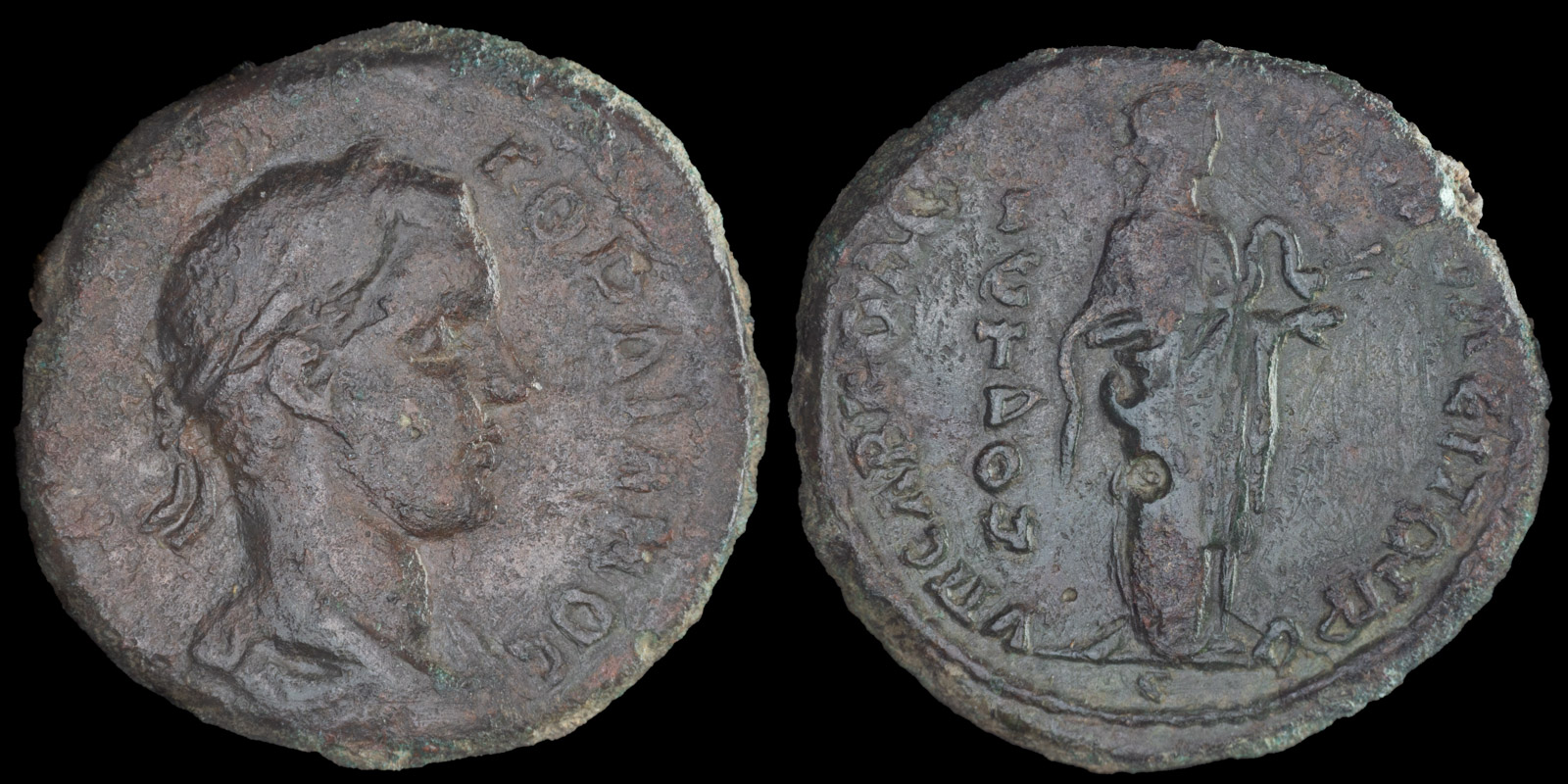
Nikopolis ad Istrum, Moesia Inferior
Magistrate Modestus
Gordian III, 238-244 CE
Æ 26.00mm, 12.93g
AYT K M ANTΩ ΓOΡΔIANOC, laureate, draped and cuirassed bust of Gordian III to right.
Rev. YP CAB MOΔECTOY NIKOΠOΛEITΩN ΠΡOC ICTPON around and downwards in left field, Hygieia standing right, holding patera, feeding serpent in arms.
Varbanov 4207; AMNG 2063; Moushmov 1519
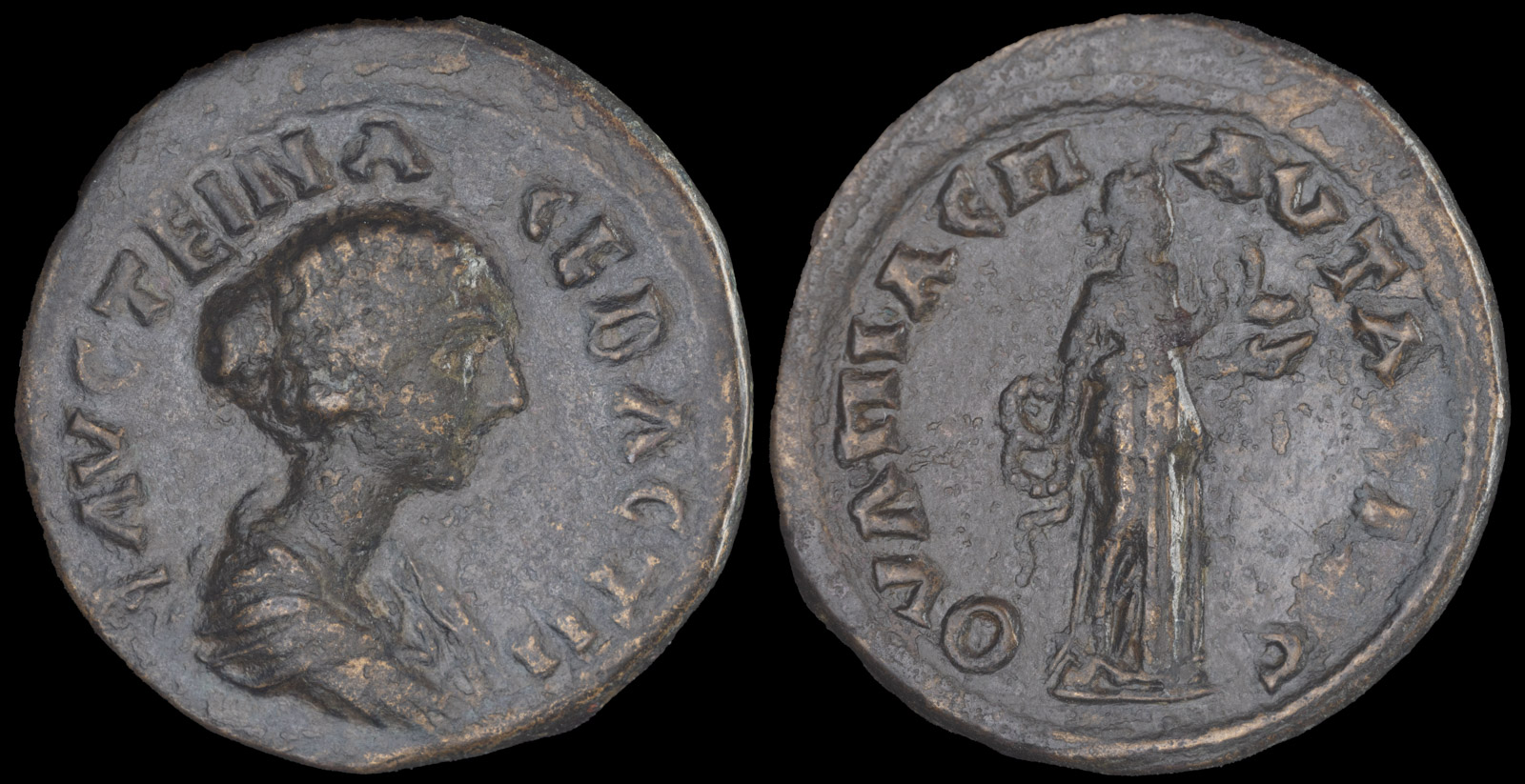
Thrace, Pautalia
Faustina II 147-175 CE
Æ 23mm, 6,99g
Draped bust right /
Hygieia standing right, feeding serpent from phiale
Ruzicka 119; SNG Copenhagen -; BMC 11