Homer
View All Tags
Modern scholarship usually places the composition of the Iliad and Odyssey in roughly the late eighth or early seventh century BCE, although the poems preserve much older material. They emerged from a long oral tradition in which professional singers performed and reshaped heroic stories over generations. The poems contain formulaic phrases, repeated scenes, and recurring descriptive epithets such as “swift-footed Achilles,” features that helped oral poets compose and remember very long narratives. For this reason, scholars debate whether “Homer” was one extraordinary poet who shaped inherited material into monumental works, or whether the poems developed through a more complex process involving several generations of performers.
The ancient Greeks themselves regarded Homer as far more than an entertainer. His poems were central to Greek education and helped define ideas about heroism, honor, leadership, warfare, hospitality, the gods, and human fate. Characters such as Achilles, Hector, Odysseus, Penelope, and Priam became cultural archetypes, and episodes from Homeric poetry were repeatedly represented in vase painting, sculpture, drama, and later literature. Greek communities could also use Homeric traditions to explain local myths, heroic cults, genealogies, and claims about their own past.
Because so little can be said securely about Homer the man, it is often more useful to think of Homer as both a historical problem and a cultural phenomenon. Whether the poems were principally the creation of one poet or the culmination of a long oral tradition, the Iliad and Odyssey became foundational texts of Greek civilization. Their influence extended through the Roman world and into later European literature, making Homer one of the most important and enduring figures in the history of Western literature.
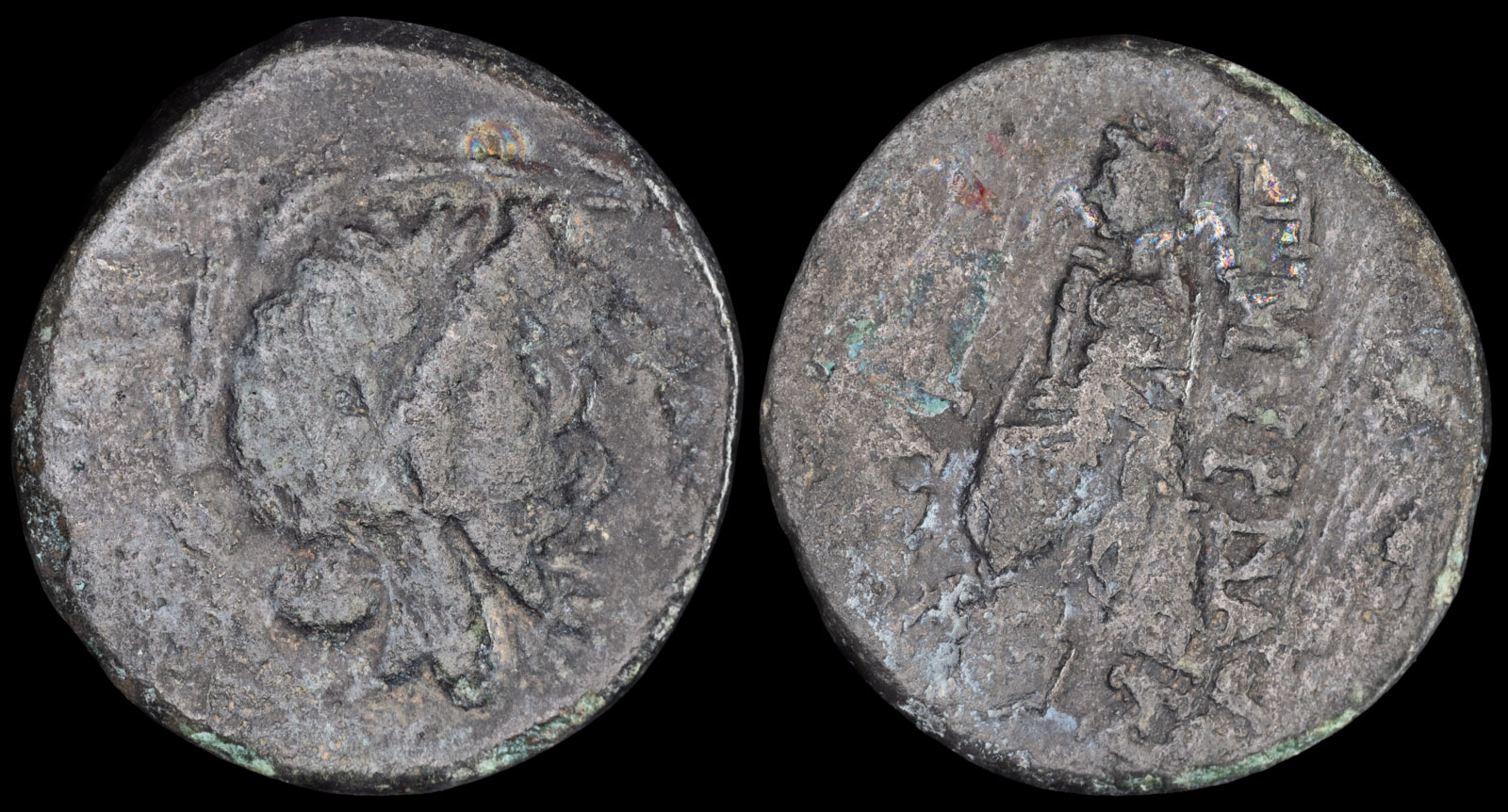
Ionia, Smyrna
Ca 145-105 BCE
Æ ‘Homereum’ 22mm, 8.00g
Laureate head of Apollo right /
ΣMΥΡNAION, the poet Homer seated left, holding scroll, sceptre behind him; in left field