Fly
View All Tags
One possible religious interpretation concerns the ancient practice of invoking divine protection against flies, particularly during sacrifices. At Olympia, Zeus was worshipped under the epithet Apomyios, meaning the Averter of Flies. According to Pausanias (Description of Greece 5.14.1), Heracles was once so troubled by swarms of flies while offering a sacrifice that he made an offering to Zeus Apomyios, after which the insects departed across the Alpheios River. The Eleans subsequently performed similar rites to keep flies away from their sacred precincts. Elsewhere in Greece, a protective figure named Myiagros, or Fly-catcher, received offerings for the same purpose. These traditions demonstrate that flies occupied a recognizable place in Greek religious thought, not necessarily as sacred creatures themselves, but as forces that could be controlled through divine intervention. Their representation on certain coins may therefore have possessed an apotropaic significance, invoking protection against harmful influences, although such an interpretation remains speculative without supporting evidence from the individual mint.
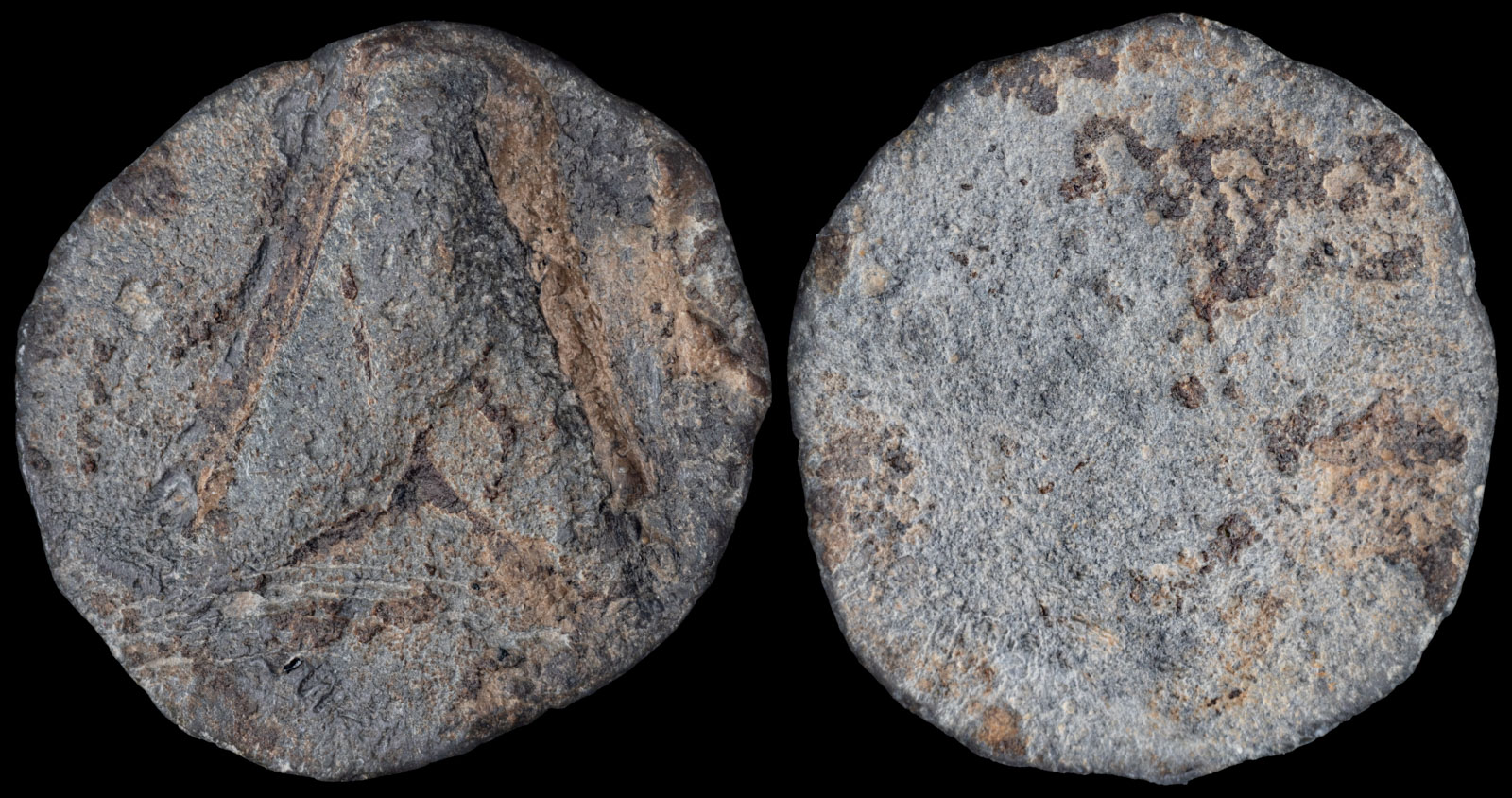
Minturnae(?), Latium
2nd – 1st Century BCE
Pb 16.51mm 1.83g
Obverse: Fly
Reverse: Blank
Stannard, Numismatic Evidence for Relations Between Spain and Central Italy at the Turn of the Second and First Centuries BC, coin 25