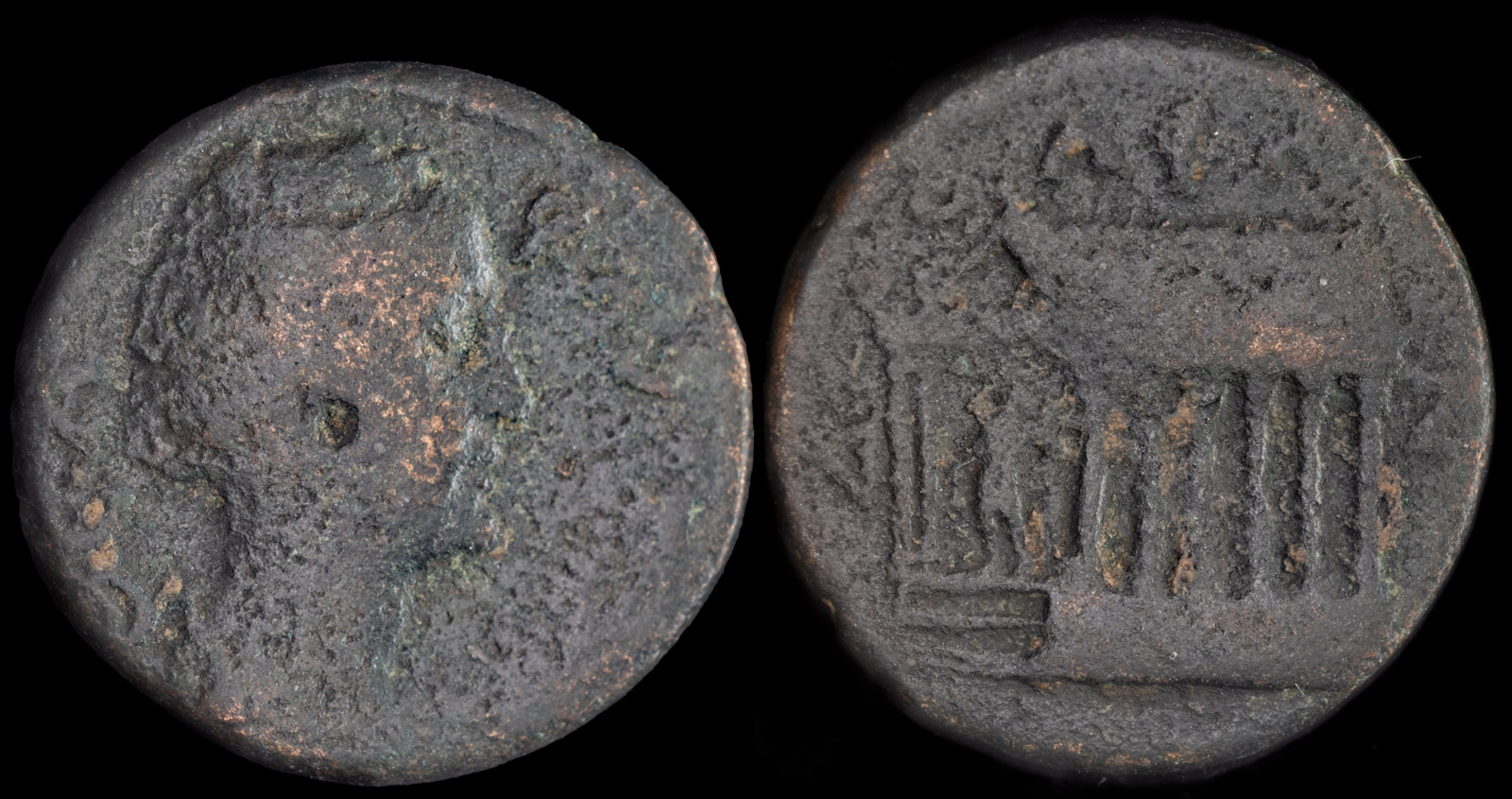
Phokis, Delphi
Diva Faustina Sr ca 141 CE
8.28g, 22mm
Draped bust of Faustina Sr. “TEA FAV[C]T[EINA]”
Temple of Apollo with 6 columns on one side, statue of Apollo standing left at the entrance. “Δ-EΛΦΩ-N” above
Sv p. 45, 87, pl XXIX 15; RPC Online 4601v; NCP X xxv
Delphi was the seat of the Pythia, the most famous and revered oracle in the Greek world. Today, it is a major tourist attraction, which isn’t all that different from antiquity.
It was an enormously wealthy place, since cities and kings across the Greek world (and even further) paid exorbitant sums to add their own treasuries and monuments. Indeed, even today it is littered with them, but in ancient times there were far more. On the Athenian Treasury, the most ancient musical notes found still can be read.
The site also contains an ancient theater and a stadium. The stadium was famous as the host of the Pythian games – one of the four main athletic contests in the Greek world and only a step down from he Olympics.
The first signs of occupation are from the Mycenaean period, and the initial temples were believed to have been constructed then. Indeed, the famous Temple to Apollo was the fifth temple per ancient writers.
The Sacred Wars, which helped the ascendancy of Philip II of Macedon, were largely fought over Delphi after the Phokians melted down many of the sacred offerings there.
The end of the First Sacred War, which leaves Athens in charge of Delphi
The Pythian Games begin at Delphi
The fourth Temple to Apollo is destroyed at Delphi
A Persian force from Xerxes attempts to take Delphi but is repulsed
Sparta dedicates its victory monument at Delphi after the Battle of Agiospotamai
Phokians under Philomelos sack Delphi
The Aetolian League along with Antigonos II Gonatas defeat an invasion of Gauls that had threatend Delphi.
Delphi comes under Roman control
The Romans under Sulla sack Delphi
Nero visits Delphi
Hadrian visits Delphi
Delphi shut down by Theodosius I