Capricorn
View All Tags
Greek myth most often connected Capricorn with **Pan** or with the goat-like god **Aegipan**. In one tradition, when the monstrous Typhon attacked the gods, Pan attempted to escape by plunging into a river. The part of his body beneath the water became fish-like while the part above remained a goat, producing the form of the Sea-Goat. Other traditions connected the constellation with the goat **Amalthea**, who nourished the infant Zeus, or with a related divine goat figure. These stories gave Capricorn associations with **survival, divine protection, nourishment, and transformation**, rather than with any single fixed mythological identity.
The constellation had an especially important astronomical meaning because in antiquity the **winter solstice occurred in Capricorn**. At the solstice the Sun reached its southernmost point and then began its apparent return northward, causing the days gradually to lengthen again. Capricorn could therefore symbolize a cosmic turning point: the moment when darkness reached its greatest extent but the return of light had already begun. This association with the solstice gave the sign powerful connotations of **renewal, reversal, endurance, and the restoration of order**.
For the Romans, Capricorn acquired an additional political significance through **Augustus**, who adopted the sign as one of his most important personal emblems and placed it prominently on coins and other imagery. Exactly why Augustus favored Capricorn has been debated, since ancient sources give conflicting information about his horoscope, but the image became closely associated with his rule, good fortune, and divinely sanctioned destiny. On Augustan coinage the Sea-Goat sometimes appears alongside symbols of prosperity or universal dominion, transforming an astronomical sign into an emblem of **victory, stability, abundance, and the new political order established by Augustus**.
In ancient astrology Capricorn was also regarded as the **house of Saturn**, which gave it qualities of seriousness, restraint, perseverance, age, and endurance. Taken together, the ancient symbolism of Capricorn was therefore considerably richer than the modern stereotype of ambition or career-mindedness. To a Greek or Roman viewer, the Sea-Goat could evoke **survival through adversity, the turning of the seasons, the return of light after darkness, divine protection, and—in the Roman world especially—the stability and renewal of imperial power**.
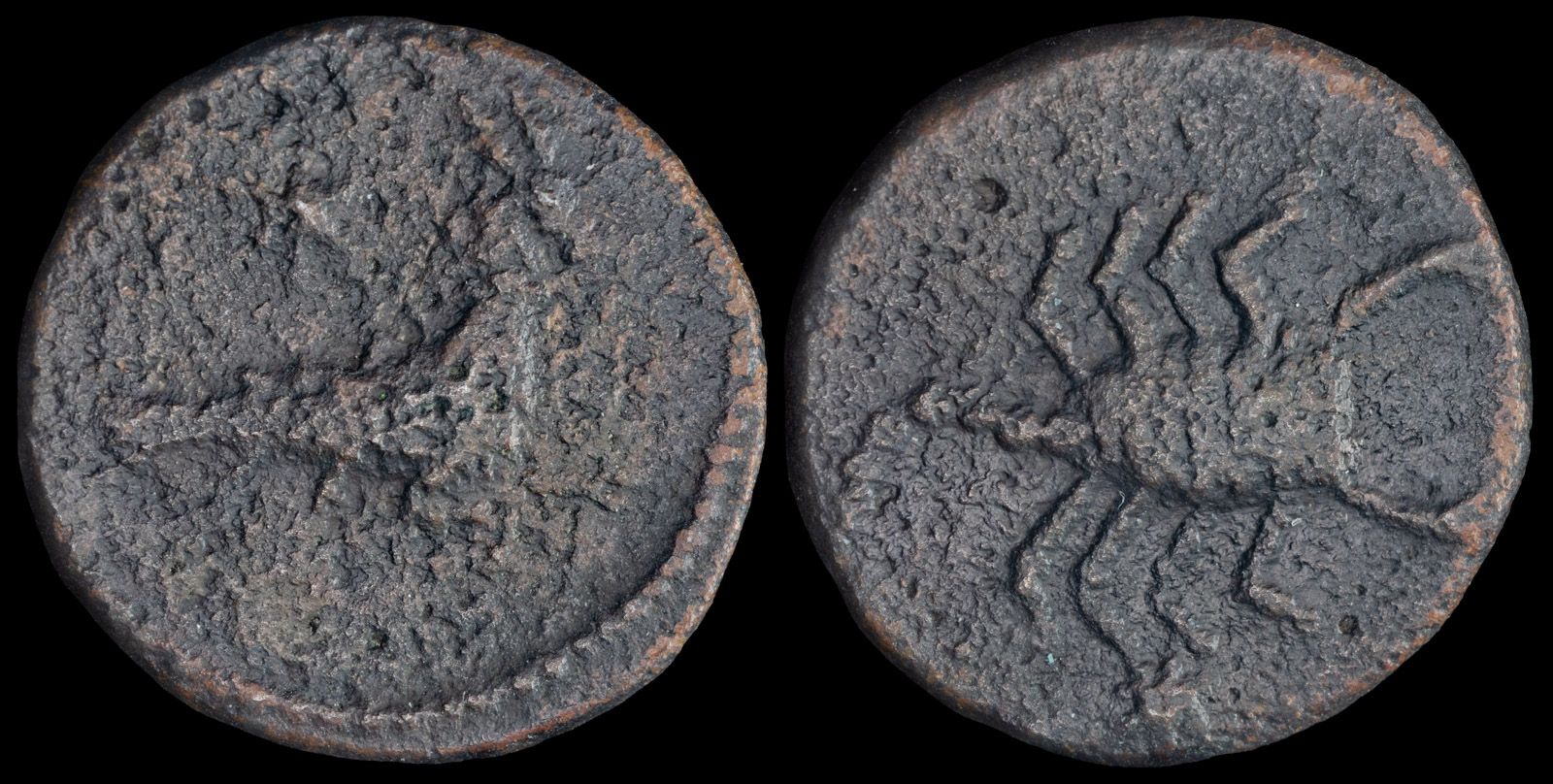
Cyprus, Koinon
Pseudo-autonomous 14-18 CE
AE 16.49mm 2.52g
Obverse: Capricorn right, star above
Reverse: Scorpion right
RPC I 3916
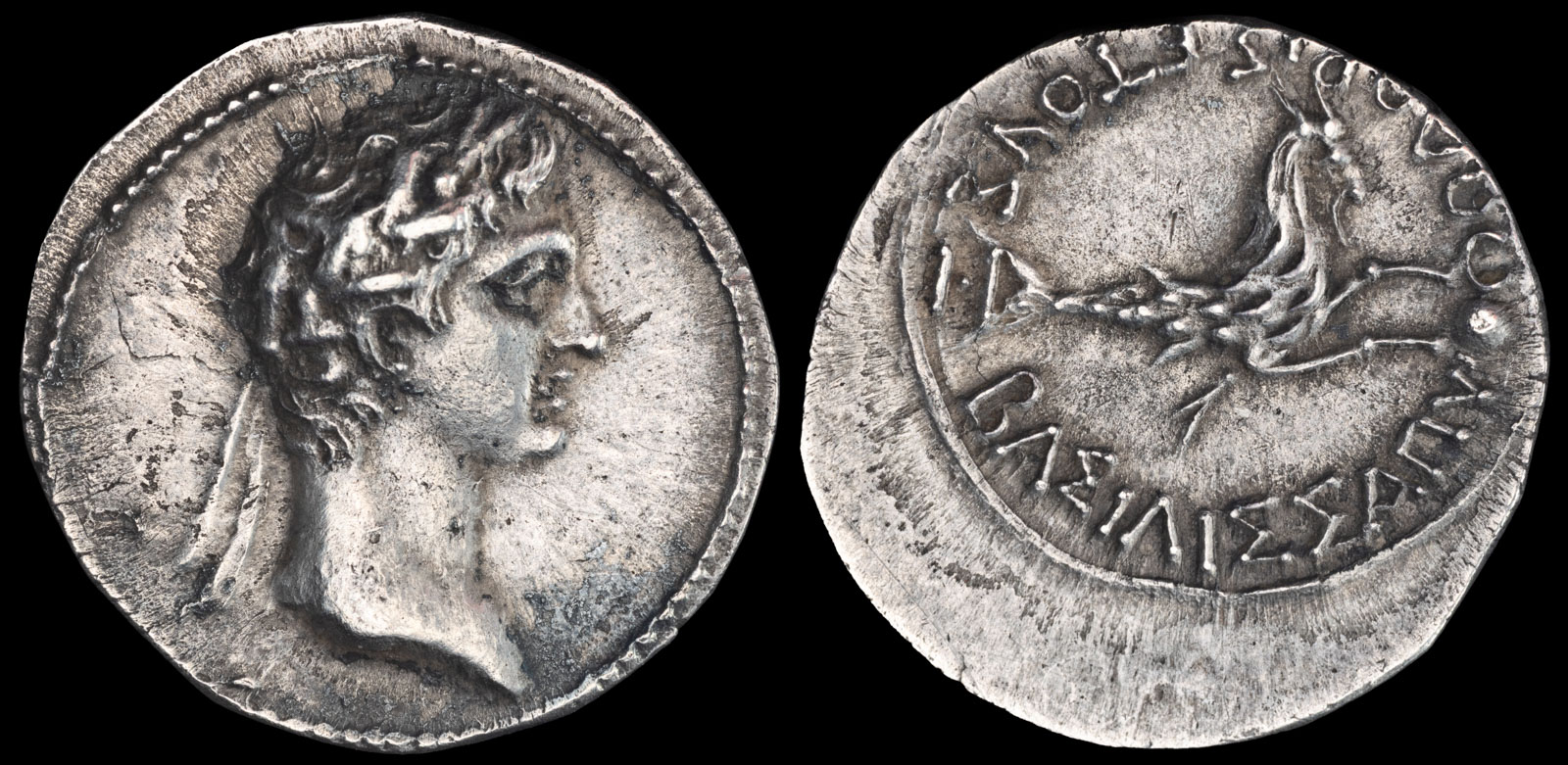
Kings of Pontus, Pythodoris, with Divus Augustus
Dated CY 60 (A22/3 or 23/4 CE)
AR Drachm 18.5mm, 3.70g, 12h
Struck under Tiberius
Laureate head of Divus Augustus right /
Capricorn right, globe between its forehooves; ETOYΣ Ξ (date) in legend.
Leschorn, Antike Ären 1a; RPC I 3803; RG 19