Caestus
View All Tags
In Greek athletics, boxing was introduced to the Olympic Games in 688 BCE. Fighters wrapped their hands in leather straps called himantes, which protected the knuckles somewhat but still allowed significant injury. There were no rounds, no weight classes, and no time limits. A bout ended only when one fighter was incapacitated or raised a finger in submission. Even with relatively simple leather wraps, broken bones and facial trauma were common.
Under Roman influence, the caestus became more brutal. Some versions, especially those associated with arena spectacles, included metal plates or spikes. These were not used in formal Olympic-style sport but appeared in gladiatorial exhibitions meant for spectacle and bloodshed. The purpose shifted from athletic competition to dramatic violence.
The caestus appears in literature as well. In Aeneid, the aged boxer Entellus retrieves the heavy caestus of the legendary Eryx. When he strikes a bull with it, the animal collapses instantly, emphasizing the weapon’s destructive power. The passage illustrates how the caestus symbolized raw strength, endurance, and sometimes savagery.
By modern standards, the caestus sits somewhere between sporting equipment and weaponry. It reminds us that ancient combat sports valued toughness and endurance over safety. The line between athletics and violence was thin, and the crowd often preferred it that way.
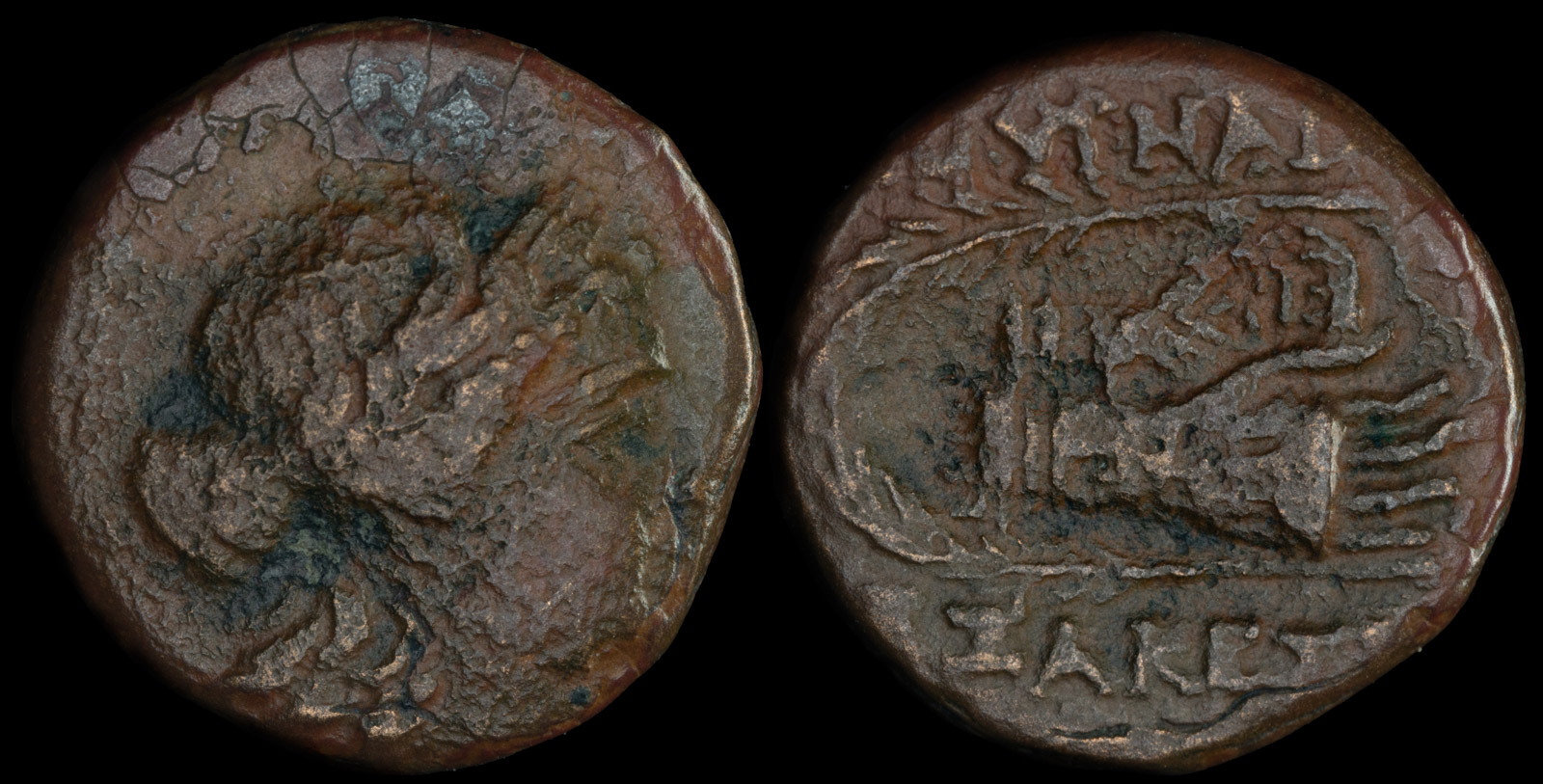
Ionia, Smyrna
Circa 125-115 BCE
AE 12mm, 2.0gms
Obv: Laureate head of Apollo right
Rev: Two hands in caestus; palm on each side