Axe
View All Tags
In ancient Greek and Roman cultures, the axe was often used to symbolize military might or sovereign power. Coins featuring an axe could indicate the strength of the ruler or military leader, with the axe signifying their ability to protect or expand their territory through force. In some instances, the axe was also connected to heroic figures or mythological deities, especially those associated with warfare, such as Heracles or Zeus, who were often depicted with weapons that included axes. The image of the axe could evoke the idea of divine intervention in battle, suggesting that the ruler was favored by the gods and capable of wielding divine strength.
The axe also had a ritualistic significance in many ancient cultures, particularly in the context of religious practices. In some cases, the axe was linked to sacrificial rites, where it was used as an instrument to slay animals or perform offerings to the gods. This association with ritual sacrifice made the axe a symbol of divine favor and propitiation. On ancient coinage, this could reflect the idea of the ruler being in harmony with the gods and performing the necessary rites for the well-being of the state. The presence of the axe on a coin might indicate the ruler’s role in maintaining sacred duties or in fulfilling the will of the gods through ritual.
In other instances, the axe served as a symbol of justice and punishment. As a tool for execution or enforcement of laws, it could signify the ruler’s role as the enforcer of order and fairness within the kingdom. This connection between the axe and justice is particularly evident in coins struck by Hellenistic rulers, who sometimes used the axe as part of their iconography to convey their role in maintaining law and order.
The axe also had practical associations with agriculture and labor in some cultures, and its use on coins could symbolize prosperity, hard work, and the natural cycle of life. For example, in ancient Thrace, the axe was sometimes depicted on coins to reflect the agricultural importance of the region and the role of the ruler in promoting fertility and growth.
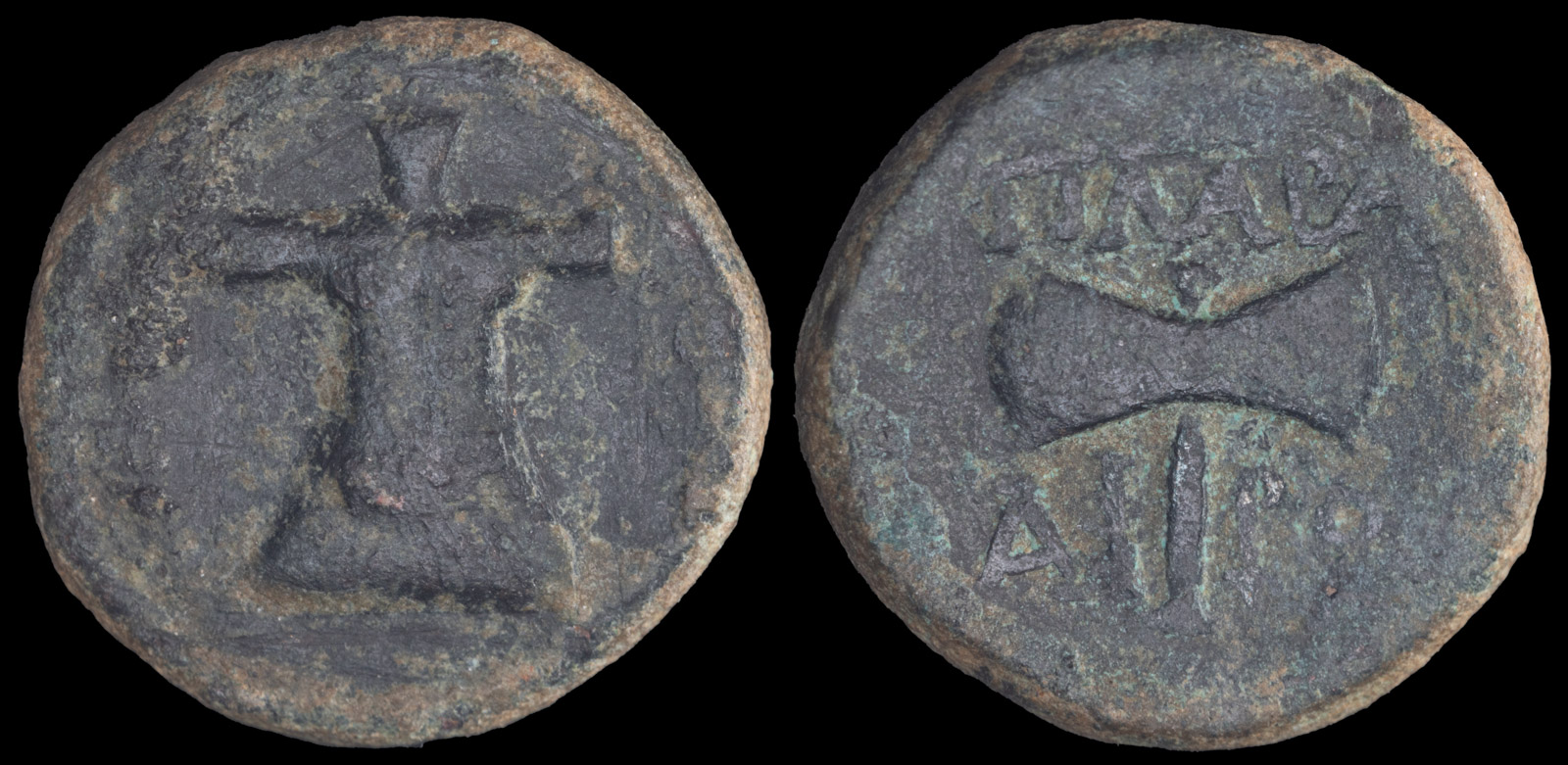
Karia, Aphrodisias
2nd-1st century BCE
AE 1.95g, 11mm
Obv.: cuirass within border of dots, monogram in left field.
Rev.: ΠΛΑΡΑ / ΑΦΡΟ, double-axe
Cf. SNG Tübingen 3354 (but here cuirass in incuse square field)
Aphrodisias, Karia 2nd-1st century BCE
Celtic Treveri. 50-30 BCE

Demetrios I Poliorketes 290-283 BCE
Olbia, Skythia 330-320 BCE

Olbia, Skythia ca 239 BCE

Olbia, Skythia ca 240 BCE

Olbia, Skythia ca 247 BCE

Olbia, Skythia ca 253 BCE

Olbia, Skythia ca 265 BCE

Olbia, Skythia ca 267 BCE

Olbia, Skythia ca 290-271 BCE

Olbia, Skythia ca 301 BCE
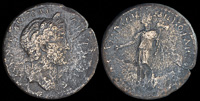
Tabala, Lydia 138-161 CE