Astarte
View All Tags
In mythology and cult practice, Astarte was closely associated with the cycles of life. She presided over fertility of the land, human reproduction, and the vitality of cities and kings. At the same time, she was invoked as a battle goddess, often depicted armed, sometimes standing on a lion or holding weapons. This martial aspect set her apart from later Greek goddesses of love and underscored her role as a protector of states and rulers. Kings sought her favor not only for prosperity but for victory and legitimacy.
Astarte was deeply interconnected with other great goddesses of the ancient world. She was closely linked to the Mesopotamian Ishtar and the earlier Sumerian Inanna, sharing myths, symbols, and attributes. As her worship spread westward, the Greeks associated her with Aphrodite, especially in Cyprus, where her cult had deep roots. Despite this identification, Astarte retained a darker, more commanding presence than her Greek counterpart, reflecting her older and more complex origins.
Her worship involved temples, votive offerings, incense, and sometimes ritual acts meant to ensure divine favor. Archaeological finds such as figurines, inscriptions, and coins attest to her popularity across centuries. Even as monotheistic traditions rose and her temples fell silent, Astarte endured as a symbol of sacred power that could not be easily confined. She represents an ancient understanding of divinity as something vast, dangerous, nurturing, and irresistible, a goddess who ruled not only hearts and wombs, but also battlefields and the fate of nations.
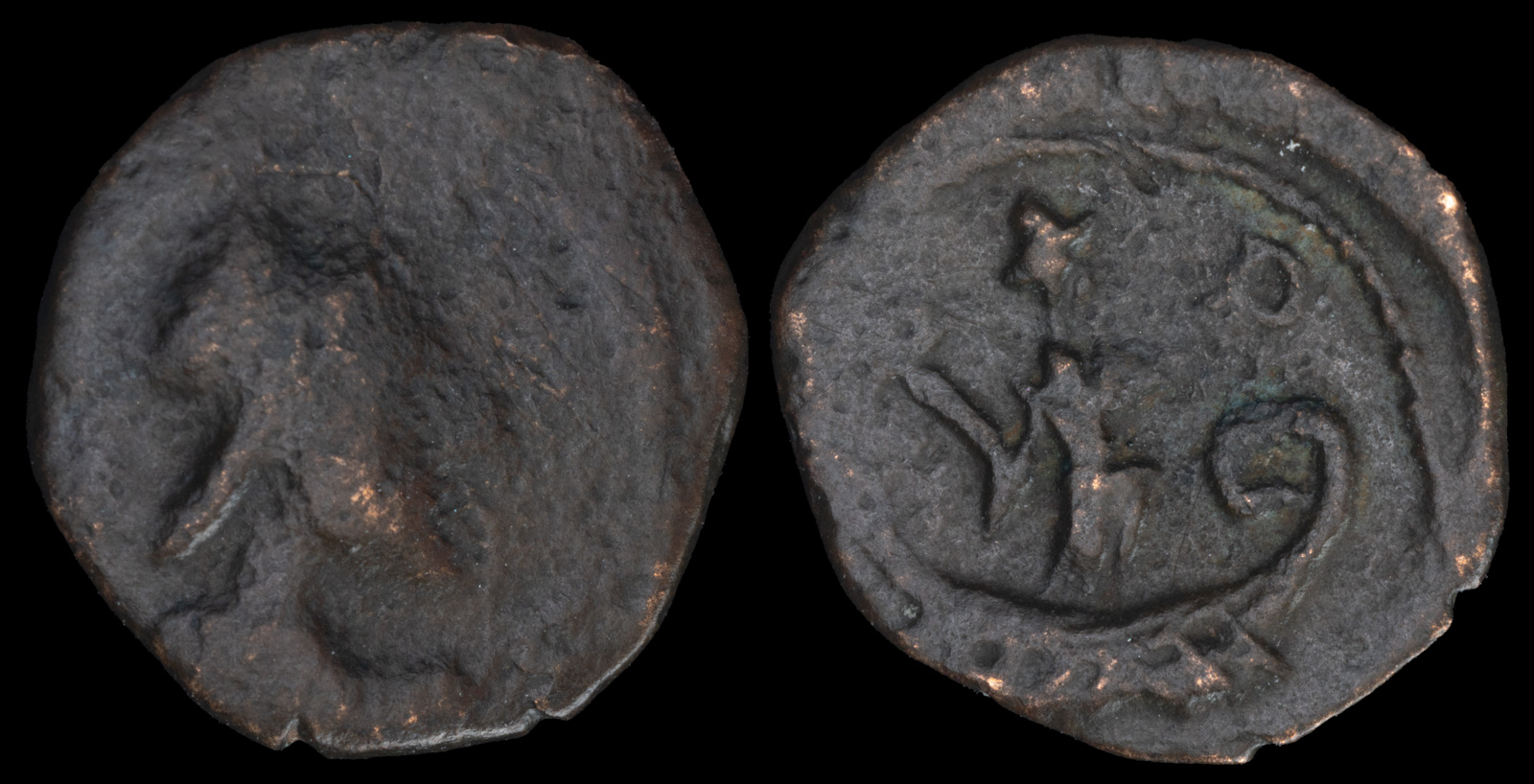
Palmyrene, Palmyra
Circa 2nd-3rd centuries CE
AE 9mm 0.43g
Obv: turreted bust of Tyche right
Rev: Astarte(?) standing in galley facing, holding uncertain object in raised hand; illegible inscription or object to left.
Unpublished in the standard references, but cf. Stephen Album 28, 14