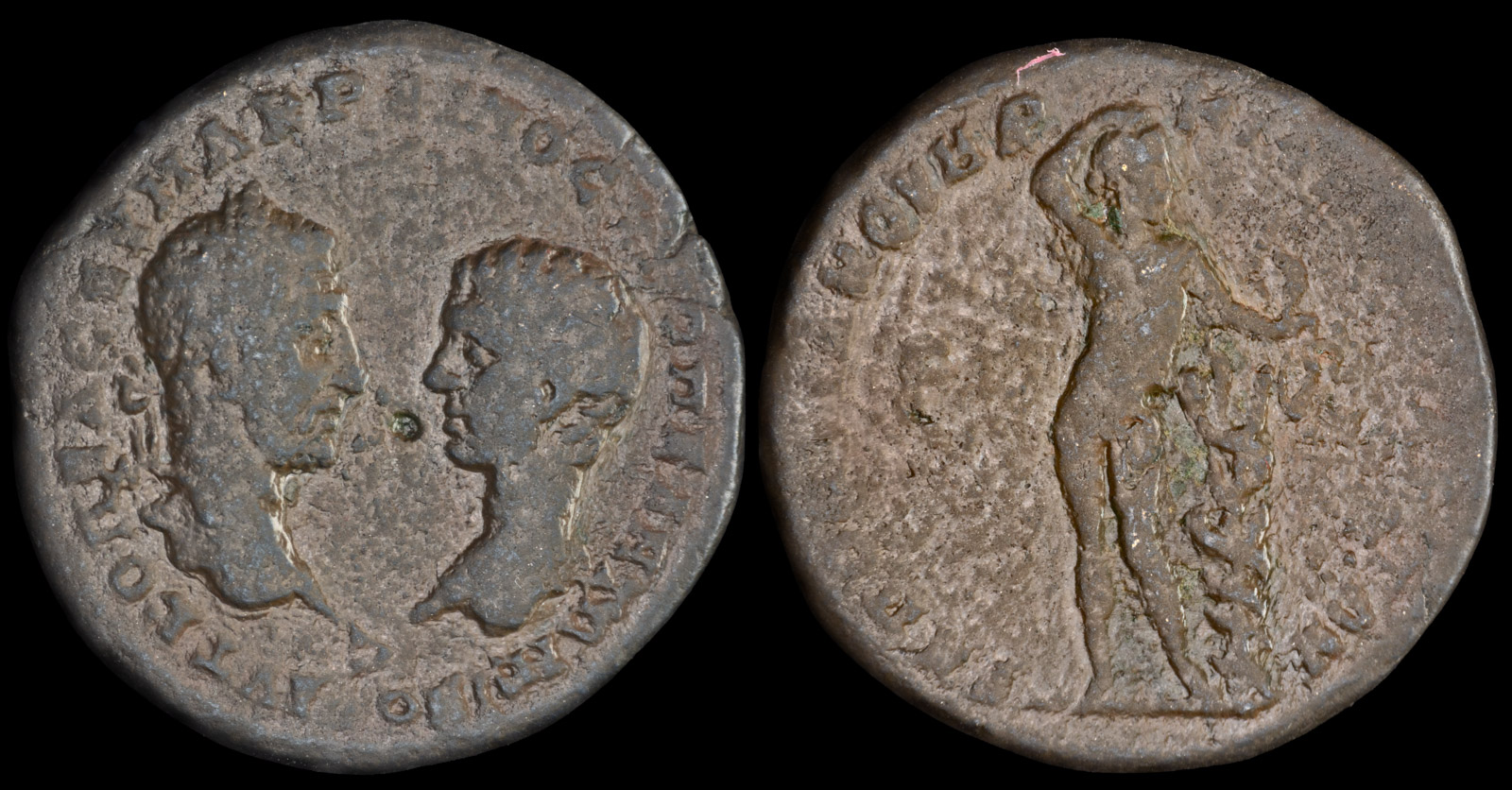
Moesia Inferior, Marcianopolis
Macrinus with Diadumenian
Pontianus, legatus consularis
217-218 CE
AE 26.67mm 12.39g
Obverse: AVT K OΠEΛ CEV MAKPEINOC K M OΠEΛ ANTΩNEINOC, confronting busts of Macrinus and Diadumenian
Reverse: VΠ ΠΟΝΤΙΑΝΟV ΜΑ-ΡΚΙΑΝΟΠΟΛΕΙΤΩΝ, Apollo stading facing, looking right, naked, right hand on head, holding bow in left; to right, serpent coiled round stump of tree; E (mark of value) in left field
Varbanov 1147
The identification of this statue as that of Apollo Lykeios by Praxiteles is very tenuous, though we do know for a fact that this coin exactly mimics extant statues, complete with serpent.
The following is what we know:
A statue of Apollo appeared in the Lykeion in Athens. From Pausanias (1.9.13)
“The Lyceum has its name from Lycus, the son of Pandion, but it was considered sacred to Apollo from the beginning down to my time, and here was the god first named Lyceius. “
Lucian in turn, describes a statue of Apollo in the Lykeion. (Anarcharsis 7)
SOLON: The place is called a gymnasium, and is dedicated to the Lycean Apollo. You see his statue there; the one leaning on the pillar, with a bow in the left hand. The right arm bent over the head indicates that the God is resting after some great exertion.
Therefore, we know that Apollo was leaning on a pillar, and in his left hand (the one on the pillar) was a bow, and the right hand was bent over the head. That describes very well the statue on this coin, though it leaves out the serpent on the pillar and there’s no mention of Praxiteles.
In fact, no ancient text mentions such a statue by Praxiteles. Modern and ancient art historians have instead assigned it to him based on the style. It just seems like something he’d make. Of course, a number of historians today disagree.