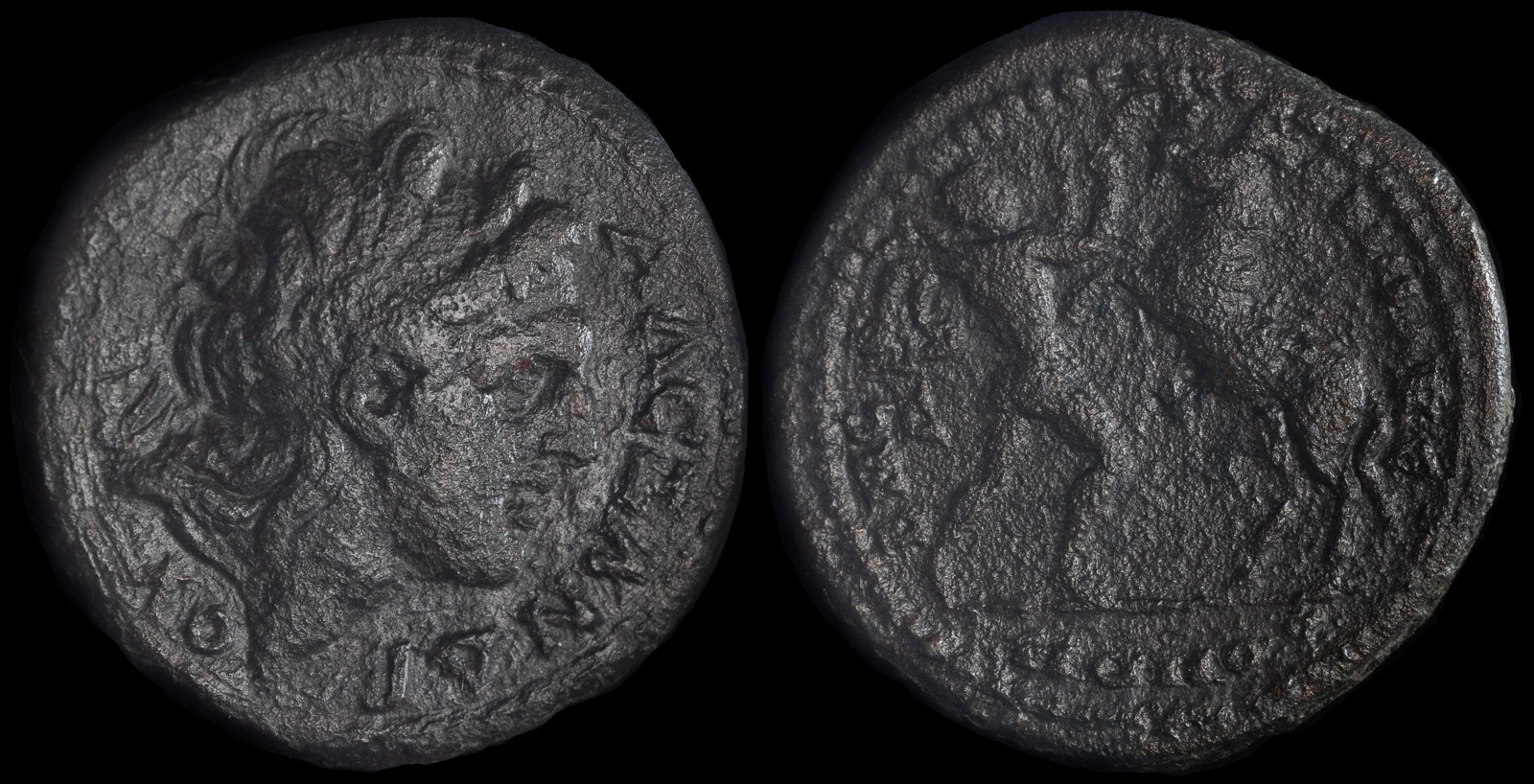
Macedon Koinon. Pseudo-autonomous
Time of Gordian III (238-244 CE)
Æ 28mm, 13.79 gm, 12h
Obv: AΛEΞANΔPOY. Diademed head of Alexander right; lightning bolt (blitz) below neck on right.
Rev: KOINON MAKEΔONΩN B NE – Ω below E, Alexander standing on left, placing harness on Bucephalus rearing on right.
AMNG III 557
This coin illustrates the story told by Plutarch (though certainly taken from a lost source) of Alexander the Great taming Bucephalus. The horse was offered to Philip II at the exorbitant sum of 13 talents, and so he refused. However, Alexander, seeing the spirit in the horse, offered to tame him, or otherwise pay the sum if he failed.
The text of B NE indicates the coin was minted during the second neokoros, or sometime after 231 CE. This type is not extremely rare, but is very popular and thus tends to sell high.
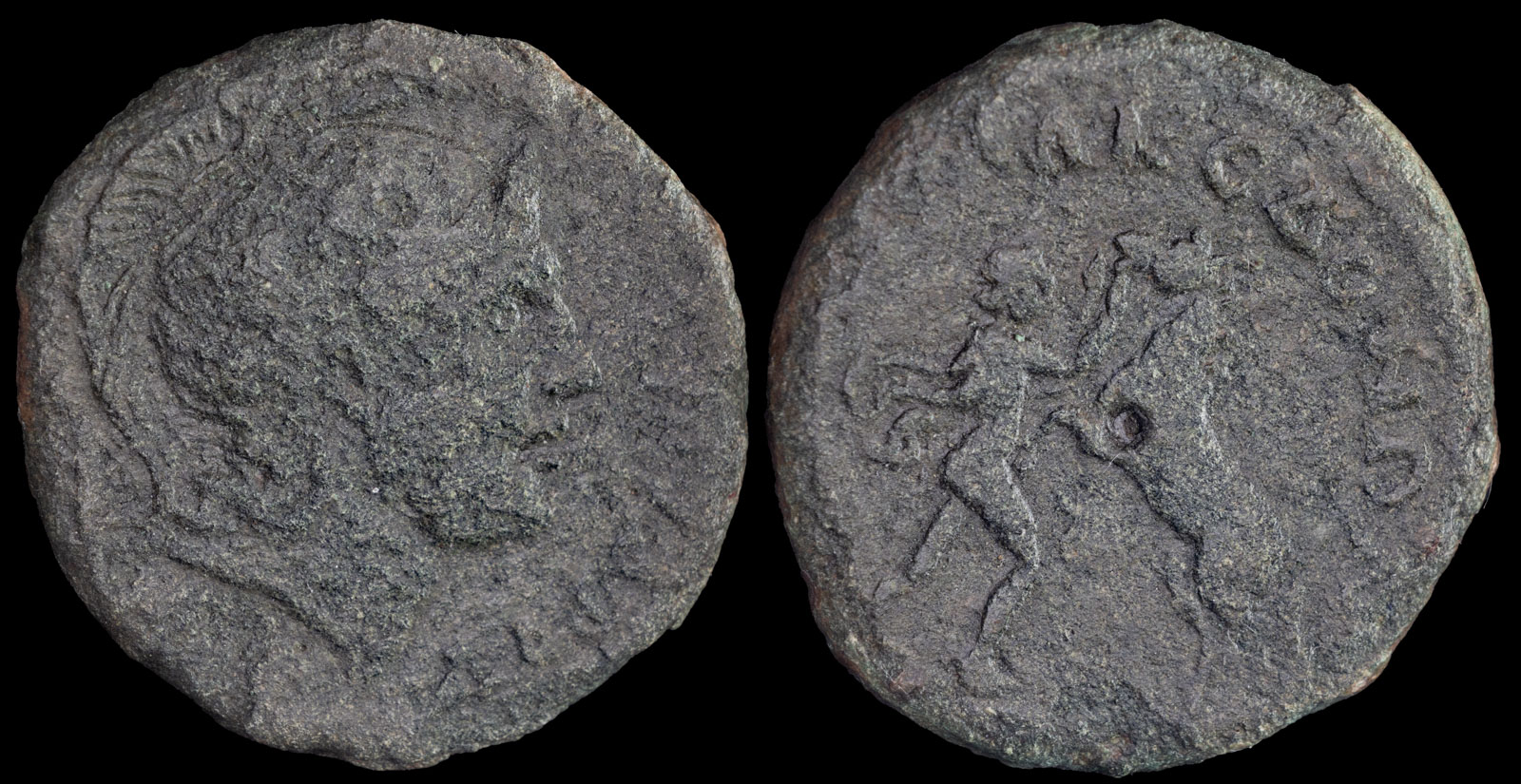
Macedon, Koinon of Macedon
temp. Severus Alexander. 222-235 CE
Æ 25mm, 7.99g, 7h
Head of Alexander the Great right, gazing upward, wearing crested Athenian helmet decorated with griffin /
Alexander standing right, nude but for cloak flowing out behind him, placing harness on Bucephalas rearing left.
RPC VII.2 Online 282; AMNG 442a var. (reverse legend)
Ex Joseph A. Dow Collection
Ex Classical Numismatic Group Electronic 2022
The story of how Alexander tamed Bucephalus was told in both Pausanias’ history of Alexander and in the less reliable Alexander Romance.
In Plutarch, a horse seller asks for a ridiculous 13 talents for the horse, which Alexander’s father, Philip II, refuses to pay since no one can ride him. Alexander offers to tame the horse, and if unsuccessful pay the fee himself.
By noticing that the horse is actually afraid of his shadow, Alexander turned its head to the sun, spoke soothingly to the horse, and was able to tame it. After that, Bucephalus became Alexander’s primary horse until he died after the Battle of the Hydaspes. Accounts differ, with some saying he died of war wounds and others of old age.
The Alexander Romance depicts Bucephalus as a man eater, kept in a cage to prevent him from killing anyone else. Alexander then tames and frees the horse. The first story probably has a bit more truth to it.
Upon Bucephalus’ death, Alexander was so distraught that he reportedly named at least one city after him. This may be Jalalpur Sharif, Pakistan, where Bucephalus is reportedly to have been buried.
Intriguing about this image is there is no known precedent. Many of the Koinon of Macedon images are strongly believed to have been inspired by paintings or sculptures, the theory strengthened by a number of the images appearing in the Aboukir Medallions. Rather than the coins being inspired by the medallions, it’s generally believed they were both modeled on the same source.
However, there are neither any extant ancient statues depicting Alexander and Bucephalus, nor are there descriptions of any in Pliny, Pausanias, or other ancient writers. Only one mosaic may depict the scene – the Berkshire Boxford Mosaic, though it depicts a significantly different pose than this one. The topic was common in medieval (where the story of a man-eating Bucephalus caged is more often depicted) and renaissance paintings and sketches, but again the poses are very different.
It is possible the engraver created this design simply from the tale of Alexander and Bucephalus, most likely Plutarch’s version and here the initial stage where Alexander is trying to sooth Bucephalus. As he soothes the horse, his hands are reaching up to turn its head towards the sun.