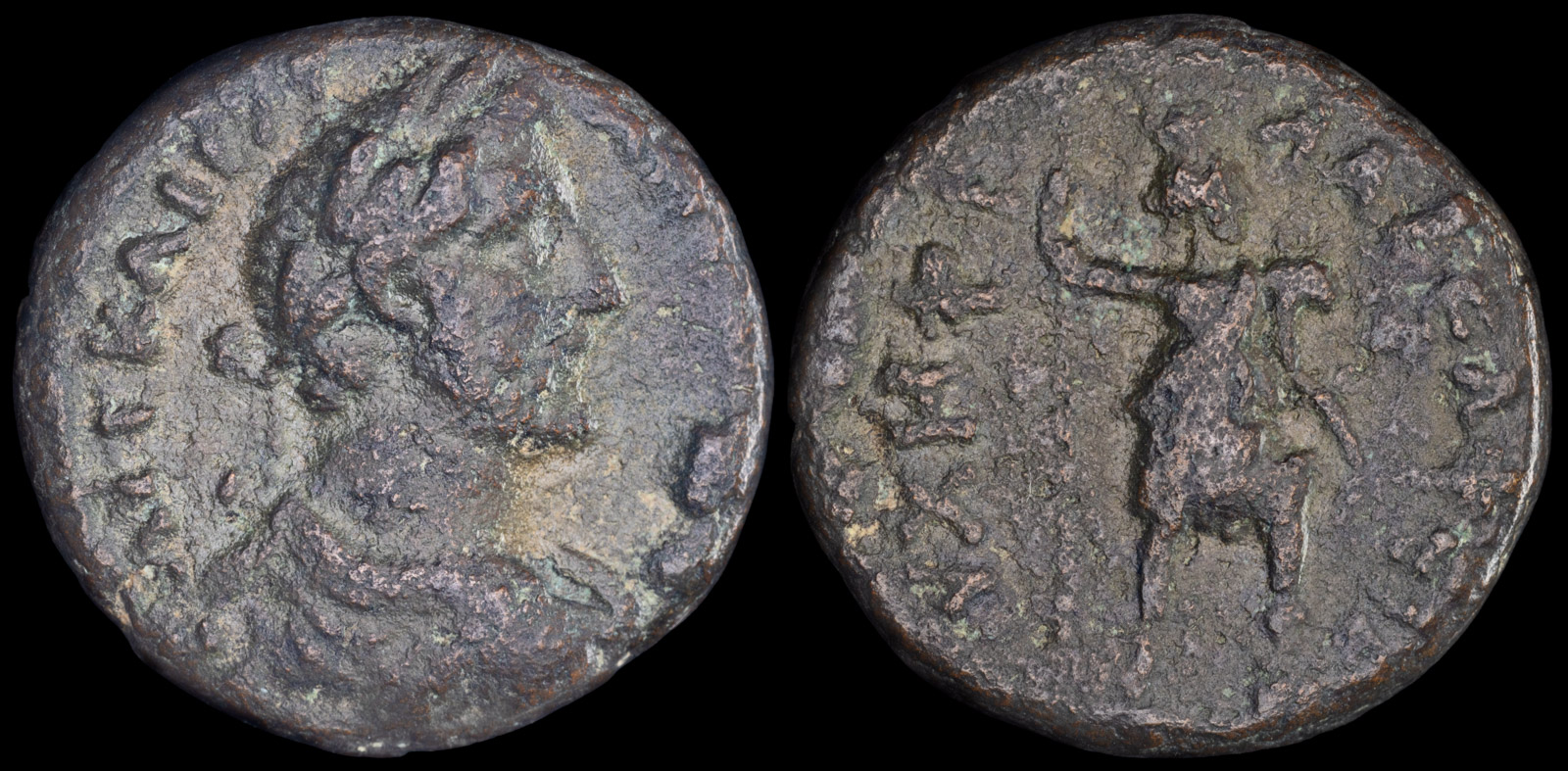
Arabia Petraea, Philadelphia
Antoninus Pius 138-161 CE
AE 19.19mm 6.43g
Obverse: ΑΥΤ ΚΑΙϹΑΡ ΑΝΤⲰΝΕΙΝOϹ, laureate and draped bust right
Reverse: Tyche standing right, holding scepter and cornucopia, foot on helmet
RPC IV.3 6637; Spijkerman 18; Rosenberger 19
Today, the ancient city of Philadelphia is the capital of Jordan, Amman. Settled since at least the 8th millennium BCE, it was earlier called Rabbath Amman and was the capital of the Ammonite kingdom.
In the 8th century BCE, the Ammonite kingdom was taken by the Assyrians, and later by the Babylonians and then Persians. The palace of Qasr-al-Abd today is considered perhaps the best preserved hellenistic (2nd century BCE) palaces.
Philadelphia bounced between the Ptolemies and Seleukids several times before falling under the Nabataaeans. They continued in control until it was taken by the Hasmonean Alexander Jannaios. Under the Romans, Philadelphia was a member of the Decapolis. The city thrived and many ruins from this era remain.
Rabbath Ammon occupied by Ptolemy II and renamed to Philadelphia in his own honor
Philadelphia taken by Antiochos III
Philadelphia comes back under Lagid control over the Battle of Raphia
Seleukid victory at the Battle of Barium, putting Philadelphia securely under Seleukid rule
Philadelphia attacked by Judas Maccabeus
Philadelphia ruled by the tyrant Zenon Kotylas and his son Theodorus
Nabataeans take Philadelphia again after defeating the Seleukids in the Battle of Cana
Nabataeans forced to withdraw from Philadelphia under pressure from Rome
War between the Herodians and Nabataeans starts, much of it fought around Philadelphia
Boundary dispute between Philadelphia and Jews in Perea