Eye
View All Tags
This is especially evident in Greek coinage, where the treatment of the eye evolved along with changing artistic conventions. Archaic portraits often show an eye rendered almost frontally even when the head itself is in profile. To a modern viewer this can appear unnatural, but it reflects a broader artistic convention in which the artist emphasized the most recognizable and symbolically important features rather than attempting strict optical realism. During the Classical and Hellenistic periods, engravers increasingly represented the eye according to the actual orientation of the head, helping to create greater depth, naturalism, and psychological expression. The change in the eye alone can therefore be an important clue when considering the artistic date and style of a coin.
Eyes were particularly important in representations of gods and rulers. The unusually large or upward-looking eyes found on some Hellenistic royal portraits could give the ruler an inspired, almost superhuman appearance. The famous portraits of Alexander the Great and the kings who adopted elements of his portraiture demonstrate how the gaze could contribute to the idea of heroic or divine kingship. A ruler was not simply being shown as an individual; the engraver could use the eyes, together with the hair, forehead, and posture of the head, to suggest energy, charisma, divine favor, or a connection with a particular god.
For numismatists, the eyes can also be diagnostically important. Different mints, engravers, and periods sometimes developed distinctive ways of cutting the eyelids, pupil, brow, and surrounding facial planes. On worn or poorly preserved coins, these details may be among the features that help distinguish one portrait type from another. Even within the coinage of a single ruler, changes in the treatment of the eyes can reveal shifts in portrait style and political messaging. The eyes of an ancient coin portrait therefore deserve close attention: in only a few millimeters of engraved metal, they could convey chronology, artistic tradition, identity, personality, and ideology.
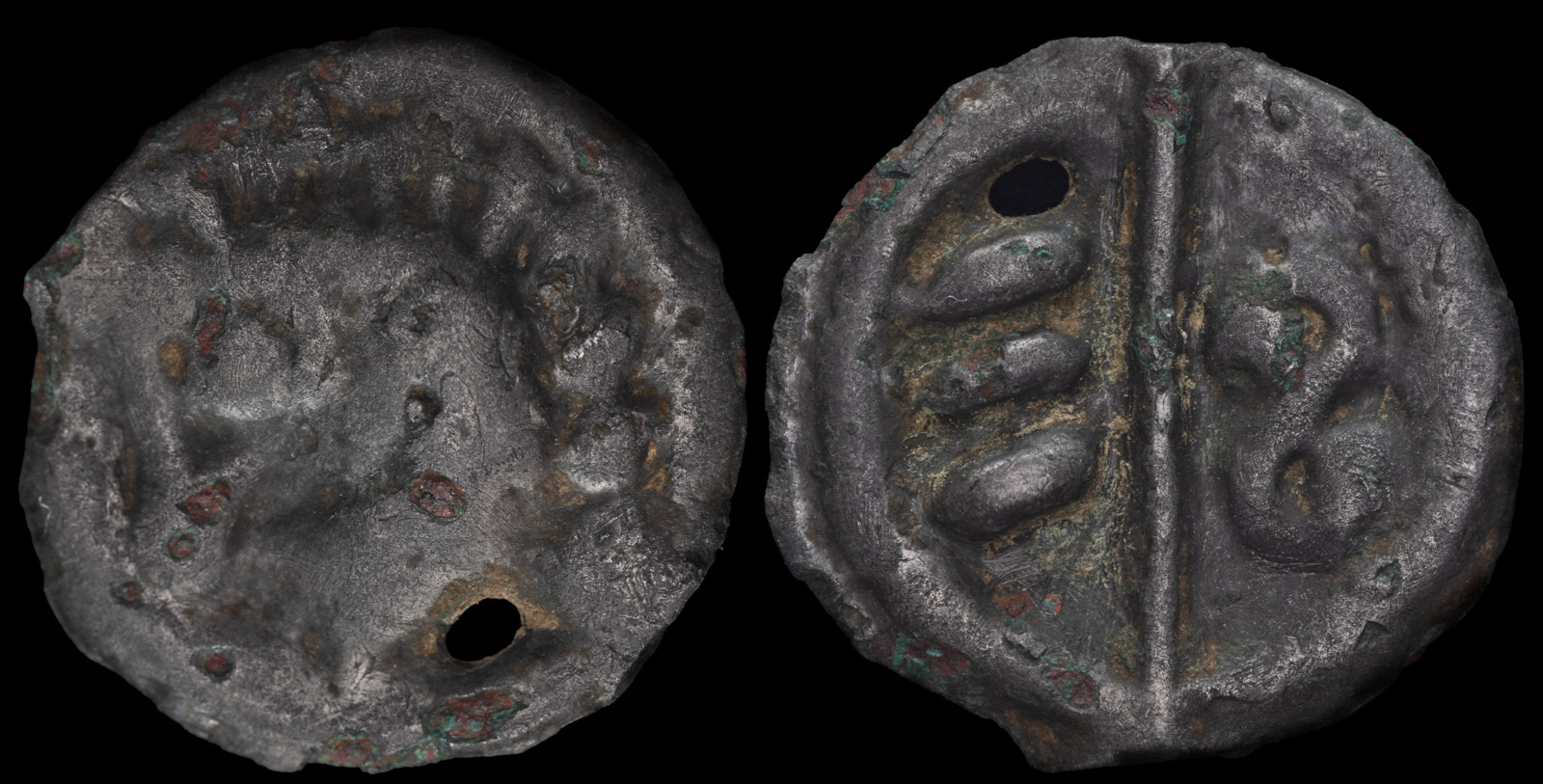
Celtic Northeast Gaul, Bellovaci
Beauvais mint
Circa 60-30/25 BCE
Cast Potin 2.67g, 17mm
Obv: male head left with prominent eye and bristled hair.
Rev: S shape above lines. head right.
D&T 535